There Is No Single Normal Reef Tank Evaporation Rate
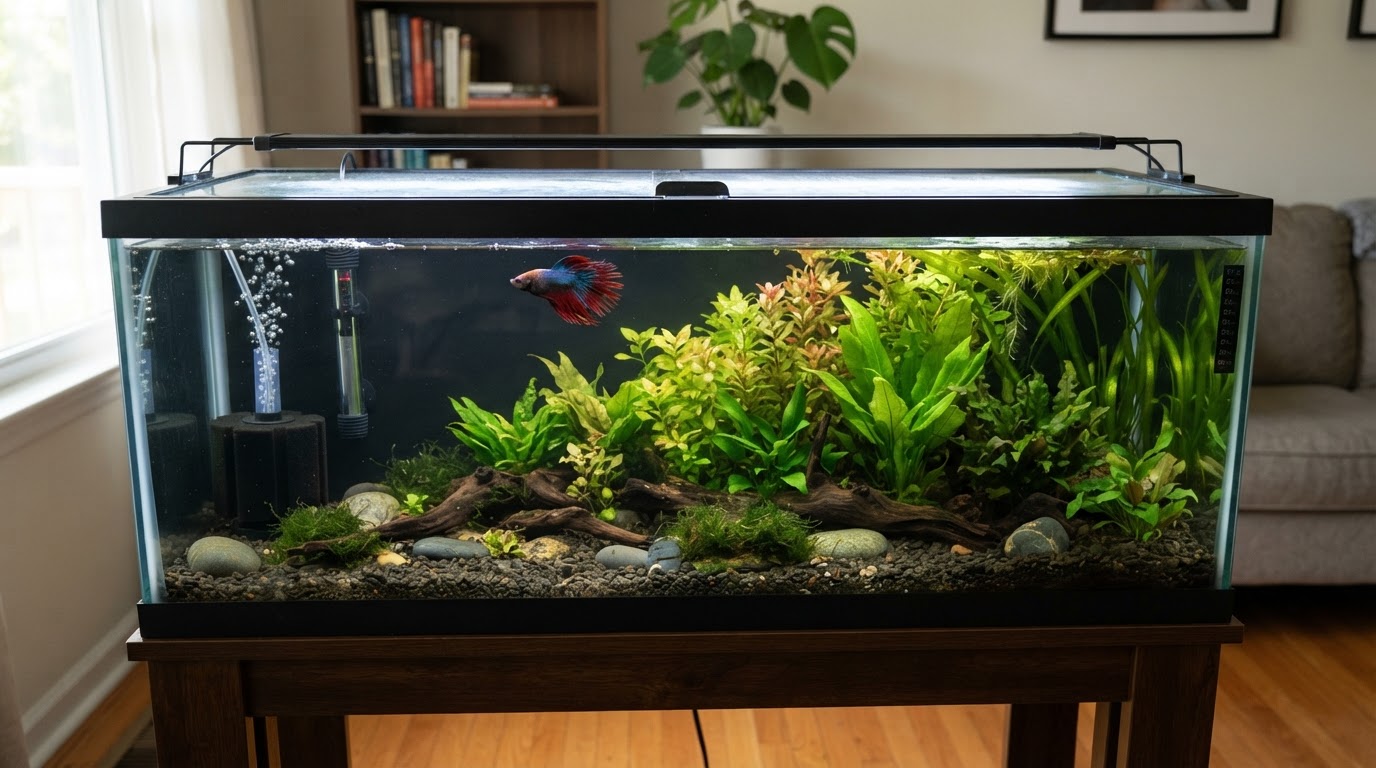
A reef tank does not have a standard evaporation rate to look up. Water loss depends on exposed surface area, the gap between water and room conditions, air movement, circulation, and attached equipment, as Bulk Reef Supply explains in its guide to aquarium evaporation. A covered sump in humid air and an open display in dry winter air can lose very different amounts at the same volume.
A percentage-of-volume shortcut is weak. If your fish tank water is evaporating quickly, ask not "what is normal?" but "what does my system lose per day, and why did that change?" A sudden jump deserves an inspection; a steady number is something to plan around.
Measure the Loss Over Several Days
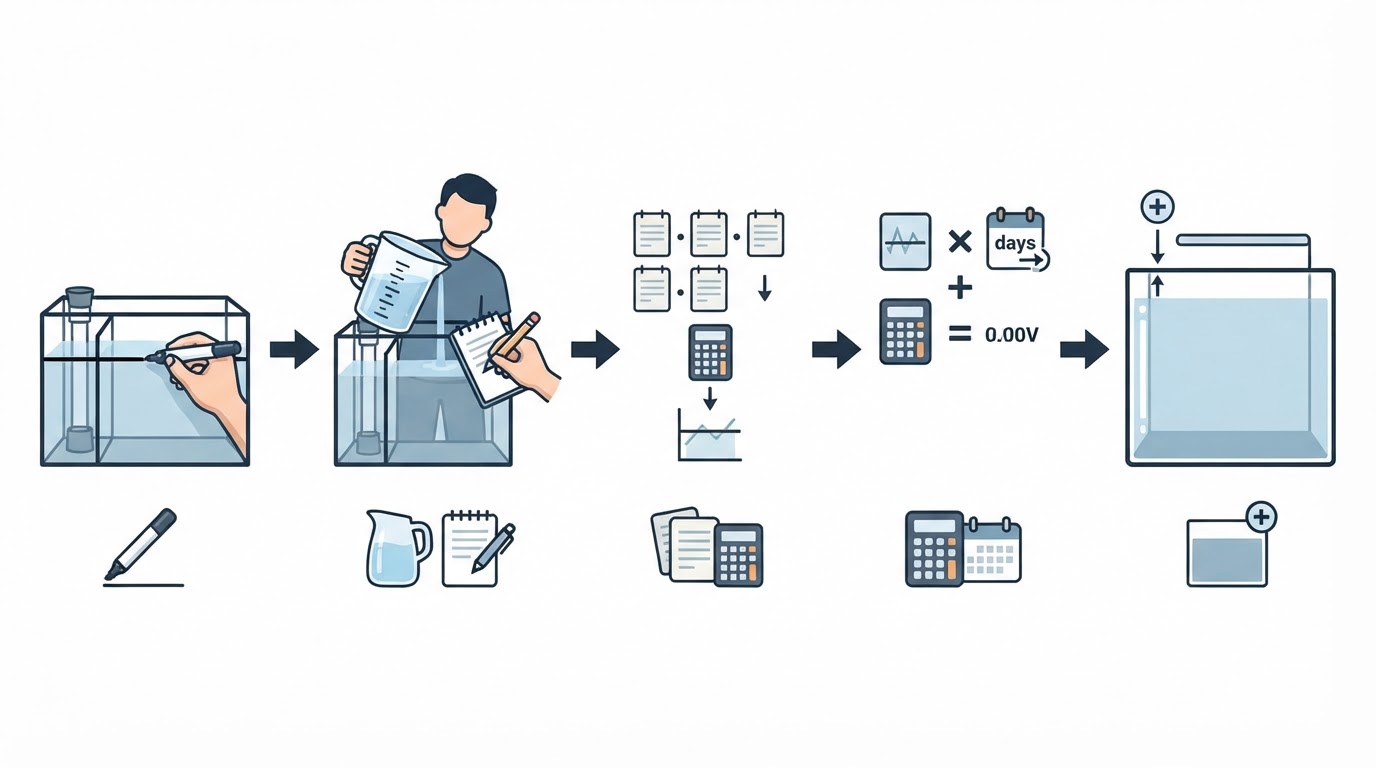
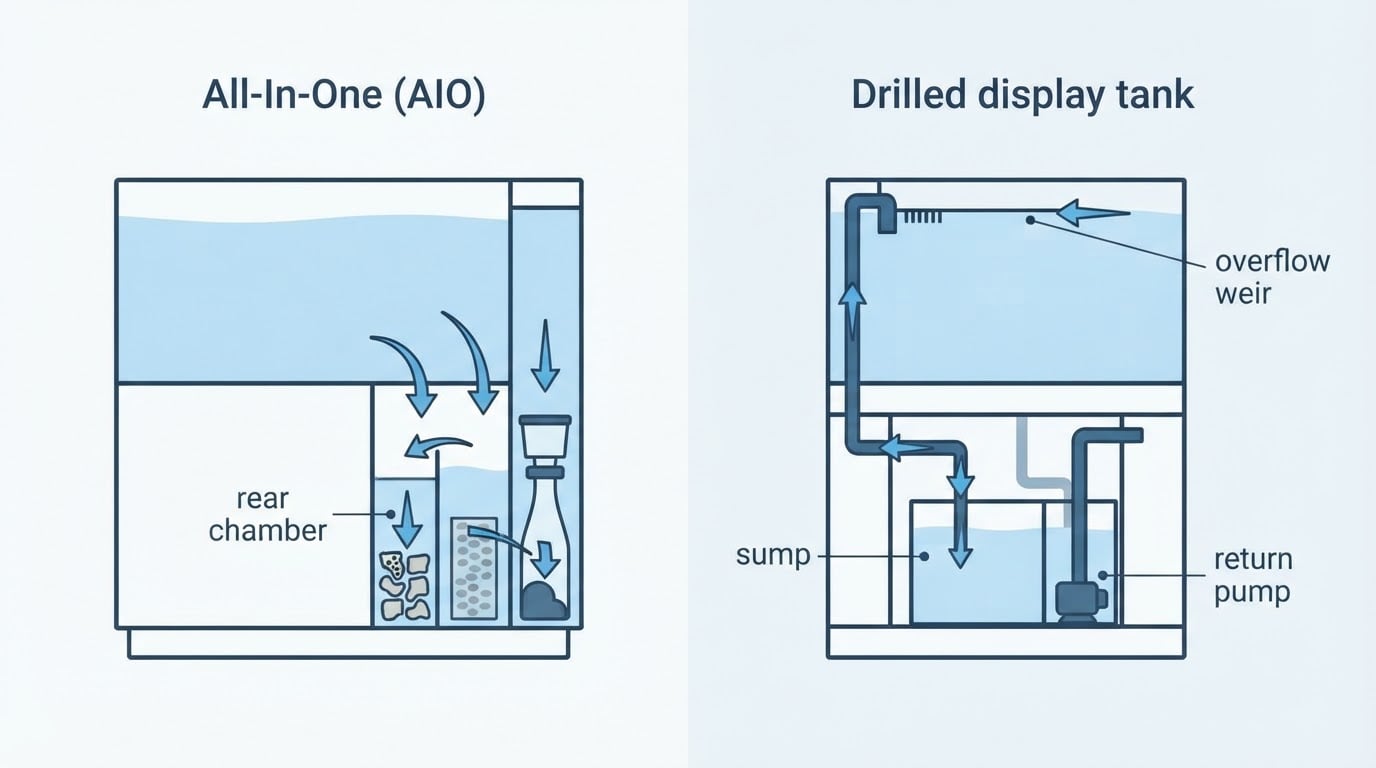
Use a repeatable water line instead of a guess. The sump's return-pump chamber is usually clearest because evaporation shows there first. Mark the level with tape or marker, refill to that line with a graduated container, and record the volume.
Record only fresh replacement water, measured at that same line and under the same lid, fan, flow and room conditions as usual. Exclude water removed by a skimmer, a leak or a water change rather than counting it as evaporation.
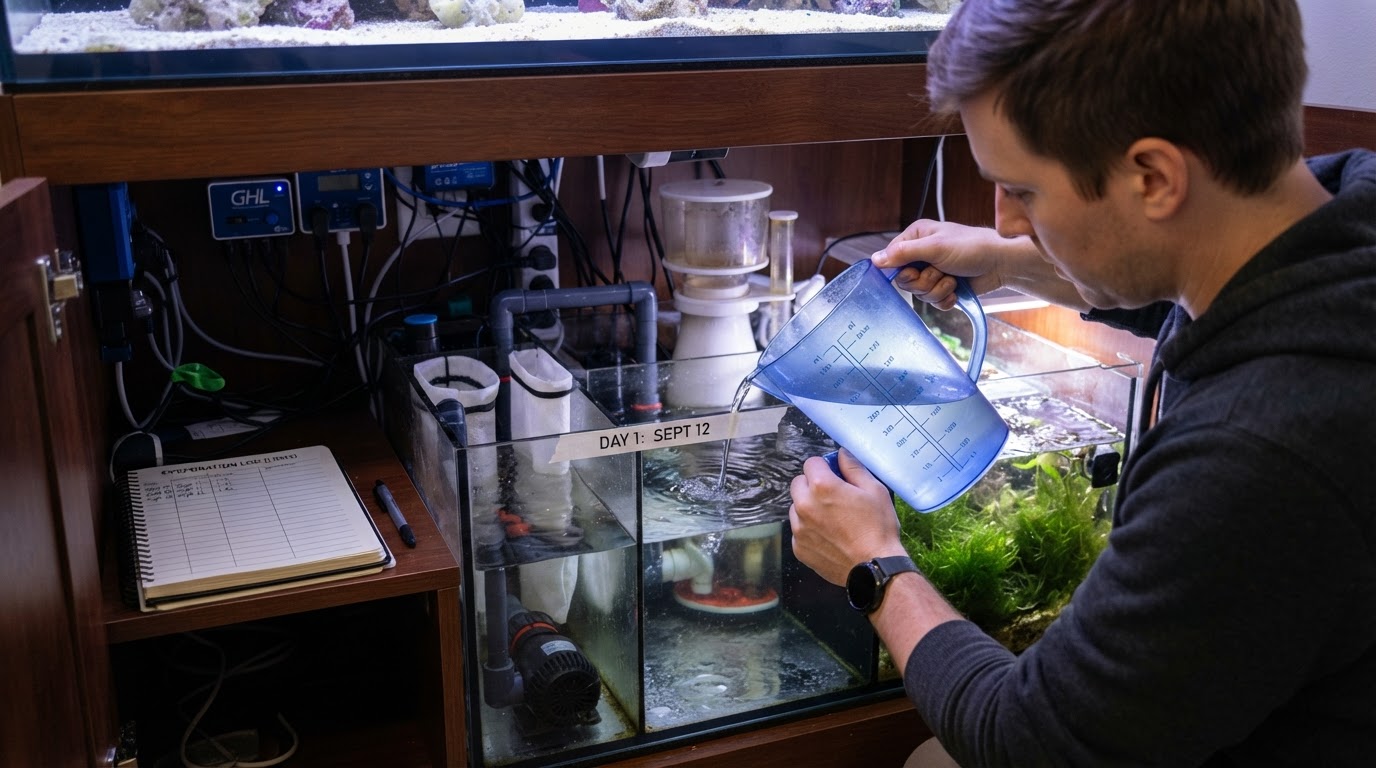
Repeat until the daily numbers stop surprising you; no duration is guaranteed. Humidity, room temperature and lid configuration can swing daily loss enough that one reading misleads. Keep normal settings during the test; changing them halfway changes the number you want to learn.
Divide total replacement volume by elapsed days. As a hypothetical example only — not measured tank data — 3.6 gallons over three days works out to 1.2 gallons per day. That figure describes your tank under those conditions, not a reef-keeping norm.
Blank daily log:
Date | Conditions: room temperature, humidity, lid, fan | Fresh replacement water added | Notes |
|---|---|---|---|
|
|
|
|
|
|
|
|
|
|
|
|
|
|
|
|
|
|
|
|
|
|
|
|
|
|
|
|
Rule Out Losses That Are Not Evaporation
Check alternatives before blaming evaporation. A leak leaves wet flooring, a drip under the stand, or residue on fittings, and salt creep on aquarium equipment is another sign water is escaping where it should not. A skimmer removes water with waste, and a water change removes old saltwater by design. Replacing those losses with fresh water hides the real problem.
Check the return section too: an exposed pump intake can run dry or push air into the display.
Size the Reservoir From Your Own Average
Reservoir sizing is arithmetic, not a promise. Multiply measured daily loss by the days between refills, then add a margin you choose and record. That margin is an explicit planning assumption about worse conditions — a dry week, extra surface movement, a warm room — never proof it covers a hot, dry spell.
With the hypothetical 1.2 gallons per day above, a weekly refill gives 8.4 gallons; choosing a 25% margin pushes the figure to about 10.5 gallons. Those numbers illustrate arithmetic for a made-up case, not a real measurement. Pick a reservoir that holds at least your own figure, and move the refill line if the interval changes.
Top Off With Fresh RODI Water
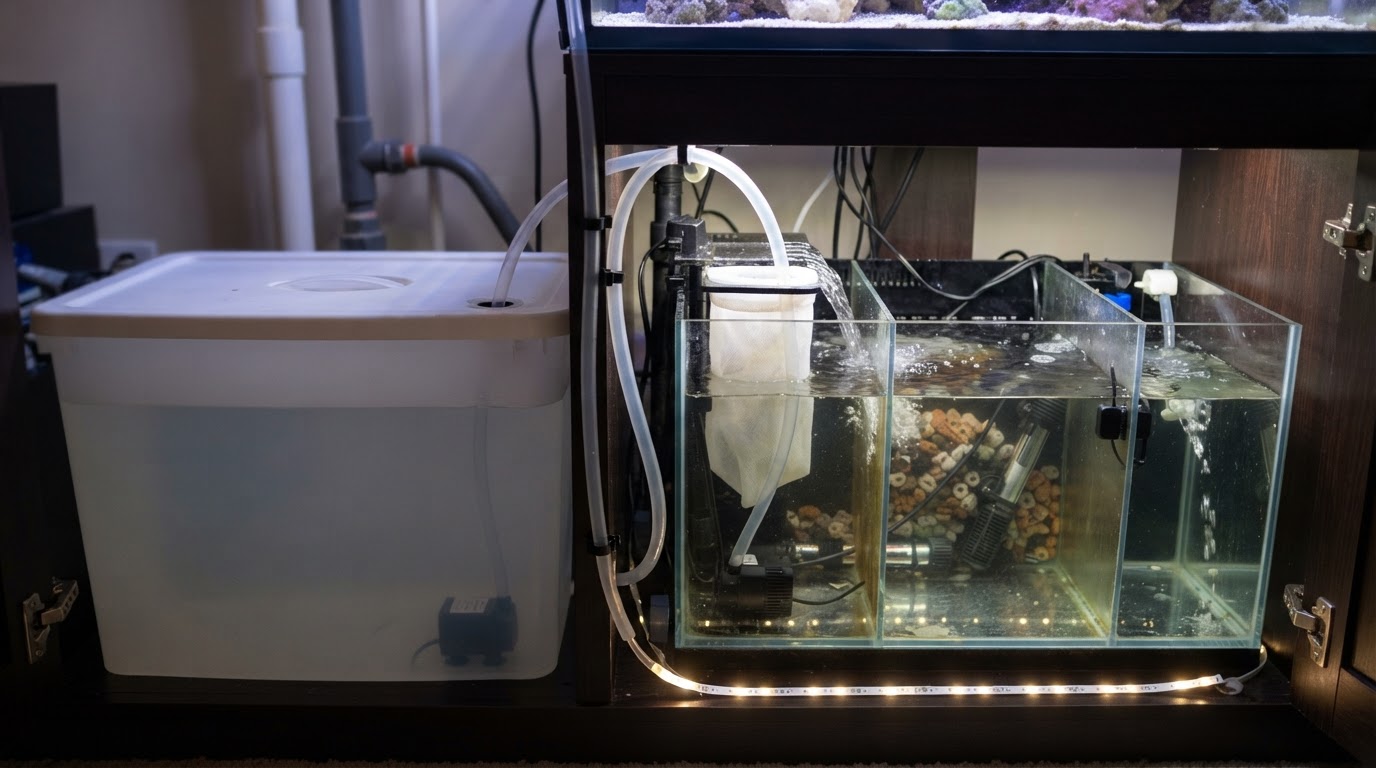
Evaporation leaves dissolved salts behind, so replacing lost volume with saltwater would push salinity higher. Use fresh RODI water for top-off, and cover the reservoir against dust. Mark a refill line to track consumption. If salinity has drifted upward, correcting it is a separate job; see how to lower salinity in an aquarium without stressing livestock.
An automatic top-off system does this continuously: a sensor detects the falling level and a pump adds fresh water until it returns. Tube routing, anti-siphon setup, sensor placement, and any maximum runtime cutoff depend on your unit, so follow that maker's instructions; there is no single required design. Test the safeguards your unit documents, and clean sensors and tubing on its schedule. A pump stuck on can overfill and dilute salinity; a pump stuck off lets salinity climb.
Covers, Fans, and Circulation Change More Than Evaporation
If the goal is to keep water from evaporating in a fish tank, covers and fans are the usual levers, but they are trade-offs, not free wins. A solid cover can reduce evaporation from exposed water, but it changes heat retention, humidity and gas exchange above the water; an open mesh top lets air move across the surface and should not be counted as an equivalent evaporation-reduction lever. A fan speeds loss while cooling the water. Surface movement and circulation support oxygen exchange and gas removal, so never obstruct gas exchange or slow flow your animals need just to shrink the top-off number. Choose covers, fans and flow for the animals first, then measure what it loses.
Recheck the daily number after any change to covers, fans, flow, room conditions, or air conditioning.
Keep the Number Current
Your reef tank evaporation rate is a measurement you own, not a specification you inherit. Mark the line, measure the fresh replacement water, average over enough days to see your own variation, rule out other losses, and size the reservoir with your written margin. Repeat the check after any change in lids, flow, room conditions, or equipment.