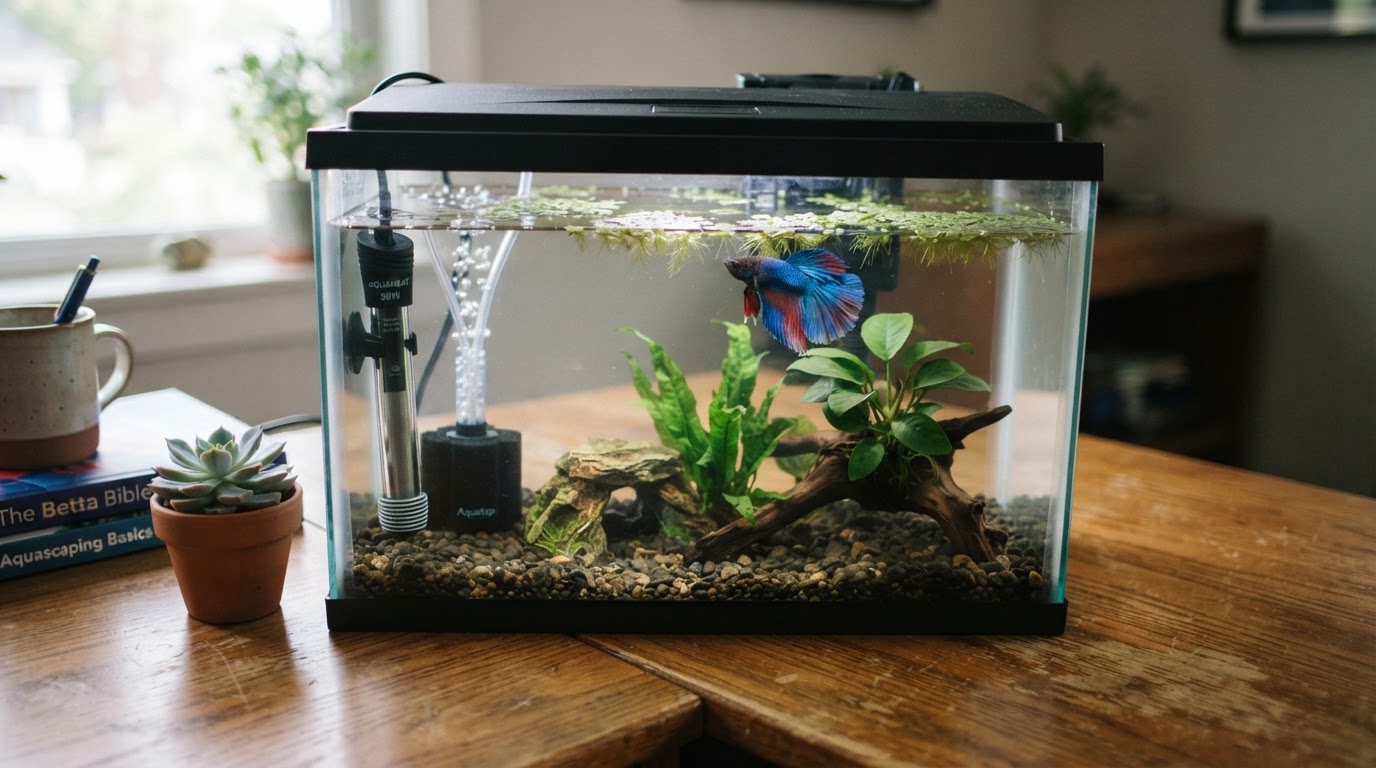
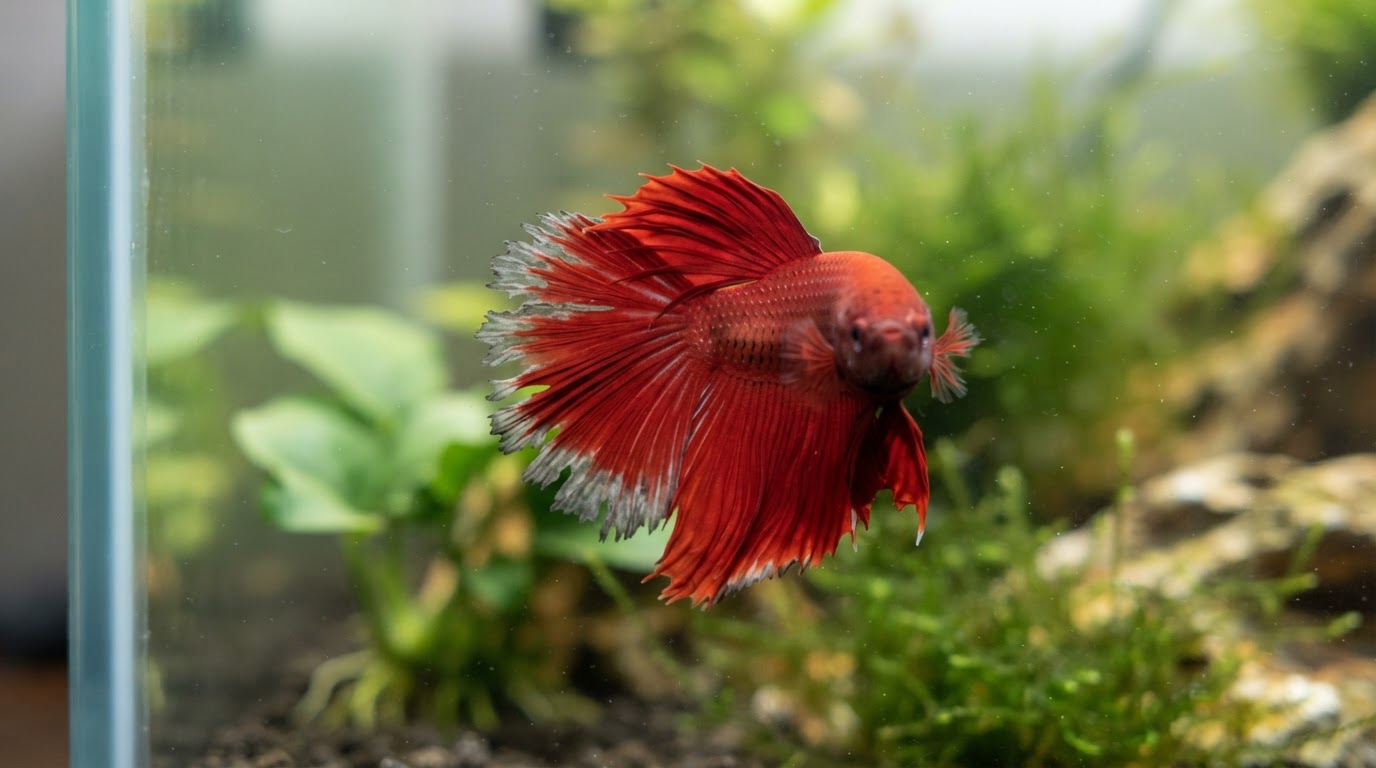
What a betta tank has to provide
Betta splendens is a tropical fish from slow, shallow, warm water — not a houseplant that happens to swim. Two practical consequences follow.
First, it needs the same stable, heated, filtered water as any other tropical fish. A 1-gallon bowl with no heater is not a smaller version of a proper tank; it is a different environment with no margin for error.
Second, bettas have a labyrinth organ, which lets them gulp air at the surface. That is why a betta can survive poor conditions far longer than most fish you could put in the same water. Surviving is not thriving. A betta that hangs at the surface and breathes heavily may be working around a problem you have not found yet.
The numbers worth memorizing:
Parameter | Practical target |
|---|---|
Minimum tank size | 5 gallons (19 L), heated and filtered |
Water temperature | 76–82°F (24–28°C) |
pH | 6.5–7.5 |
Ammonia and nitrite | 0 ppm |
Nitrate | under 20 ppm |
Water hardness | 2–15 dGH |
Typical lifespan | 2–5 years |
Treat those as starting targets rather than a contract. Your source water, tank volume and stocking decide what your tank actually settles at, and your own test results outrank any table — including this one. The ranges above are the ones Sea Life Planet publishes in its Betta splendens species profile and water-parameter table.
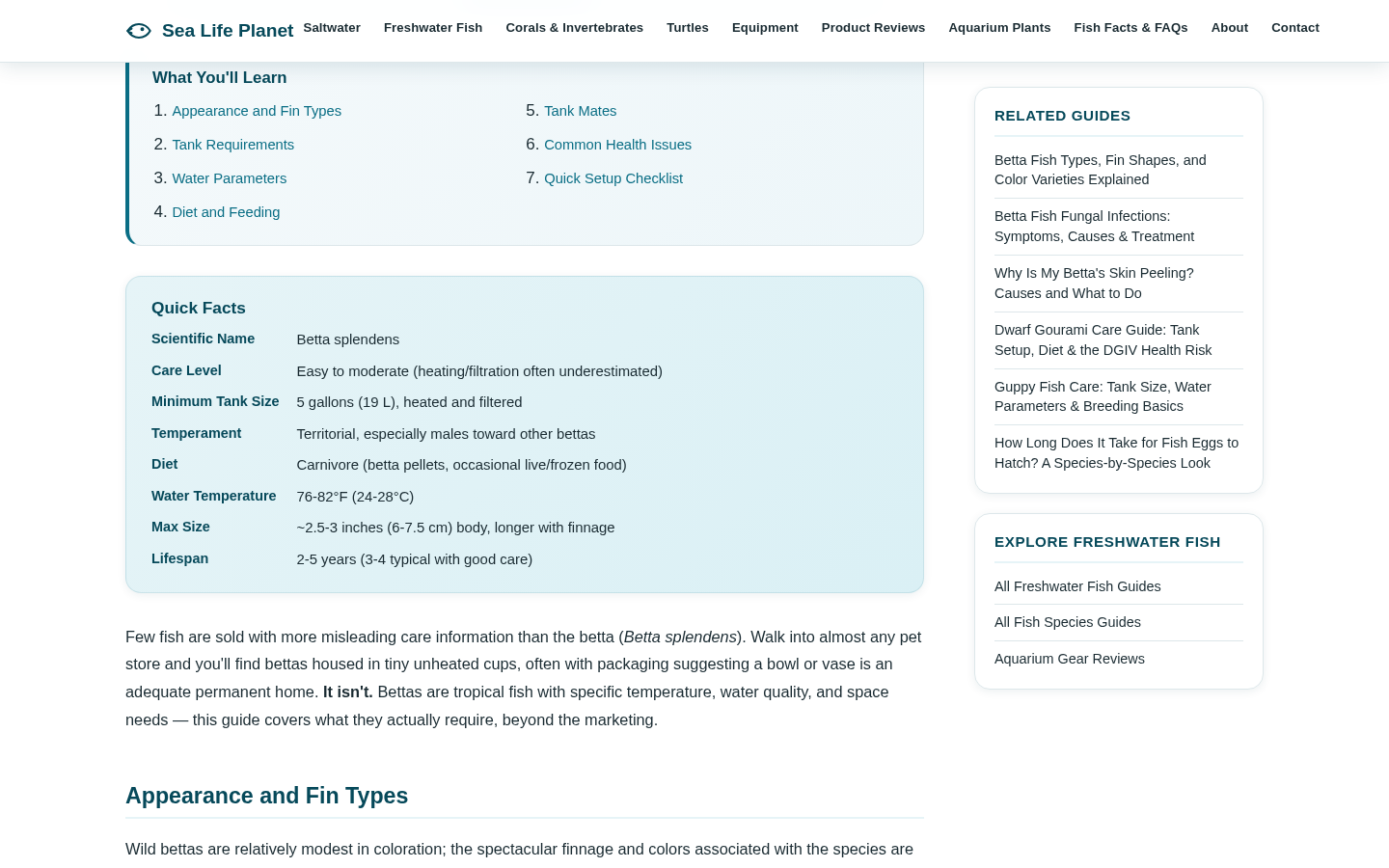
Flagship species guide framed mid-page: 'What You'll Learn' TOC edge above, full Quick Facts definition panel (Scientific Name, Care Level, Minimum Tank Size, Temperament, Diet, Wa
One more honest trade-off: small water volumes are less forgiving. A lightly stocked 10-gallon gives you more time to spot a problem than a 5-gallon at the same stocking level, and both are far easier to keep stable than a bowl.
Set the tank up before you buy the fish
A betta bought on impulse usually lands in whatever container is already wet. You can skip that entire class of problem by running the tank first.
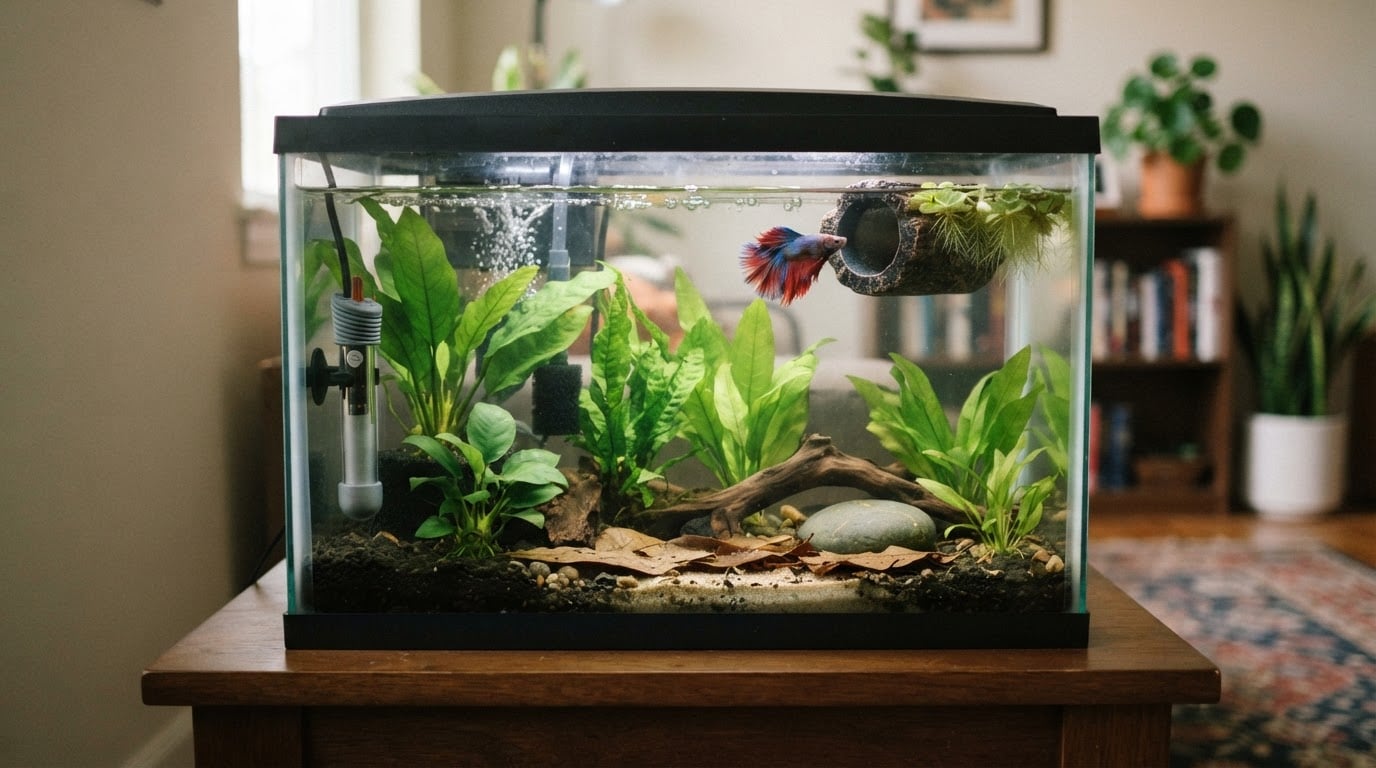
What you actually need:
- A tank with a lid. Bettas jump. An open top is a real risk, not a theoretical one.
- A heater, sized for the tank and the room, plus a thermometer you can read. The dial on the heater is a setting, not a measurement.
- A filter with gentle, adjustable flow. Bettas carry long, heavy fins and are weak swimmers in current. If the outflow pushes the fish around, baffle it or turn it down.
- Cover to break the current: live or silk plants, a floating log, a coconut shell or ceramic hide.
- Substrate and decor without sharp edges. Plastic plants and rough rock tear fins.
- A water conditioner (dechlorinator), a test kit for ammonia, nitrite, nitrate and pH, a siphon, and a bucket reserved for the tank.
Before any fish goes in, the tank has to cycle — a colony of nitrifying bacteria has to establish itself in the filter. A brand-new tank has none, so fish waste stays in the water as toxic ammonia. Feed the empty tank an ammonia source, test every day or two, and wait. The cycle is finished when ammonia and nitrite both fall back to 0 ppm between doses and nitrate starts to climb. That usually takes a few weeks, and it is the one part of betta fish care you cannot rush.
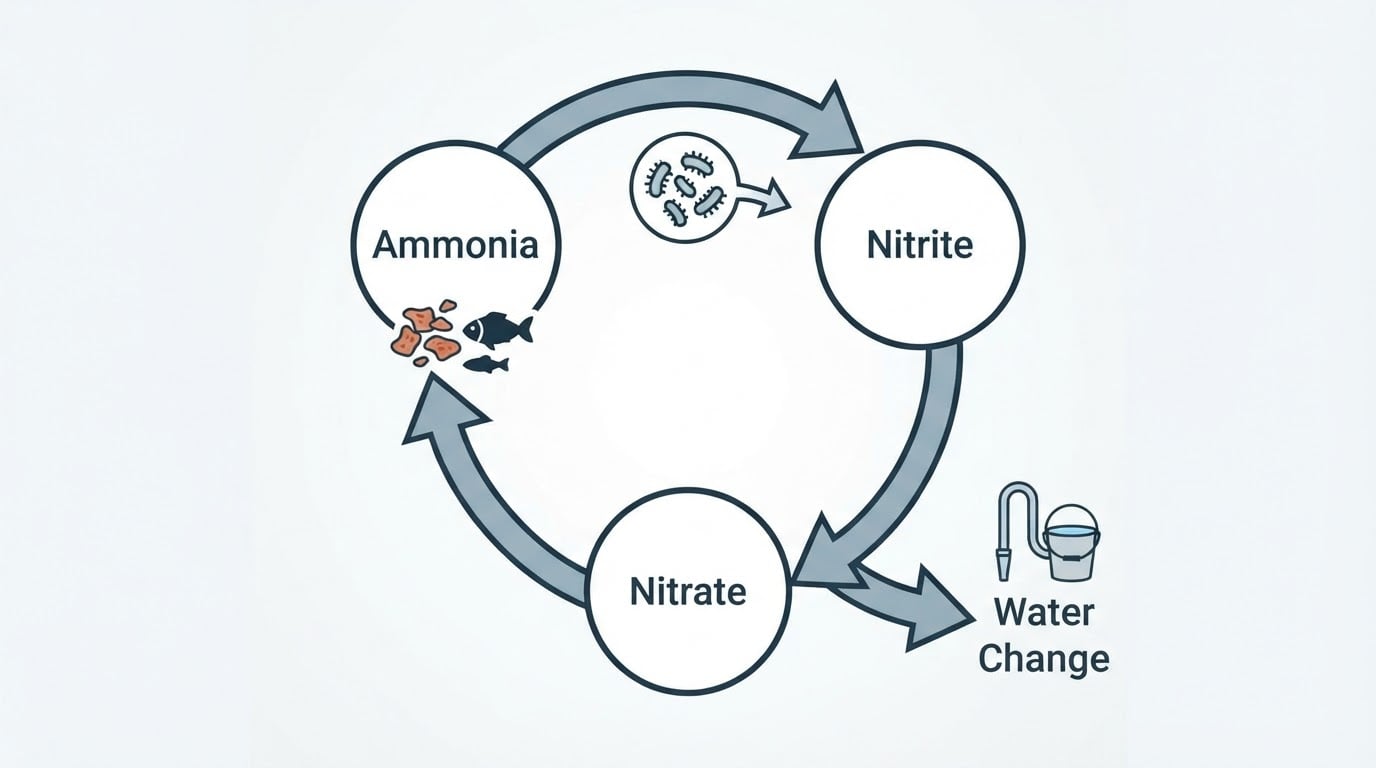
Completion standard: the tank clears its ammonia dose to 0 ppm by the next day, and the heater holds 76–82°F (24–28°C) overnight. That is your green light to buy the fish.
Put the tank on a stand rated for the filled weight, out of direct sun and away from heating vents, near an outlet. Fill it, run it for a day, and check for leaks and overnight temperature swings before the fish arrives. Acclimate a new betta by floating the bag and adding tank water gradually before release; a sudden change in temperature or chemistry is a stress event the fish does not need on day one.
Water and temperature: the two variables that matter most
Most betta health problems trace back to water — not the water in the marketing, the readings in your tank.
Temperature. Hold 76–82°F (24–28°C), and hold it steady. Heater failure is a common emergency, and warm-water fish cool down faster than most owners expect; how much time you have depends on the tank's volume. If your heater is cheap, read the thermometer daily and keep a spare.
pH. Somewhere in 6.5–7.5 is fine. Chasing an exact number with pH-up and pH-down additives usually creates swings, and a swinging pH is worse for a fish than a stable reading at the edge of its range. If your tap water already lands in the band, leave it alone.
Ammonia, nitrite, nitrate. Ammonia and nitrite should read 0 ppm at all times; anything else means the filter is not keeping up. Nitrate should stay under 20 ppm, and partial water changes are how you get it there.
The weekly partial water change. Change part of the water every week — around a quarter of the volume in a small, lightly stocked tank is a reasonable starting point — and size it so nitrate stays under 20 ppm. Match the new water to tank temperature, treat it with conditioner before it goes in, and unplug the heater while the water level drops. Never change all of the water, and never rinse filter media under the tap; that is where your bacteria live.
Two smaller habits matter more than they look. Top off evaporation with treated water, because evaporation leaves minerals behind and concentrates what is left in the tank. And keep the tank covered: a lid slows evaporation and keeps jumpers where they belong.
Feeding a betta without overfeeding it
Overfeeding is the most common mistake in betta care, and it punishes the fish twice — once through digestion, once through the water.
A betta's stomach is roughly the size of its eye. Two small meals a day, each about what the fish can finish in a minute or so, is plenty. Pellets formulated for bettas make a fine base; frozen or freeze-dried bloodworms and brine shrimp are treats, not the whole diet. Thaw frozen food before it goes in.
Then watch the result rather than the clock: the abdomen should return to normal within a few hours. A betta that still looks round after eating was fed too much. If a fish stops eating and looks bloated, skip a day, confirm that ammonia and nitrite are still at 0 ppm, and give it another day before reaching for a treatment. Many keepers also fast bettas one day a week; it is a harmless habit, not a requirement.
Remove uneaten food after a few minutes. Every pellet that sinks and rots becomes ammonia the filter has to process.
The weekly and monthly maintenance routine
Maintenance for a single betta is short. Doing it in the same order every week is what keeps it short.
Weekly, about half an hour:
- Test ammonia, nitrite, nitrate and pH, and write the numbers down. You are looking for trends, not single readings.
- Change roughly a quarter of the water, vacuuming the substrate as it drains.
- Rinse filter media in the water you just removed, never under the tap.
- Wipe the glass, and remove dead leaves and uneaten food.
- Compare the thermometer against the heater setting, and check that the filter is still moving water.
- Look at the fish: fins, color, appetite, breathing, any new spots or marks.
Monthly:
- Inspect the filter impeller, intake and tubing; clean them if flow has dropped.
- Check the heater cable, suction cups and lid.
- Confirm the test kit has not expired — an expired nitrate test can read misleadingly low.
- Check the stand and the tank seams for moisture.
What not to do: no full teardown, no replacing all the filter media at once, no soap or household cleaners anywhere near the tank or its bucket. Cleaning too thoroughly causes more crashes than cleaning too little.
Health basics: read the water before you read the fish
The signs worth watching for in a betta: loss of appetite, clamped fins, hanging at the surface or sitting on the bottom, a sudden color shift, frayed or white-edged fins, cottony patches, pale peeling patches, or a swollen body.
When you see one, work in this order:
- Test the water. Ammonia, nitrite, nitrate, temperature. Fin rot, paleness and listlessness usually start here.
- Change part of the water with temperature-matched, conditioned water, and cut feeding for a day or two.
- Check flow and tankmates. Fin damage can come from a filter that is too strong or from a fish that will not leave yours alone.
- Then consider treatment. Medication is a second step, not a first one. Match it to a specific problem instead of adding a broad-spectrum product to the tank and hoping.
- Get help if it persists. A fish that has stopped eating for more than a couple of days, or that has an obvious wound or growth, needs more than a water change. Look for a veterinarian who treats aquatic animals.
The honest limitation: water quality explains a large share of what goes wrong, not all of it. Fin rot and nipped fins look alike; a fungal patch and a bacterial one look alike. Guess wrong and you lose days. Correcting the water first, then treating something specific, is how you avoid treating the wrong thing.
On tankmates. Two male bettas can never share a tank. A betta on its own is a complete, valid setup, and it is the setup that fails least often. If you do add tankmates, do it in a tank big enough for both species' requirements, and watch for nipped fins and hiding — the early signs that the arrangement is not working.
Common betta care questions
Can a betta live in a bowl? Only as a temporary container. A bowl is unheated, unfiltered, and too small to hold stable water. Bettas tolerate it because they can breathe air — which is exactly why the decline is easy to miss.
Does a betta need a heater? Yes, unless the room holds 76–82°F (24–28°C) year-round. The swing is the problem, not only the cold.
How often do I change the water? Weekly, in a partial change sized to keep nitrate under 20 ppm. Test more often if the tank is small, new, or heavily stocked.
What is the minimum tank size? 5 gallons (19 L), heated and filtered. Ten gallons is easier to keep stable and gives you more margin when equipment fails.