Fin rot is a water-quality problem wearing a costume
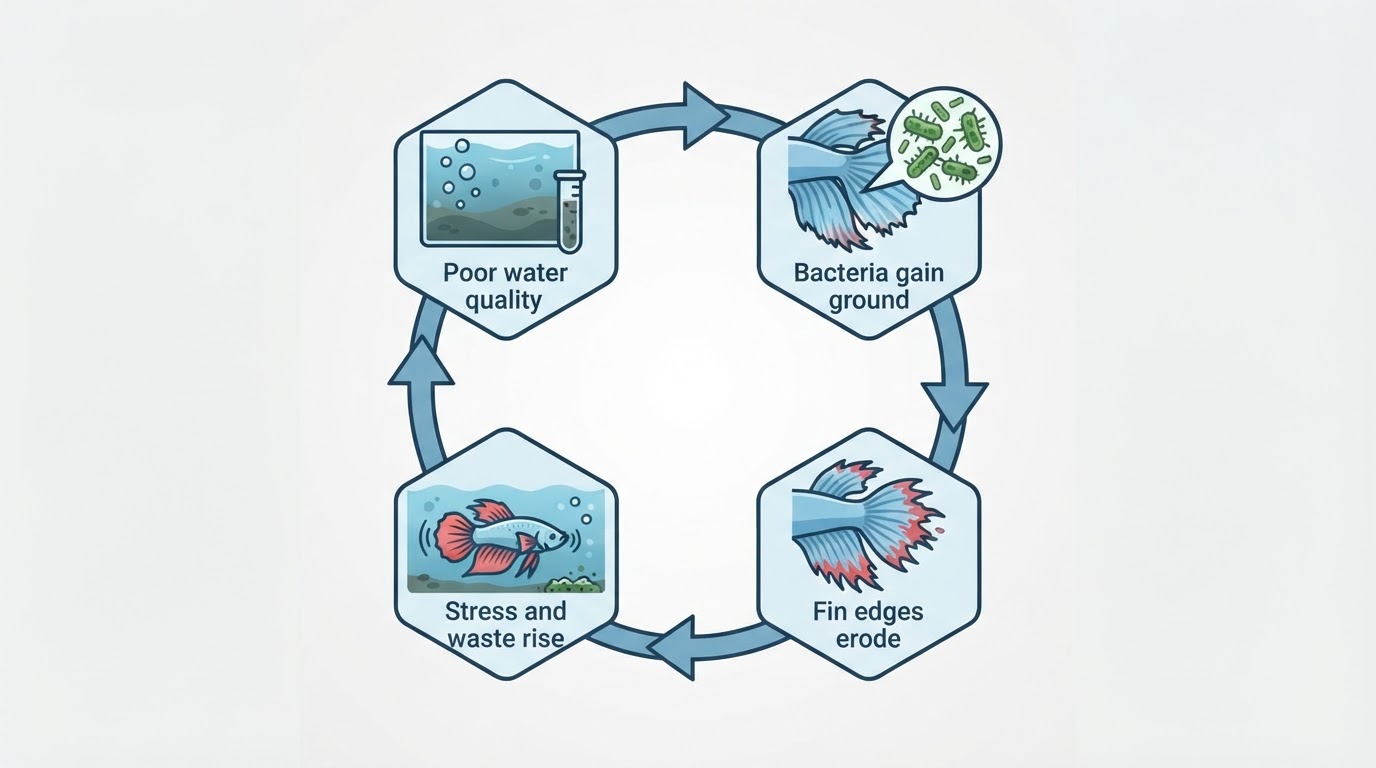
The bacteria behind fin rot are already in your aquarium. They are not a rare invader you catch from a bad fish; they are part of the normal tank environment, and a healthy betta with stable water and low stress keeps them from gaining ground. What tips the balance is almost always environmental — ammonia or nitrite creeping up, a temperature swing, filtration that is not keeping up, or a fish worn down by a small, unheated container.
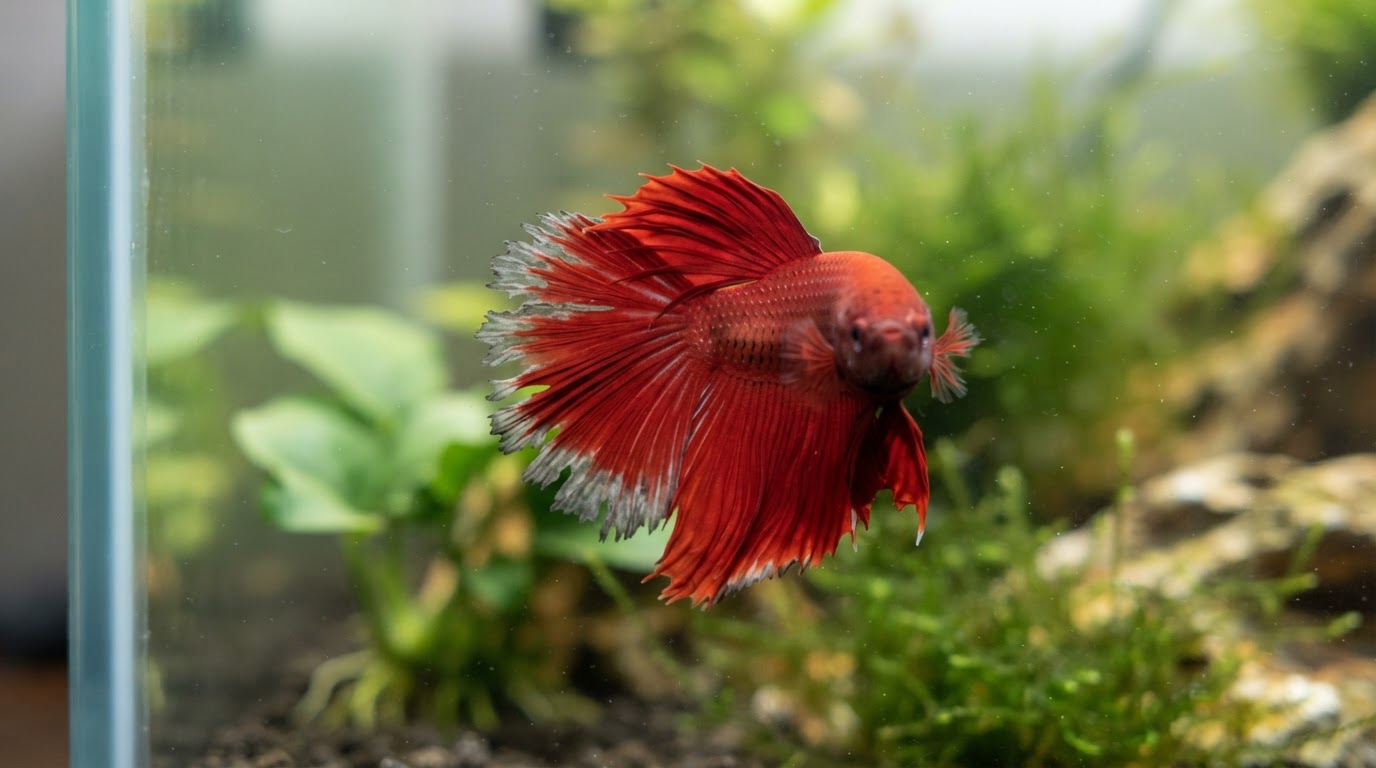
The visible damage follows a fairly predictable progression. Early on, the edges of the tail or dorsal fin look ragged and slightly pale or grey. As it advances, tissue erodes from the edges inward, the margin can look darker or frayed, and the base of the fin where it meets the body may look red or inflamed. When erosion reaches that base and moves quickly, you are no longer dealing with a mild case.
That is why the fin is a symptom rather than the disease. Treat the fin alone and it keeps coming back.
Diagnose before you dose
Four checks decide the whole plan, and three of them have nothing to do with medication.
Test the water first
Ammonia and nitrite should read 0 ppm. Nitrate should stay below 20 ppm. A betta's water should sit somewhere around pH 6.5–7.5 with general hardness (dGH) in the 2–15 range. Test before a water change and again after it, so you can see which direction the tank is moving instead of guessing from one reading.
Check temperature and stability
Bettas do best between 76–82°F (24–28°C). Stability matters as much as the number, so an undersized heater in a small volume of water is a problem even when the average looks fine on paper.
Check the tank itself
The realistic minimum is 5 gallons (19 L), heated and filtered. Beyond that, look for the physical stressors that damage fins: a filter intake that catches a long tail, sharp decor or rough rockwork in a tank where the fish likes to squeeze into gaps, and flow strong enough to keep a heavy-finned betta pinned in one corner.
Read the fin properly
Look at what the tissue is doing. A ragged edge with a pale or translucent margin usually means the damage is at the surface. A dark or red margin with tissue disappearing toward the body, fins held clamped, and a fish that stops eating is a different situation, and it moves faster. This one distinction changes how aggressively you treat, so make the call before you open any bottle.
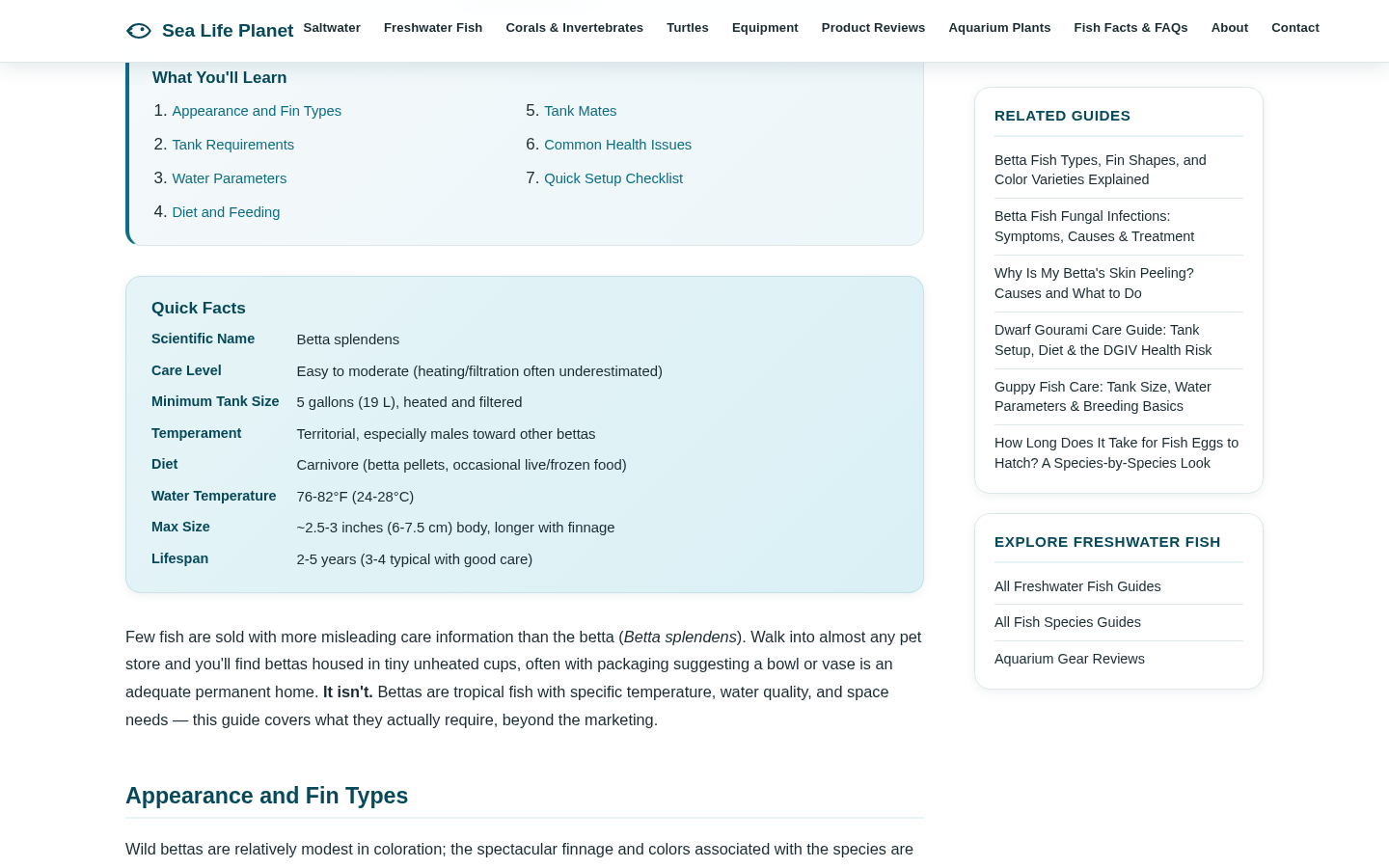
For the species-side numbers in one place, Sea Life Planet's betta care guide packs the tank size and water temperature into a Quick Facts panel alongside water-parameter targets, then covers the common health issues that show up in bettas — fin rot among them. Read it as the baseline; the checks above are what you act on today.
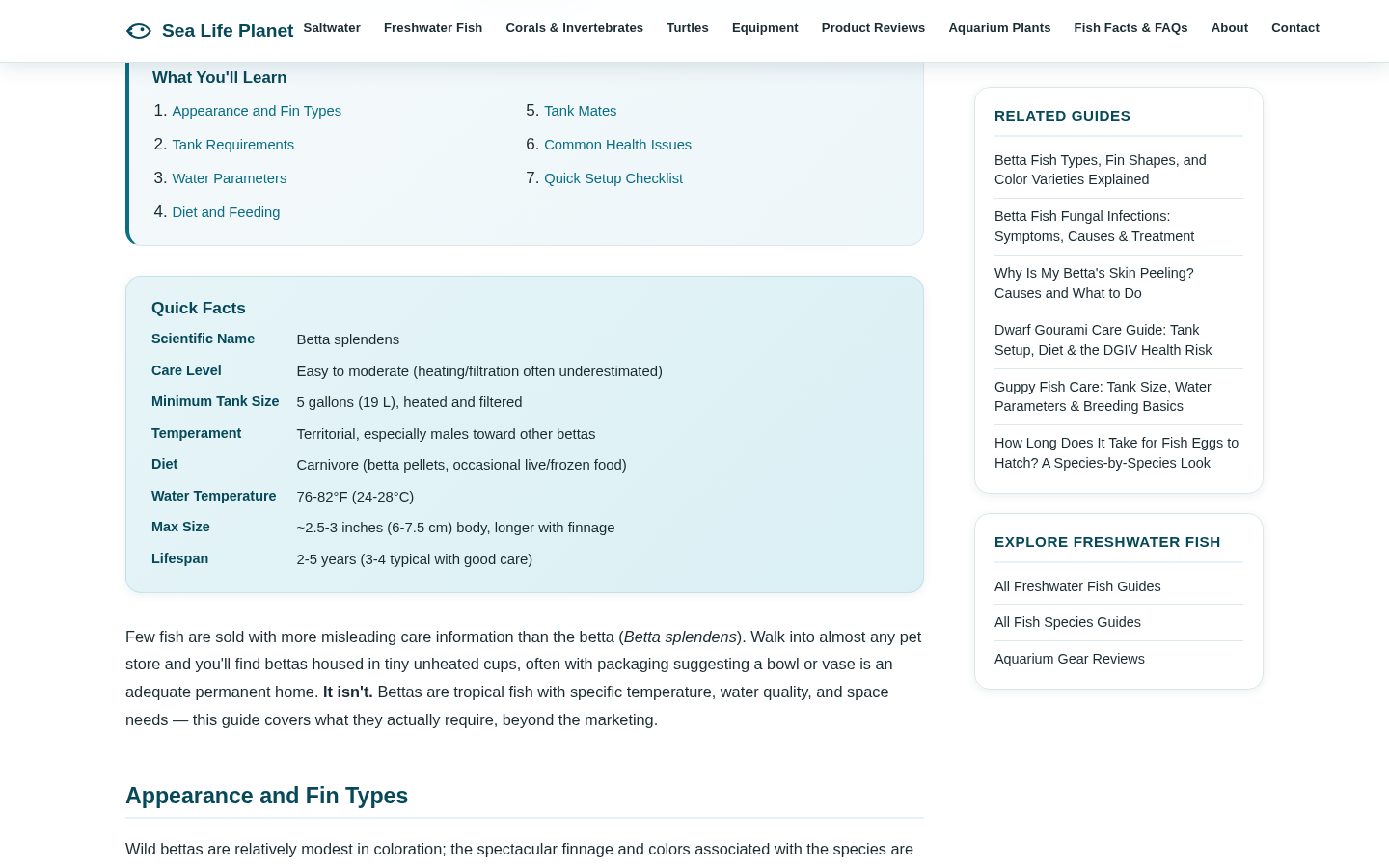
Flagship species guide framed mid-page: 'What You'll Learn' TOC edge above, full Quick Facts definition panel (Scientific Name, Care Level, Minimum Tank Size, Temperament, Diet, Wa
Rule out the look-alikes before you treat
Fin rot is a diagnosis of exclusion more often than people expect, because several other problems produce similar-looking fins.
- Fin nipping. Bettas are notorious for biting their own tails, especially in cramped or high-flow tanks. Nipping tends to leave chunks missing with relatively clean edges, and the fish usually acts otherwise normal. Rot looks frayed along the edge and often carries a white, grey, or red margin instead.
- Fin melt. Rapid, runaway erosion with an inflamed base and a fish that has gone quiet is a more serious bacterial problem than slow edge fraying. It needs the aggressive route, not another week of monitoring.
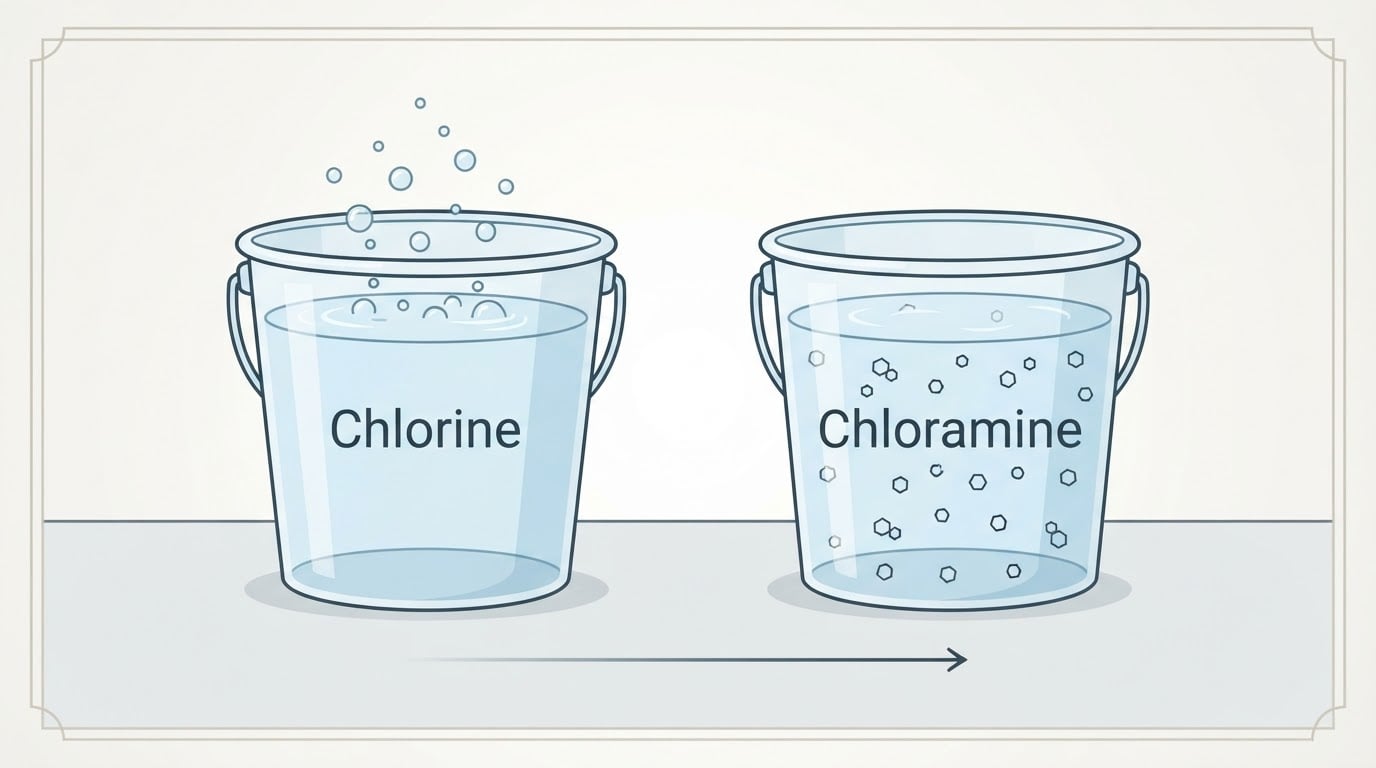
- Mechanical or chemical damage. An intake, sharp decor, chlorine or chloramine from a water change that skipped dechlorinator, or a pH crash can all shred fins without any infection involved.
- New growth. Regrowing tissue often comes in translucent, clear, or pale before it colors up. It can look worse than it is — do not restart medication just because the new edge reads as white.
- Fungal or other secondary infection. Once tissue is damaged, a cottony or woolly growth can appear on top of the original problem, which changes what you are treating.
The treatment ladder
Step 1: Fix the water — this is the treatment
Do partial water changes with temperature-matched, dechlorinated water, and vacuum the substrate while you are in there. Rinse filter media in removed tank water, never under the tap; the bacteria living in that media are what keep ammonia at zero, and killing them restarts the problem you are trying to solve.
Step 2: Remove the stressor
Match the fix to the cause you found: drop the flow, move the decor, add a pre-filter sponge to the intake, correct the heater, or move the fish out of the container that cannot hold a stable temperature. A stressed fish repairs tissue slowly no matter what you add to the water.
Step 3: Add supportive care, not a cure
Aquarium salt is one of the most common supporting measures for fin damage, and it is support — not a substitute for water quality. Follow the label, keep it out of tanks with plants, snails, and invertebrates that tolerate it badly, and do not treat it as the whole plan.
Step 4: Treat with medication only when the fin is actively eroding
If tissue is disappearing, the fin base is red or inflamed, or erosion continues after the water is corrected, an antibacterial aquarium treatment labelled for fin rot is the usual next step. Two practical points: run the course in a separate hospital tank where you can, and remember that activated carbon strips medication out of the water, so keep it out during treatment unless the product says otherwise. Do not stack several products at once; a stressed fish does not need three overlapping treatments.
Step 5: Keep the tank boring while it heals
Small, frequent water changes, light feeding, steady temperature, and no new tank mates. Recovery is a low-stress waiting game, and every spike in the tank is a setback.
What improvement actually looks like
- The first sign is subtraction. Within a few days of corrected water, you should stop finding new missing tissue. The erosion stopping is progress even if nothing looks better yet.
- Then a new margin. Within a week or two, a thin translucent or pale edge typically appears along the damaged fins. That edge is new tissue.
- Then thickness and color. Over the following weeks, that tissue fills in and colors up. Regrowth is uneven and not linear, and after severe damage the fin may never match its original shape, length, or color exactly.
- If nothing changes, re-test the water instead of adding a second medication. Unfinished erosion usually means an unfinished water problem, not an under-medicated fish.
The mistakes that make it worse
- Dosing medication into dirty water, which treats the symptom and leaves the cause running.
- Tearing the tank down and sterilizing the filter, which crashes the cycle and recreates the water quality that caused the rot.
- Stopping water changes once medication starts, as if the bottle replaced maintenance.
- Adding a second product after two days because the first one has not visibly worked yet.
- Using salt as a cure, then wondering why the fins keep eroding.
- Reading translucent new growth as spreading rot and restarting treatment unnecessarily.
- Treating a whole community tank with invertebrates and plants when a hospital tank would have been safer.
When it is more than fin rot
Some versions of this problem are not solved by clean water and a labelled course of treatment. Get more help — an aquatic vet, if you have access to one — when the rot crosses the base of the fin onto the body, when fins disappear in a matter of days with a red or white inflamed base and a fish that has stopped eating, when a cottony growth appears over the damaged tissue, or when other fish in the tank develop lesions at the same time. The water correction still applies. It just is not sufficient on its own.
Quick answers
Can fin rot heal without medication?
Mild, early fin rot often improves with water correction alone, because the water quality was the problem. If tissue is actively disappearing, support alone is usually not enough.
Should I treat the whole tank or set up a hospital tank?
A hospital tank is easier on the rest of the tank: you avoid medicating invertebrates and plants, you can control the dose, and you do not disturb the main tank's filtration.
How long does betta fin rot treatment take?
Days for the erosion to stop, one to two weeks for new tissue to appear, and several weeks or longer for fins to fill in. Severe damage can leave permanent changes.
Does aquarium salt cure fin rot?
No. It is supportive care, not a treatment for the underlying cause. Clean, stable water is the treatment.
Is fin rot contagious?
Not in the way a parasite is. The bacteria are already present in the tank, so the useful question is which conditions let them take hold — and those conditions affect every fish sharing the water.