
Betta Fish Care:
Tank Size, Heating,
Feeding, and Lifespan
A betta does well in a tank that is larger, warmer, and steadier than most pet-store cups. This guide walks through each part in order, so you can check your setup before you bring a betta home.
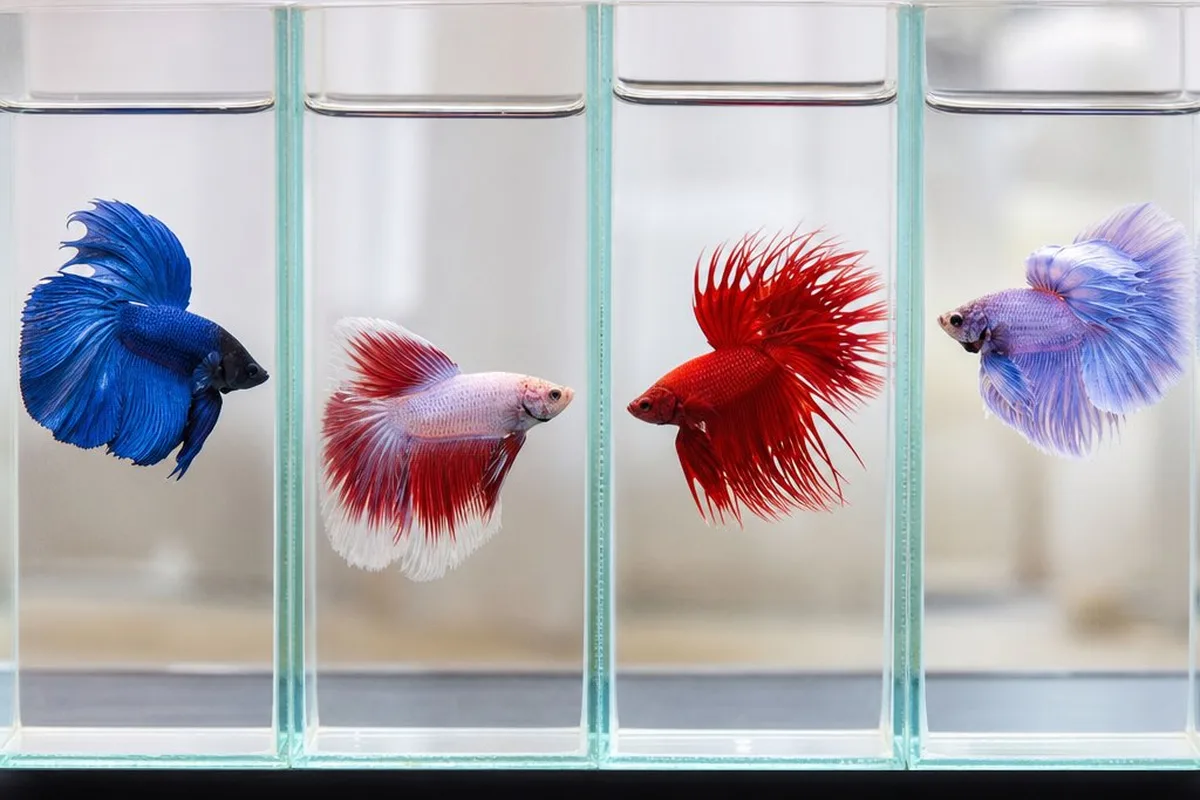
Bettas come in many fin types. The basic care needs are the same.
Quick Facts
| Item | Detail |
|---|---|
| Scientific name | Betta splendens |
| Care level | Easy to moderate. Heating and filtration are often underestimated. |
| Minimum tank size | 5 gallons (19 L), heated and filtered |
| Water temperature | 76–82°F (24–28°C) |
| Temperament | Territorial, especially males toward other bettas |
| Diet | Betta pellets, with occasional live or frozen food |
| Maximum size | About 2.5–3 inches (6–7.5 cm) body length, longer with fins |
| Lifespan | 2–5 years, typically 3–4 years with good care |
Start with a 5-gallon tank
Many forum threads still argue about whether a 3-gallon tank is enough. A 3-gallon can work for an experienced keeper with a well-planted tank, a reliable heater, a filter, and regular water changes. For most people, a 5-gallon tank is the safer start, because the water holds its temperature and quality for longer between problems.
Smaller tanks change faster. Temperature drops quicker when the heater fails, ammonia builds faster when a meal is overfed, and a single missed water change matters more. A larger volume gives you more time to notice and correct each problem.
When a smaller tank carries more risk
- The tank is unheated or the room temperature swings.
- The water is changed irregularly or the filter is not cleaned.
- The tank has no plants or hiding places, so the betta has little space to rest.
- The owner plans to add a second fish to the same tank.
Check your volume with the tank volume calculator. Measure the length, width, and water depth, and the calculator returns the gallons and liters you have.
Use the Aquarium Tank Volume Calculator →→Keep the water at 76–82°F (24–28°C)
Bettas are tropical fish. A heater keeps the water in the 76–82°F (24–28°C) range, even when the room gets cold at night or during the day.
Use a heater with a built-in thermostat, and place it in the water according to its instructions, so the water circulates past it. Set the heater to a temperature within the range, then check it with a separate thermometer over several days.
Checks for a steady temperature
- Place the thermometer on the opposite side of the tank from the heater.
- Read it once in the morning and once in the evening for the first week.
- If the temperature moves outside 76–82°F (24–28°C) for more than a day, check the heater setting and the room temperature before you change anything else.
Choose gentle filtration
Bettas have long fins and prefer slow water. A low-flow filter cleans the tank without pushing the fish around. Strong currents tire a betta and can tear its fins.
A filter should turn over the whole tank volume several times an hour, and a low-flow setup keeps that movement gentle. Use the filter turnover calculator to check your current filter's rate against your tank size.
Use the Aquarium Filter Turnover Calculator →Rinse the filter media in tank water during water changes, not in tap water, so the beneficial bacteria that break down ammonia are kept.
Keep the water in range
Test the water before you add a betta, and again when something changes. The targets below are the ranges to aim for.
| Measure | Target |
|---|---|
| pH | 6.5–7.5 |
| Ammonia | 0 ppm |
| Nitrite | 0 ppm |
| Nitrate | Under 20 ppm |
| General hardness | 2–15 dGH |
A tank that has not finished cycling still shows ammonia or nitrite, and those readings are the signal to wait before adding a fish. The fishless cycle calculator shows how much ammonia to dose to start that process without a fish in the tank.
Use the Fishless Cycle Ammonia Dosing Calculator →Change part of the water on a regular schedule. Replace the water that is removed with water that matches the tank's temperature, and treat tap water with a conditioner before it goes into the tank.
Feed small meals and watch what is left
Betta pellets make up the base of the diet. Add live or frozen foods now and then as a treat, not as the main diet.
Offer a small portion that the betta finishes in about two minutes. Feed once or twice a day. Remove any food that sinks to the bottom and is not eaten.
Signs of overfeeding
- Uneaten food collects on the gravel or substrate.
- The water clouds faster between water changes.
- The betta looks bloated or stops moving normally between meals.
When you see these signs, cut the portion size before you change anything else. Check the water readings in the water-quality table above.
What to expect for lifespan
A betta usually lives 2–5 years. Owners who keep the temperature steady, test the water, and feed small portions often see 3–4 years.
The same habits that keep a betta healthy also keep its lifespan on track: a heated and filtered tank of at least 5 gallons, water in range, and a varied diet of betta pellets with occasional live or frozen food.
Tank mates and breeding
This guide covers the single-betta care basics. For tank mates and breeding, see the freshwater fish guides.
Browse Freshwater Fish Guides →Common questions about betta fish care
Can a betta live in a 3-gallon tank?
Yes, for an experienced keeper with a well-planted, heated, and filtered tank and regular water changes. A 5-gallon (19 L) tank is the safer start because it holds temperature and water quality more steadily.
Does a betta need a heater?
Yes. Bettas are tropical fish and need water at 76–82°F (24–28°C). A heater with a thermostat keeps the water in that range when room temperatures change.
Is the same setup right for a female betta?
The heating, filtration, water-quality, and tank-size guidance above applies to a single female as well. Keeping females together in one tank is outside the scope of this guide.
How often should I feed a betta?
Feed once or twice a day, with a portion the betta finishes in about two minutes. Remove food that is not eaten.
How long does a betta live?
A betta usually lives 2–5 years, and often 3–4 years with good care.
Check your setup before you buy
Use the tools below to check the tank volume, filter flow, and cycling dose before the betta comes home.
Ensure your habitat is ready for Betta splendens.