Oscar Fish Care Guide

Oscar Fish Care: Tank Size, Filtration,
Feeding and Lifespan

Oscars grow large and produce a lot of waste. Most health problems in this species start with a tank that was sized for the juvenile instead of the adult, or with filtration and feeding that did not keep up with the fish's size.

What an oscar fish is and how big it gets

The oscar is a large cichlid from the Amazon basin and nearby river systems. Its scientific name is Astronotus ocellatus. Aquarists also know it as the Tiger Oscar, Velvet Cichlid, or Marble Cichlid.

Buy and plan for the adult fish. Juveniles look small, but they grow quickly and reach their full size in a home tank.

Quick Facts

FactDetail
Scientific nameAstronotus ocellatus
Common namesTiger Oscar, Velvet Cichlid, Marble Cichlid
Native rangeAmazon basin (Brazil, Colombia, Ecuador, etc.)
Adult lengthUp to about 70 cm (28 in)
DietOmnivore; meaty foods for carnivorous fish

Choose a tank for the adult fish

Tank size is set by the water volume, not by the fish's length alone. Measure the tank's length, width, and water depth, then compare the volume against the adult size. An adult oscar needs room to turn around and enough water to dilute its waste between water changes.

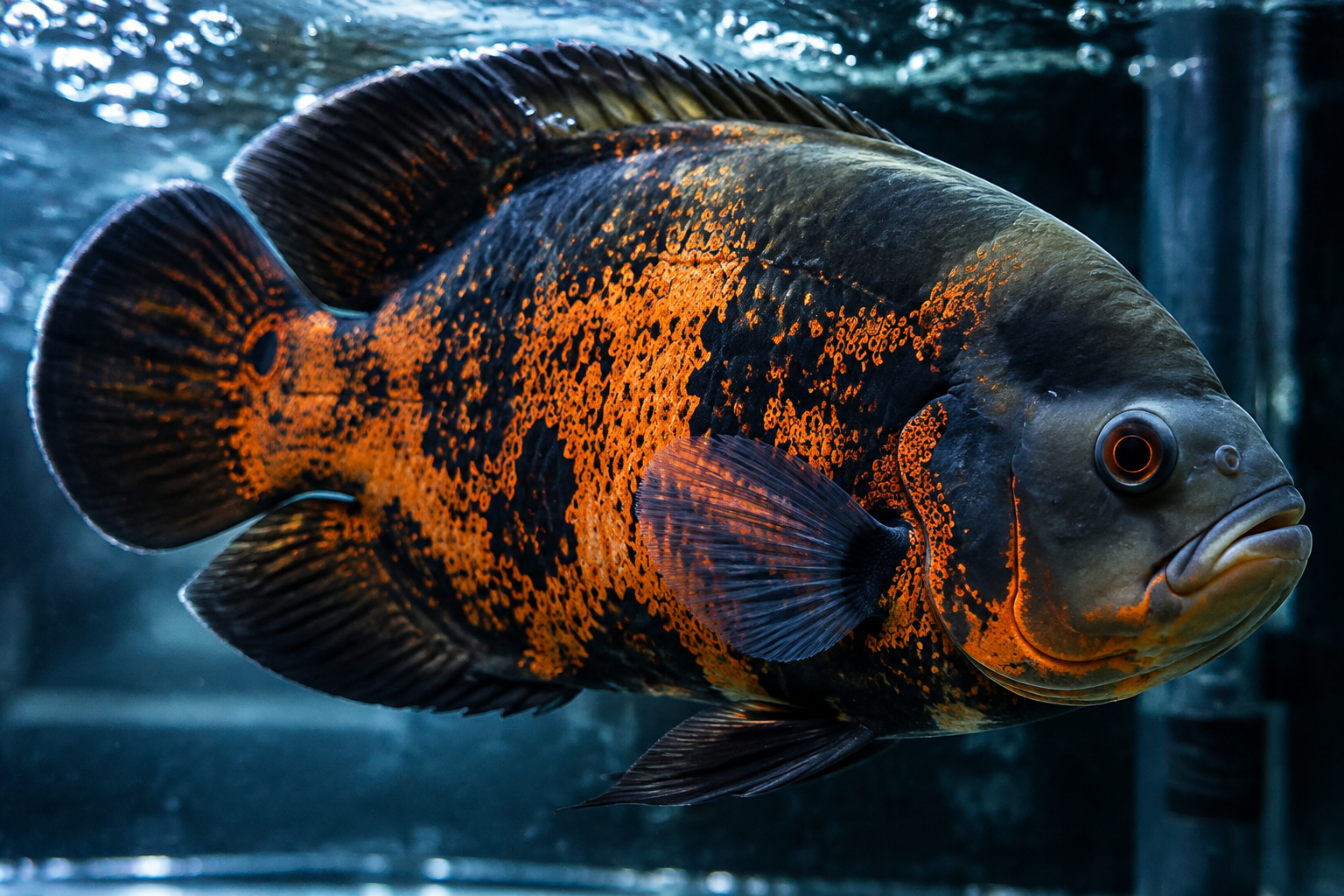
Adult Tiger Oscar swimming in a large aquarium

Start with the adult tank, not a smaller "starter" tank that you plan to upgrade later. Moving a fish into a larger tank later is stressful for the fish and expensive for you.

  1. 1

    Choose the adult-size tank before you buy the fish.

  2. 2

    Work out the water volume from the tank's dimensions.

  3. 3

    Place the tank where it will not be moved, because a large tank is heavy when full.

Filtration and water quality for a heavy waste load

Oscars eat a lot and produce a large amount of waste. Choose filtration rated for a tank larger than the one you own, and fill the filter with biological media that has a large surface area for bacteria.

Before adding the fish, cycle the new tank so that bacteria can convert ammonia into less harmful compounds. A fishless cycle lets you dose ammonia and track the process without putting the fish at risk.

Plan your ammonia dose

Routine Care

After the cycle, run a steady routine: test ammonia, nitrite, and nitrate on a fixed schedule, and do partial water changes whenever the readings rise.

Check your filter turnover →
  • Cycle the tank before adding the fish.
  • Choose a filter rated above volume.
  • Test the water on a fixed schedule.
  • Make water changes when readings rise.

Feeding: diet, portions, and routine

In the wild, oscars eat mostly other fish, along with shrimp, snails, insects, insect larvae, and seasonally fruit and nuts. In captivity, the most practical diet is a quality pellet or granule formulated for large carnivorous cichlids, with meaty foods such as shrimp, worms, insects, and fish fillet offered as extras.

"Oscars need vitamin C in their diet. Use a food that lists it, or add a vitamin C supplement made for fish."

Feed a small portion the fish finishes within a few minutes. Remove any uneaten food from the tank, because it decays and fouls the water. Set a fixed feeding routine rather than feeding every time the fish approaches the glass.
Cichlid Pellets (Staple)
Meaty Treats (Weekly)
3-Minute Portions
Remove Uneaten Food

Lifespan and the health problems that shorten it

Lifespan depends most on three things: water quality, the diet you feed, and whether the tank was large enough from the start. Stable water and a consistent diet do more for a long life than any single product.

Early Warning Signs

  • The fish stops eating or hides more than usual.

  • Fins are held close to the body or look ragged.

  • The fish gasps at the surface or breathes rapidly.

  • Spots, white patches, or sores appear on the body.

Most problems in home tanks trace back to water quality. Test first, correct the water, and then decide whether the fish needs treatment.

Setup checklist from first day to routine care

01

Measure the tank and calculate the volume.

02

Choose a filter rated above the tank volume.

03

Cycle with ammonia and confirm before adding fish.

04

Add the fish to a tank sized for the adult.

05

Feed once a day on a schedule, remove leftovers.

06

Test water regularly and perform partial changes.

Frequently Asked Questions

How big do oscar fish get?

Reports put adult oscars at up to about 70 cm (28 in) in length. Plan the tank for that size.

Can an oscar live in a small tank?

An oscar kept in a small tank grows poorly and is more likely to develop water-quality problems. Choose the tank for the adult fish from the start.

What do oscar fish eat?

In captivity, oscars do well on pellets for carnivorous cichlids, with meaty foods like shrimp and worms as extras. They need vitamin C.

Does a new oscar tank need to be cycled first?

Yes. Cycle the tank before adding fish so bacteria can process ammonia. A fishless cycle is the safest method.

How often should I change the water?

Use a fixed schedule of partial water changes, adjusted based on your water tests. Rising ammonia or nitrates are signals to change more water.

Plan your oscar tank in minutes

Start with the tank volume and filter turnover. Both calculators work from your tank's dimensions, so you can check the numbers before you buy equipment.

Free tools for better aquarium care