What a freshwater clean up crew actually does
A clean up crew is maintenance support, not a cleaning service. Snails, shrimp, and bottom-dwelling fish consume part of the algae, uneaten food, and organic debris that accumulate in a stocked tank. They do not remove waste from the system — they process some of it and add their own. The practical benefit is a slower buildup of visible mess and less manual removal between water changes, not a tank that cleans itself.
That distinction matters when you plan a stocking list. Every crew member is a living animal with its own oxygen demand and its own waste output. If the real problem is overfeeding, a large crew simply converts the extra food into a larger snail or shrimp population. Fix the input first, then choose the animals that match the leftover work.
Key answers at a glance
- What belongs in a freshwater clean up crew? Snails, shrimp, and small bottom-dwelling fish — each group covers a different part of the tank.
- Which group works on algae? Snails graze glass and hardscape, shrimp and small sucker-mouth catfish work on plant leaves, and bristlenose-type plecos rasp hard surfaces.
- Can a crew replace water changes and gravel vacuuming? No. It reduces visible debris; it does not remove dissolved waste.
- Will my fish eat the crew? Some will. Loaches, puffers, many cichlids, and some bettas treat shrimp and small snails as food.
- How many should I add? Start with a small group, let the tank adjust, and add more only if the crew is keeping up.
- Do snails always become a pest? No. Population growth follows the food supply, so heavy reproduction is usually a feeding problem.
- Are all "algae eaters" suitable? No. Some grow large, some need an established tank, and some are best left out of a community setup.
Snails: the grazers
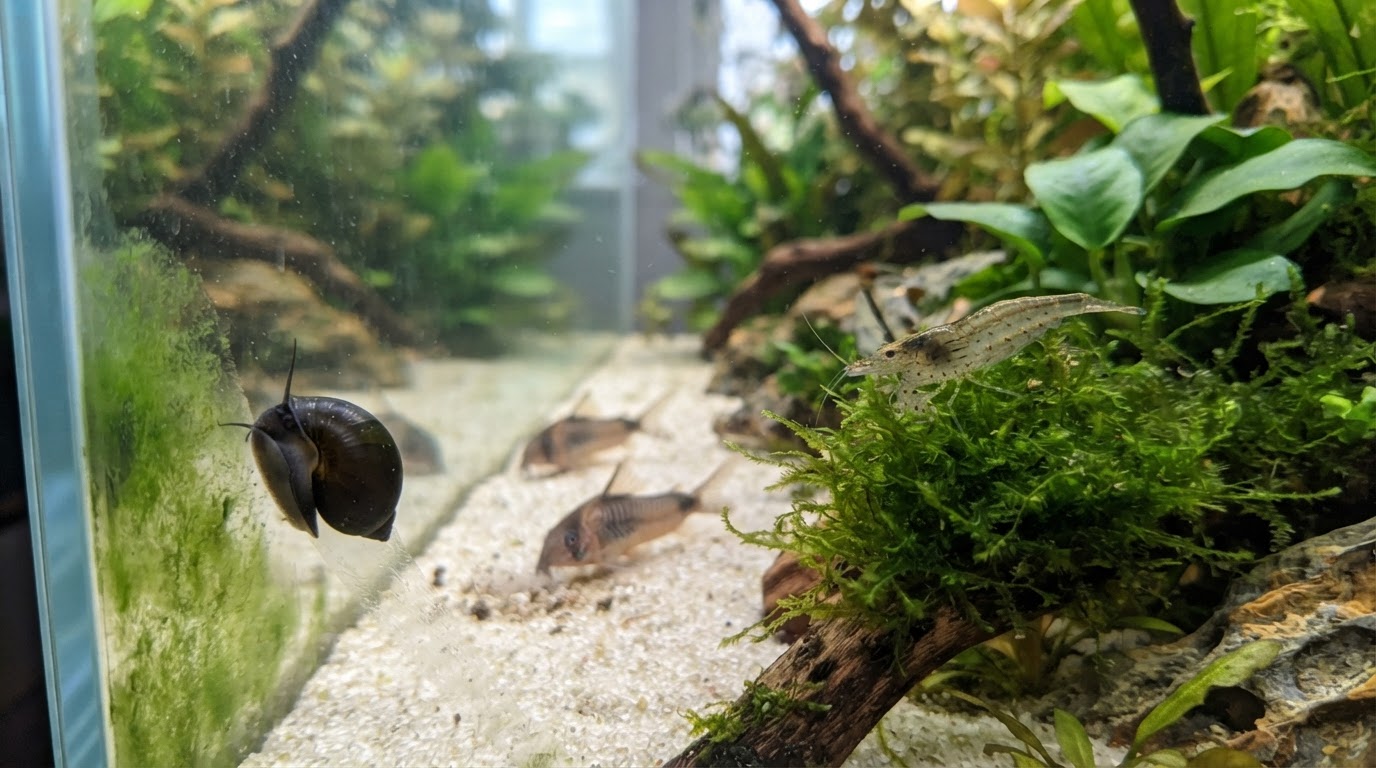
Snails are the most reliable general grazers in a freshwater tank. Nerite snails are the common choice for glass, rock, and hard plant leaves because they work continuously and, in practice, rarely turn into a population problem in freshwater. Ramshorn and Malaysian trumpet snails are also widespread; trumpet snails burrow into the substrate and help process mulm, while ramshorns stay on surfaces.
Two cautions apply to every snail. First, most fish that hunt snails will eat them, so a large snail is not automatically safe. Second, snail numbers track food. If the population explodes, the crew is being fed more than the tank needs.
Shrimp: the detail cleaners
Shrimp clean the places snails and fish cannot reach. Amano shrimp are the standard working shrimp for community tanks, grazing algae and biofilm from moss, wood, and plant stems. Cherry shrimp (Neocaridina) do similar work and add color; ghost shrimp are inexpensive but vary in how much algae they actually eat.
Shrimp are also the most vulnerable part of a crew. Small fish that ignore adults may still pick off juveniles, and many invertebrate medications are not shrimp-safe. Check any treatment before dosing a tank that contains shrimp.
Fish: the bottom crew
Bottom-dwelling fish handle leftover food and the surfaces snails and shrimp miss. Corydoras catfish sift the substrate for uneaten food, which makes them a good fit for tanks where food reaches the bottom. Otocinclus graze soft algae from plant leaves but do best in a tank that has been running long enough to grow biofilm. Bristlenose-type plecos rasp algae from hard surfaces, but they grow larger than many buyers expect and produce a corresponding amount of waste.
Avoid adding a fish only because it is sold as an "algae eater". Some of the most effective algae-eating fish grow far beyond the size a small tank can support, and others are shoaling species that do better in groups.
Match the crew to the problem
Tank problem | Additions worth considering | Check before you buy |
|---|---|---|
Algae film on glass and hardscape | Nerite snails, bristlenose-type plecos | Whether larger fish will bother them |
Uneaten food on the substrate | Corydoras, shrimp | Bottom space and hiding cover |
Mulm and debris in the substrate | Malaysian trumpet snails, shrimp | Whether burrowers will disturb fragile plants |
Algae on plant leaves | Otocinclus, amano shrimp | Whether the tank is mature enough |
Dead plant matter | Shrimp, snails | Removing large leaves by hand first |
Tank mates and compatibility
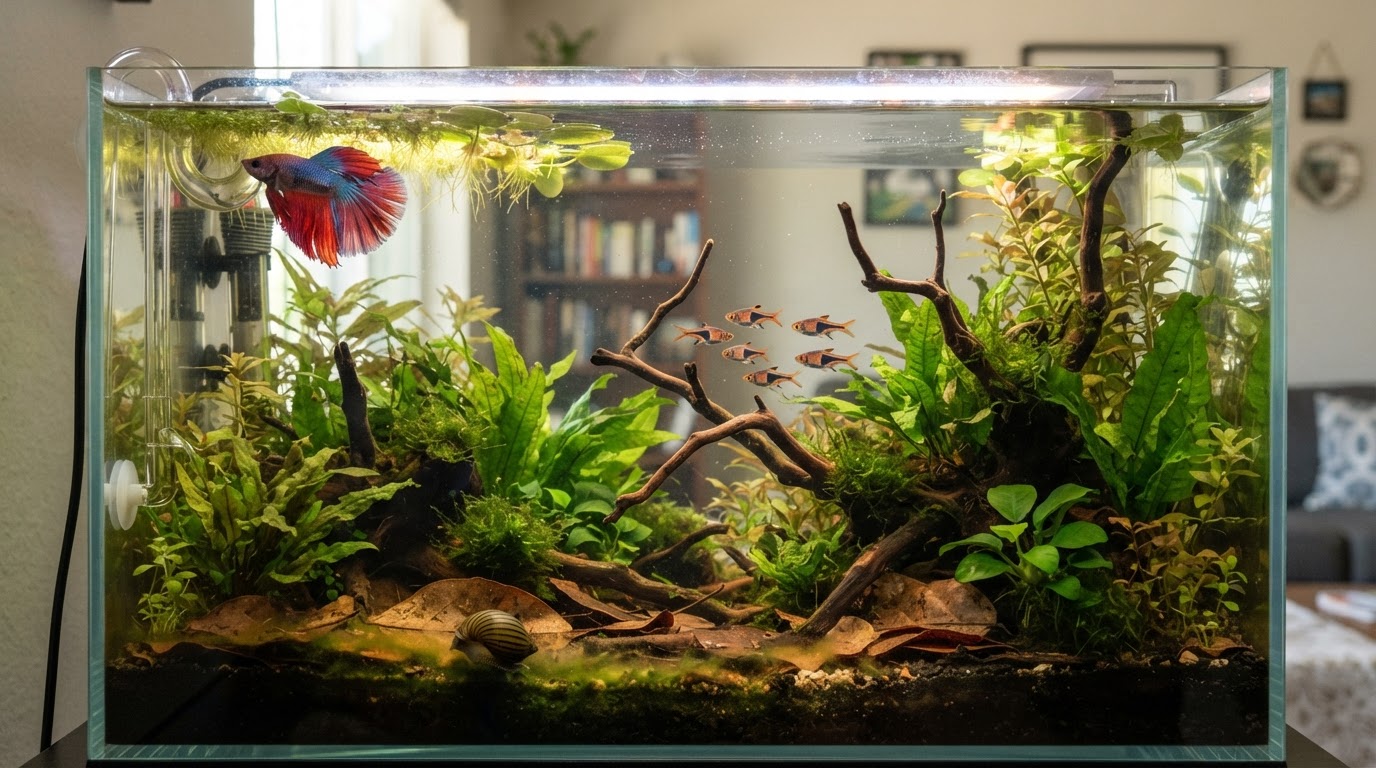
Compatibility works in both directions: the crew has to survive its tank mates, and the tank mates have to leave the crew alone. Predictable problems include loaches, puffers, and many cichlids, all of which may eat snails or shrimp. Angelfish and other mid-sized community fish will often take shrimp fry. Even a betta may hunt shrimp, depending on the individual fish.
Cover is the practical answer. Dense plants, moss, leaf litter, and small ceramic hides give shrimp and juvenile snails somewhere to retreat. Add the crew before, not after, a large predator if you have a choice, and quarantine new arrivals so you do not introduce disease with the cleanup team.
Match the problem first, then pick the animal: algae film on glass and hardscape points to snails, leftover food on the substrate points to bottom feeders, and mulm in the substrate points to burrowing snails and shrimp.
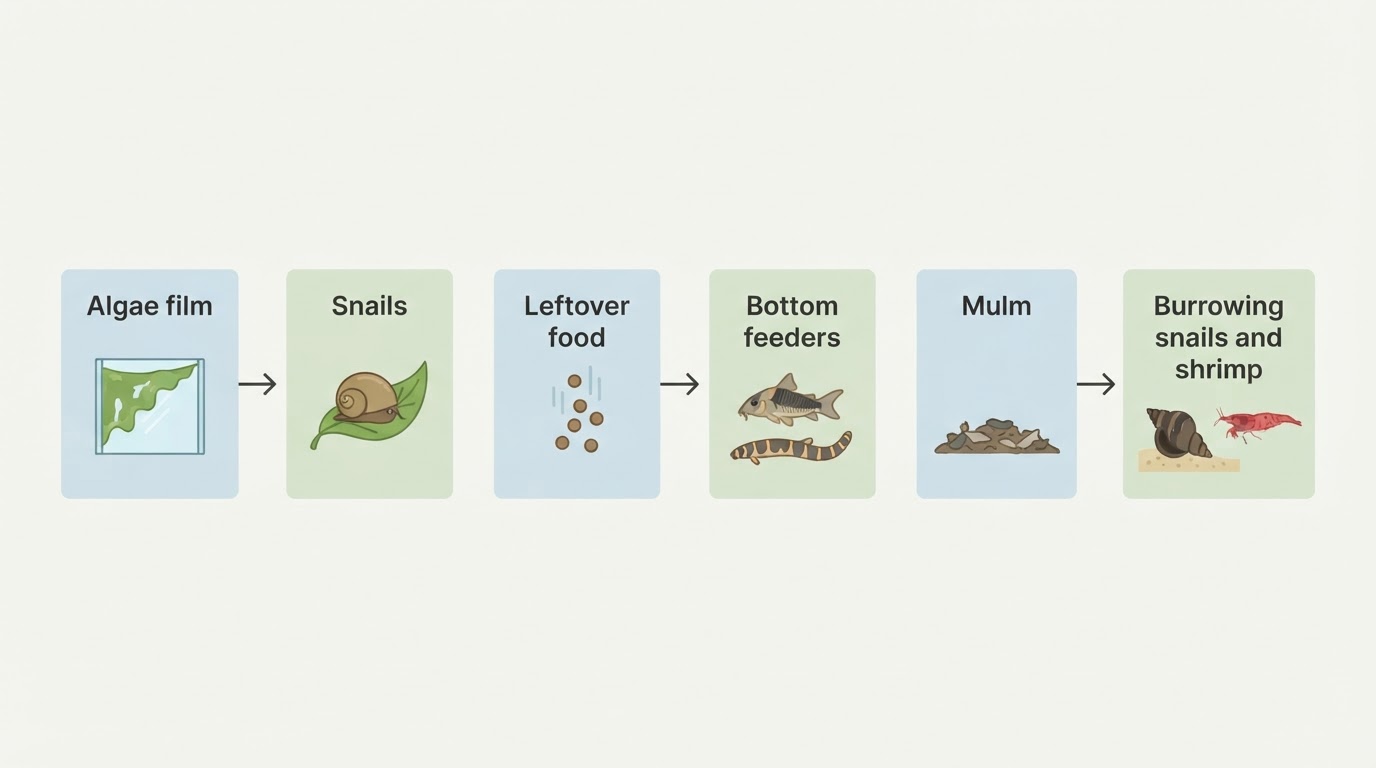
When you are adding a crew to an already stocked tank, the deciding question is not only which species eats what, but which combinations actually work together. Sea Life Planet keeps compatibility and tank-mate notes for freshwater and saltwater systems, including the combinations that do not work — a useful second check before you buy a species your existing fish may treat as food.
First-level category landing for freshwater fish: H1 and intro for freshwater care guides and tank setup.
Where a clean up crew fails
A crew cannot fix overfeeding, overstocking, or poor filtration — it can only hide the symptoms for a while. This is the trade-off most cleanup-crew advice skips. A tank with too much food produces a boom in snails or shrimp; a tank with the lights on too long keeps growing algae no matter how many grazers you add; and a tank with weak filtration keeps accumulating dissolved waste even when the substrate looks clean.
Expect failure in three common forms: the crew disappears because something eats it, the crew multiplies because the tank is being fed too much, or the crew never keeps up because the underlying imbalance was never corrected. All three point back to maintenance and stocking, not to the animals.
A simple way to build and maintain a crew
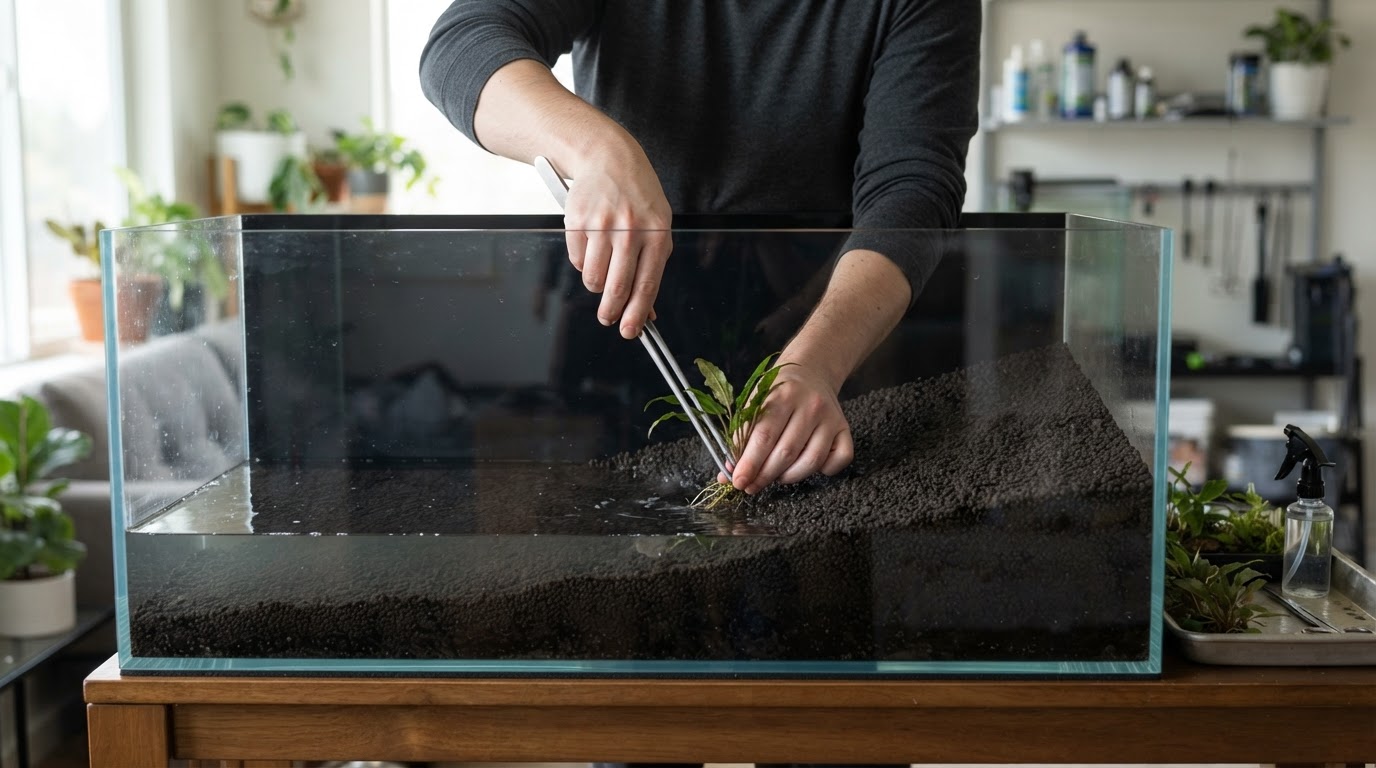
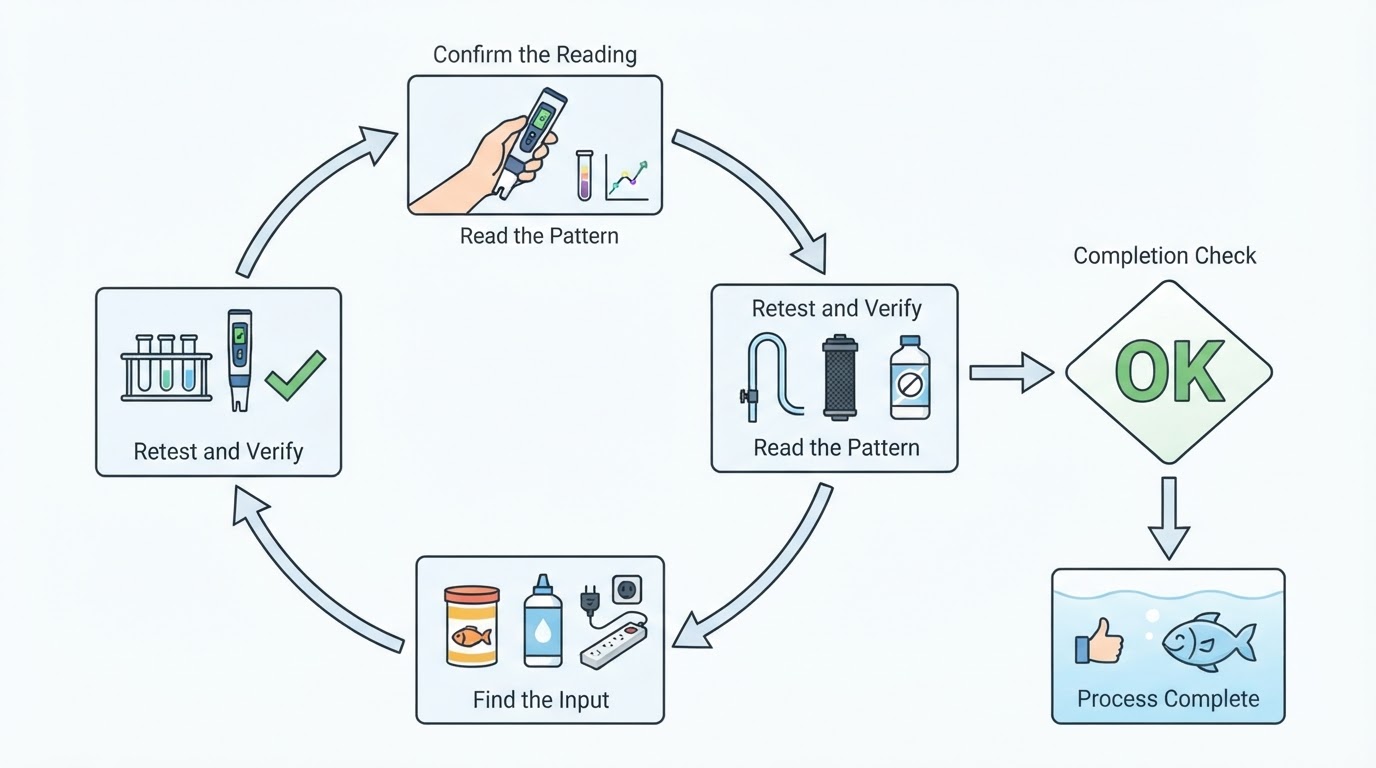
- Correct the root cause first. Reduce feeding until food is finished within a few minutes, keep the light on a consistent schedule, and keep up routine partial water changes. A crew added to an unbalanced tank will not keep up.
- Add one group at a time. Start with the group that matches your main problem — usually snails or shrimp. Give the tank a few weeks before adding another group so you can see whether the first one is thriving.
- Keep cover and check compatibility. Provide hiding places, and know which of your fish are likely to hunt the crew.
- Check the completion standard. After about a month, surfaces should stay visibly cleaner, the substrate should not collect food, and the crew should still be present and active. If any of those is false, adjust feeding or stocking instead of adding more animals.
FAQ
What is the best clean up crew for a beginner freshwater tank? A small group of snails for surfaces, a group of shrimp for plants and detail work, and a small bottom-feeding fish group if the tank has the space. Start with less than you think you need.
Do clean up crew animals really clean the tank? They consume part of the algae, leftover food, and debris, but they also produce waste. Treat them as support for your maintenance routine.
Why do cleanup crew animals disappear? Predation and acclimation problems are the usual reasons. If fish are the suspects, add more cover first; if the arrivals died early, check how they were acclimated and whether the tank is a suitable home.
Can I keep shrimp with a betta? Sometimes. It depends on the individual betta and on how much cover the tank offers. A heavily planted tank gives shrimp a better chance; a bare tank usually does not.
Do I need to feed a clean up crew? Usually not — their diet is what the rest of the tank leaves behind. If a tank is kept very clean, or a species needs more than the tank provides, supplement deliberately rather than assuming the crew will find enough.
Why did my snail population explode? Almost always because there is more food than the tank consumes. Reduce feeding, keep up water changes, and the population will follow the food supply down.