The Short Answer
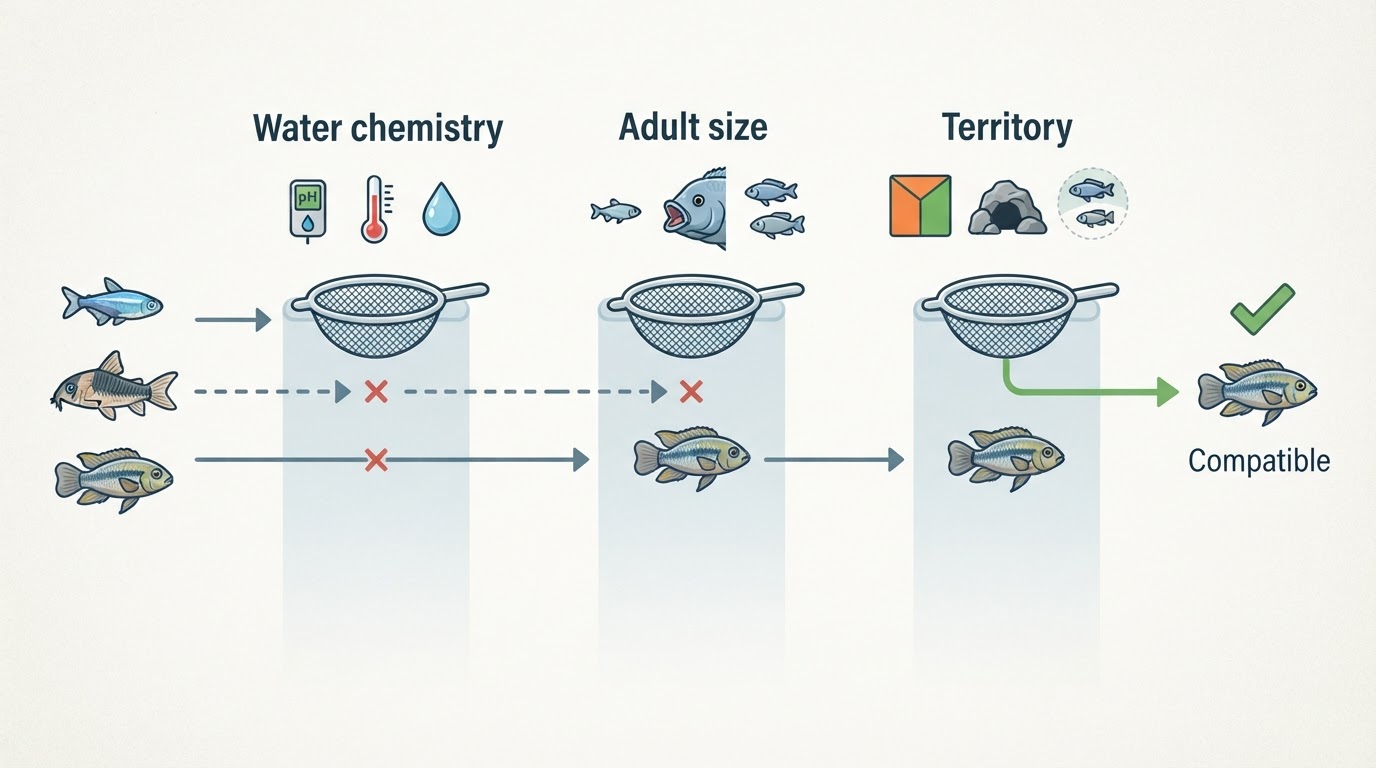
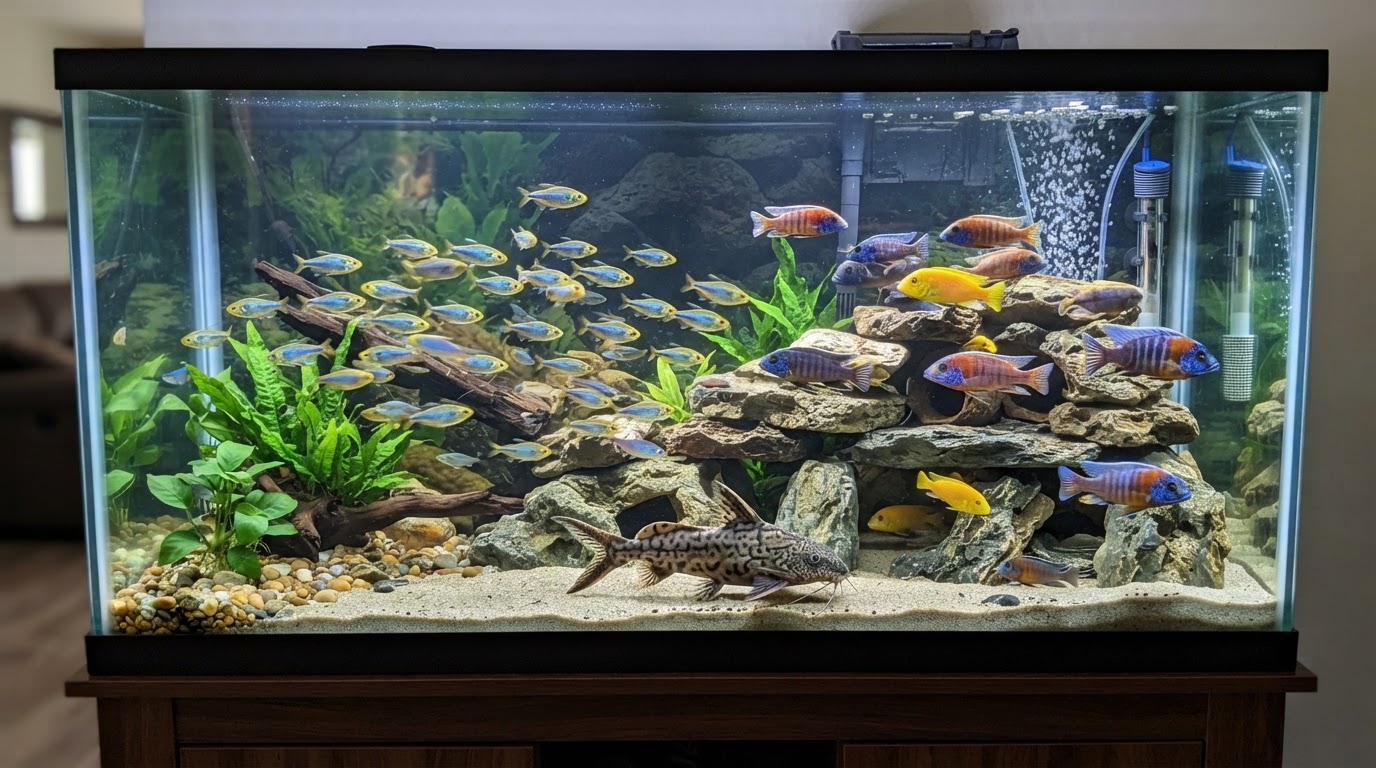
Most cichlids can live with tank mates that use a different part of the tank, tolerate the same water parameters, and cannot be swallowed. The safest categories are fast mid-water schooling fish, armored bottom dwellers such as Synodontis catfish and many plecos, and other sturdy species that can hold their own without starting fights.
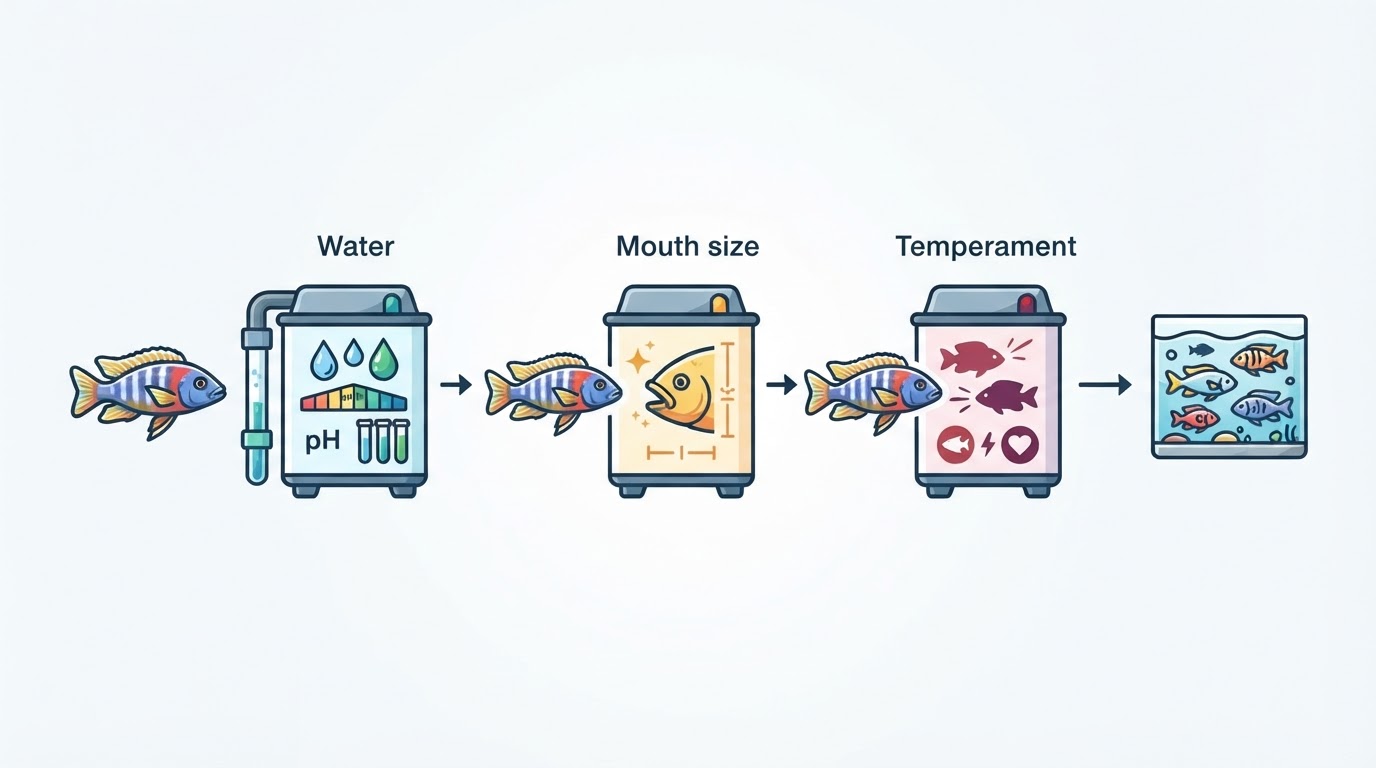
Everything else comes down to three questions: what water the cichlid needs, how aggressive that particular species is, and how much room you can give the fish. Get those wrong and even peaceful tank mates get hurt. Get them right and a cichlid tank becomes one of the most active, colorful community setups in the hobby.
Key Answers at a Glance
Each answer stands on its own, so you can scan straight to the one you need.
- African cichlids do best with Synodontis catfish, larger armored plecos, and tough, fast dither fish. They do not mix with soft-water community fish.
- South American cichlids can live with larger tetras, pencilfish, hatchetfish, Corydoras, and bristlenose plecos.
- Dwarf cichlids such as Apistogramma, rams, and kribensis are the most community-friendly and mix well with small schooling fish and bottom dwellers.
- Small fish are food. If a tank mate fits in a cichlid's mouth, assume it will end up there.
- Water chemistry comes first. A behavior problem is often a water-parameter problem in disguise.
- Never mix rift-lake African cichlids with soft-water species like discus or cardinal tetras, because the two groups need opposite water.
- Goldfish are not cichlid tank mates. They are coldwater fish; most cichlids are tropical.
- One male of a territorial species per tank. A second male is a fight waiting to happen.
- Aggression is managed with space and structure, not by adding more fish to spread it around.
- If a cichlid has already killed a tank mate, expect the behavior to repeat.
Match the Water Before You Match the Fish
The first filter has nothing to do with personality. African cichlids from Lakes Malawi and Tanganyika live in hard, alkaline water. Most South American cichlids, including angelfish, discus, rams, and Apistogramma, come from soft, acidic water. Central American species such as convicts and firemouths sit in the middle and adapt more widely.
A tank mate has to live in the same water as the cichlid, not the water you wish you had. Putting cardinal tetras in a Malawi tank, or mbuna in a discus tank, creates a slow decline that looks like disease and aggression but usually starts with the wrong minerals and pH. Pick the cichlid group first, set the water to suit it, then choose tank mates from species that thrive in that same water.
Best Tank Mates for African Cichlids
The most reliable African cichlid tank mates are the armored catfish from the same lakes. Synodontis species such as Synodontis lucipinnis and Synodontis petricola are the classic choice: they work the bottom, they are armored, and they handle hard, alkaline water. Bristlenose and larger plecos often work too, though most plecos naturally prefer softer water, so treat them as an adaptation rather than a perfect fit.
Fast, hard-water-tolerant dither fish such as larger rainbowfish or giant danios can work in a long tank with plenty of rockwork, but mbuna will test them. The fish that reliably fail are small, slow, soft-water species: neon tetras, guppies, Corydoras, and anything with long fins. If you plan to breed your cichlids, skip the cuckoo catfish (Synodontis multipunctatus), which specializes in eating mouthbrooder eggs and fry.
Best Tank Mates for South American and Central American Cichlids
For angelfish, severums, and other peaceful South American cichlids, the reliable partners are larger tetras such as black skirts, bleeding hearts, and serpae tetras, plus pencilfish, hatchetfish, Corydoras, and bristlenose plecos. Silver dollars work well with severums in a large tank. The trap is small tetras: neon and cardinal tetras are natural angelfish prey and disappear over time.
Aggressive Central American cichlids such as oscars, Jack Dempseys, and convicts need tank mates chosen for toughness, not looks. Silver dollars, large plecos, and big armored catfish can share the water. Convicts in particular become tyrants while breeding and sometimes need to be kept as a species pair. Firemouths are milder and can live with larger livebearers and tetras, but they will eat anything that fits in their mouths.
Dwarf Cichlids Are the Easiest to Mix
If you want a community tank that includes cichlids rather than a cichlid tank with extras, start with the dwarf species. Apistogramma, Bolivian rams, German blue rams, and kribensis stay small and mix well with ember tetras, rasboras, pencilfish, Corydoras, otocinclus, and snails.
The one thing to plan for is breeding. A pair of dwarf cichlids with eggs turns into a small territorial army, and kribensis are notorious for chasing bottom dwellers away from their cave. Break up sight lines with plants and wood, and give the pair a corner of their own.
Pairings That Fail, and Why
Some combinations keep showing up in "it was fine for a month, then it wasn't" stories.
- A big cichlid plus small schooling fish. The mouth-size rule always wins eventually.
- Rift-lake cichlids plus soft-water community fish. Opposite water needs; one group suffers even when nobody fights.
- Two males of the same territorial species in a small tank. They read each other as rivals, not companions.
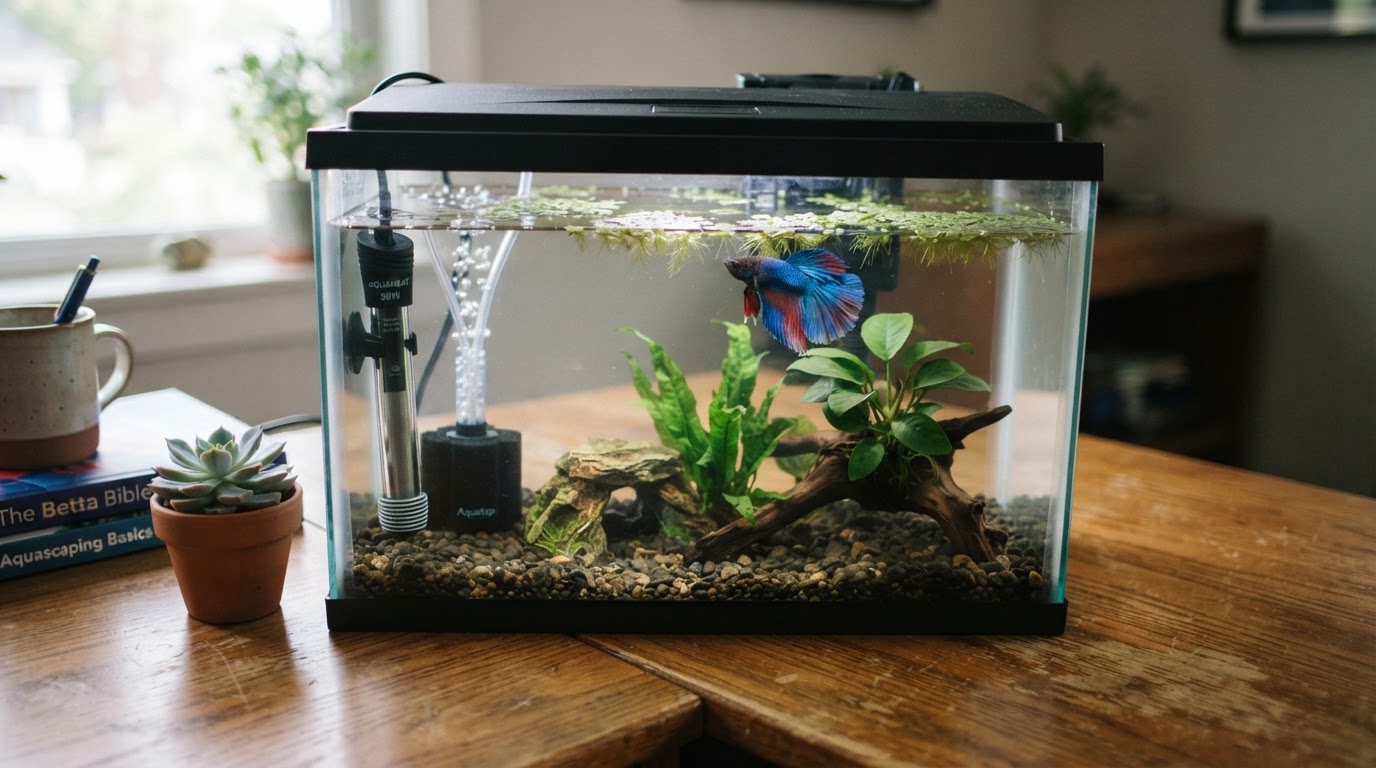
- Cichlids plus slow, long-finned fish. Bettas, guppies, and fancy goldfish are targets, not tank mates.
- Cichlids plus goldfish. Different temperature, different appetite, different waste load.
- Fish shaped like the cichlid. Cichlids often target species that look like competitors.
- A crowd added to spread aggression. More fish usually means more stress, more waste, and more fights.
How to Add Tank Mates Without Starting a War
The order of operations matters as much as the species list.
- Quarantine the new fish. A stressed newcomer that carries disease will look like an aggression problem and can wipe out the tank.
- Rearrange the decorations first. Move rocks and wood before the new fish goes in, so the resident cichlid cannot defend one familiar territory.
- Add tank mates in a group. A single newcomer gets singled out; a small school spreads the attention.
- Feed at opposite ends of the tank. Two feeding spots reduce competition at the same corner.
- Watch for two weeks. Chasing, torn fins, hiding at the surface, or a fish that stops eating are early warnings, not normal settling.
- Keep the water clean. Injuries and stress heal faster in good water, and heavy feeding during introductions raises waste.
When It Is Not Working
Treat persistent chasing, torn fins, a fish pinned in a corner, or a tank mate that has stopped feeding as a decision point, not a phase. Remove the victim or the aggressor, rearrange the scape, and try again with a different species or a bigger tank. A cichlid that has killed once usually repeats the behavior, especially in the same territory.
If a specific pairing is the question, check it before you buy rather than after. Sea Life Planet publishes compatibility guides that walk through individual combinations, including the ones that do not work, such as whether bala sharks or an oscar can share a large tank with cichlids.
First-level category landing for freshwater fish: H1 and intro for freshwater care guides and tank setup.
Common Questions
Can cichlids live with tetras?
It depends on the cichlid. Dwarf cichlids and peaceful South American species can live with larger tetras. Big or aggressive cichlids will eat small tetras, and soft-water tetras do not belong in a hard-water African cichlid tank.
What fish can live with African cichlids?
Synodontis catfish, armored plecos, and tough, fast dither fish in a large tank. Small, slow, or soft-water species do not last.
Can cichlids live with angelfish?
Angelfish are cichlids themselves. They mix with peaceful South American species such as rams and severums in a large tank, but not with aggressive Central American cichlids or rift-lake Africans.
Can cichlids live with plecos?
Usually yes, with caveats. Plecos are armored and mostly nocturnal, so they tolerate boisterous tank mates. Large plecos produce a lot of waste, and very small ones can be harassed.
Can cichlids live with Corydoras?
With dwarf and peaceful cichlids, often yes. With large or aggressive cichlids, no: Corydoras have no armor and cannot escape a determined cichlid.
Do cichlids eat smaller fish?
Yes. Most cichlids are opportunistic predators. If a fish fits in the mouth, it is food, no matter how peaceful the cichlid looked in the store tank.
Can cichlids live with shrimp or snails?
Snails usually survive if they are too big to swallow, and some cichlids eat them anyway. Shrimp are food for most cichlids; only dwarf species in a heavily planted tank give shrimp a realistic chance.
Why is my cichlid suddenly attacking its tank mates?
The usual triggers are breeding, a tank too small for the territory the fish wants, and a new fish that looks like a rival. Rearrange the scape, remove the fish being targeted, and reassess the stocking.