What a betta actually needs from a tank
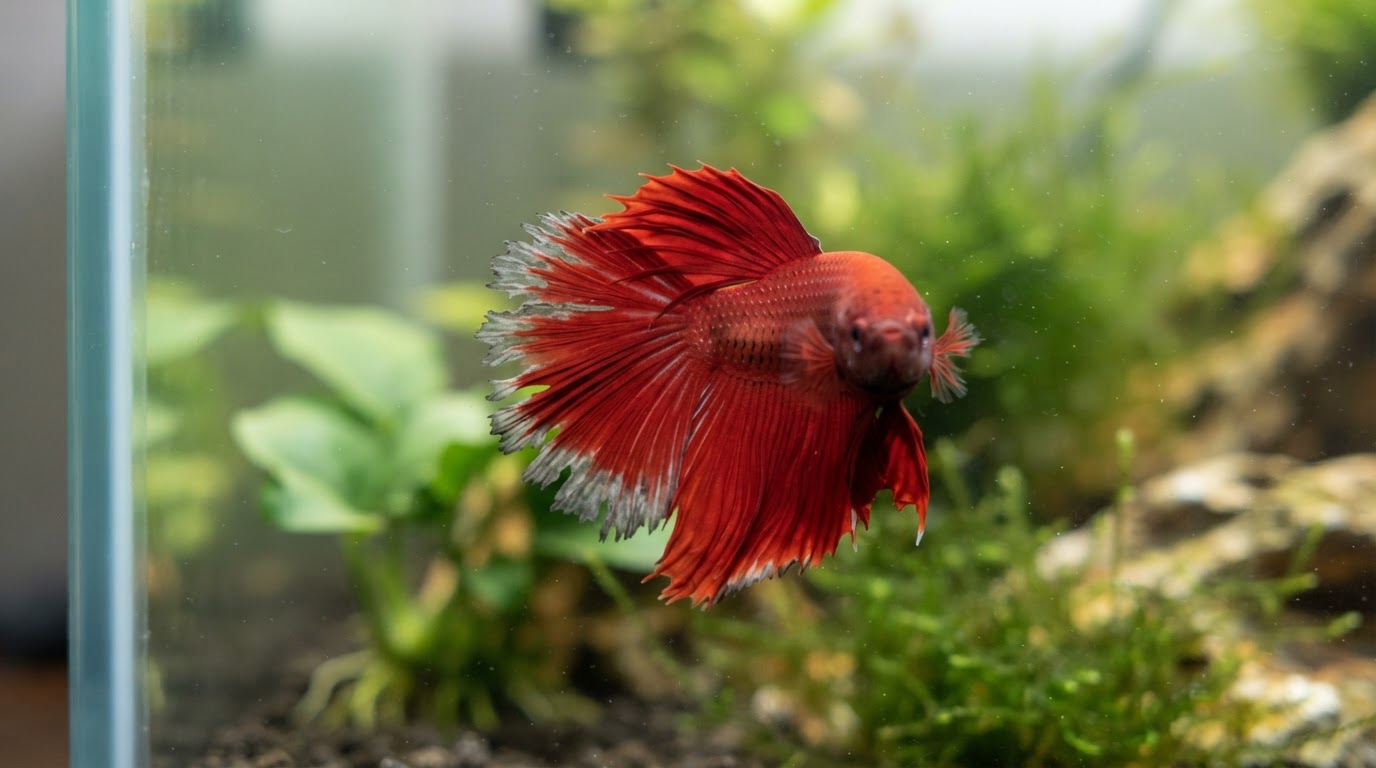
Betta splendens is a small fish with a large reputation for surviving almost anything. That reputation comes from a real adaptation: bettas are labyrinth fish, which lets them gulp air at the surface when the water is low in oxygen. It is why a betta can stay alive in a vase long enough to be sold, and why "it survived" is a bad test of whether a setup works.
A tank that actually meets the fish's needs does four jobs at once:
- Dilutes waste. Ammonia and nitrite build up from food and fish waste, and more water means a slower, gentler rise between water changes.
- Holds steady warmth. The species is tropical, so a temperature that swings with the room is a stressor rather than a neutral condition.
- Keeps the current gentle. Long fins catch moving water, so a filter sized for a busy community tank is usually too strong for a betta.
- Leaves surface access. Bettas need to reach the air, and a lid stops a startled fish from ending up on the floor.
Tank size: how small is too small
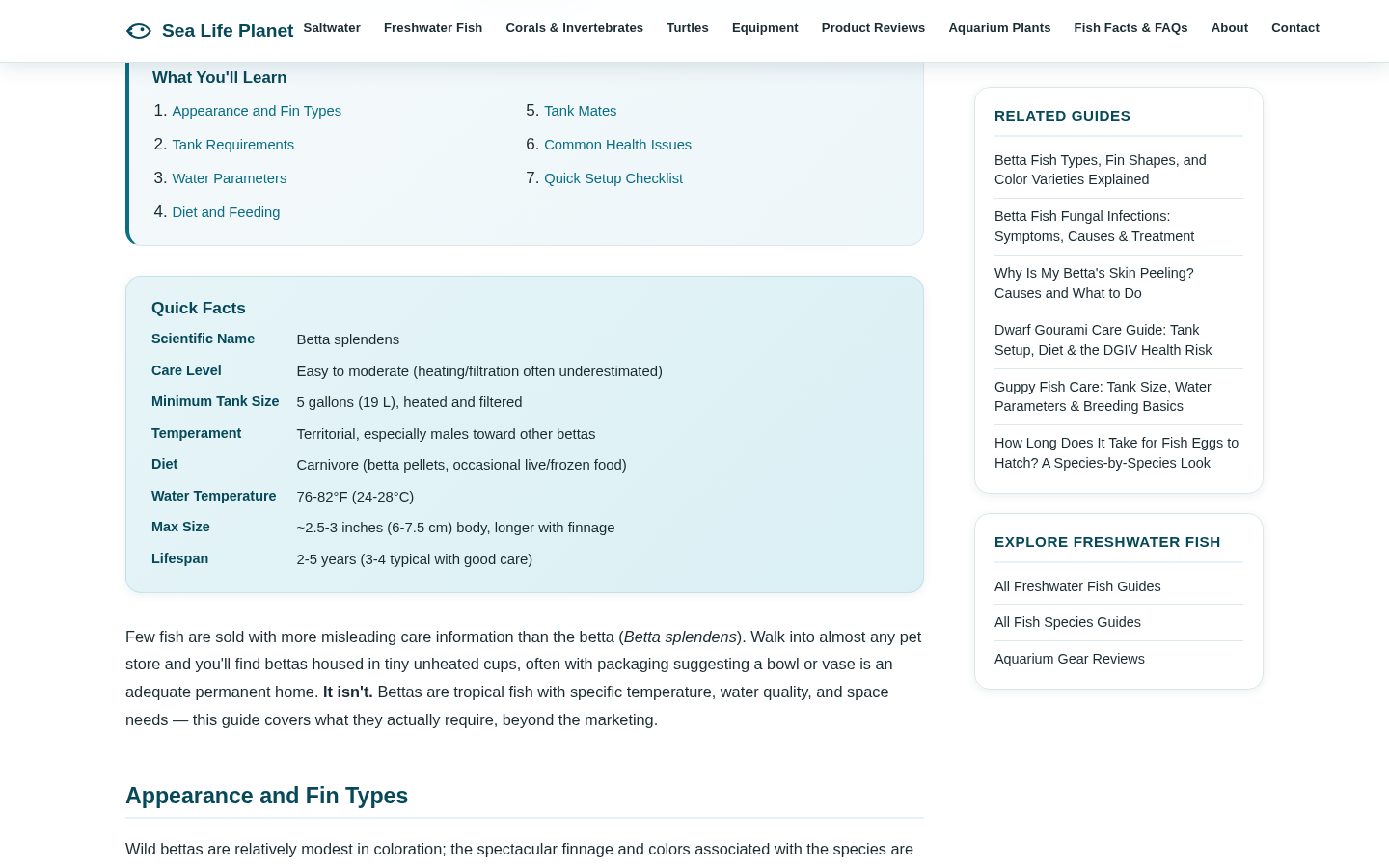
Five gallons (19 L) is the practical floor for one betta. It is also the minimum tank size listed for Betta splendens in Sea Life Planet's species care guide, which frames the fish as a heated, filtered 5-gallon resident rather than a bowl occupant, gives 76–82°F (24–28°C) as the water temperature range, and puts the expected lifespan at 2–5 years. The same guide documents target water parameters for the species — pH 6.5–7.5, ammonia and nitrite at 0 ppm, nitrate below 20 ppm, and 2–15 dGH — which is effectively a test-kit checklist for a newly set-up tank.
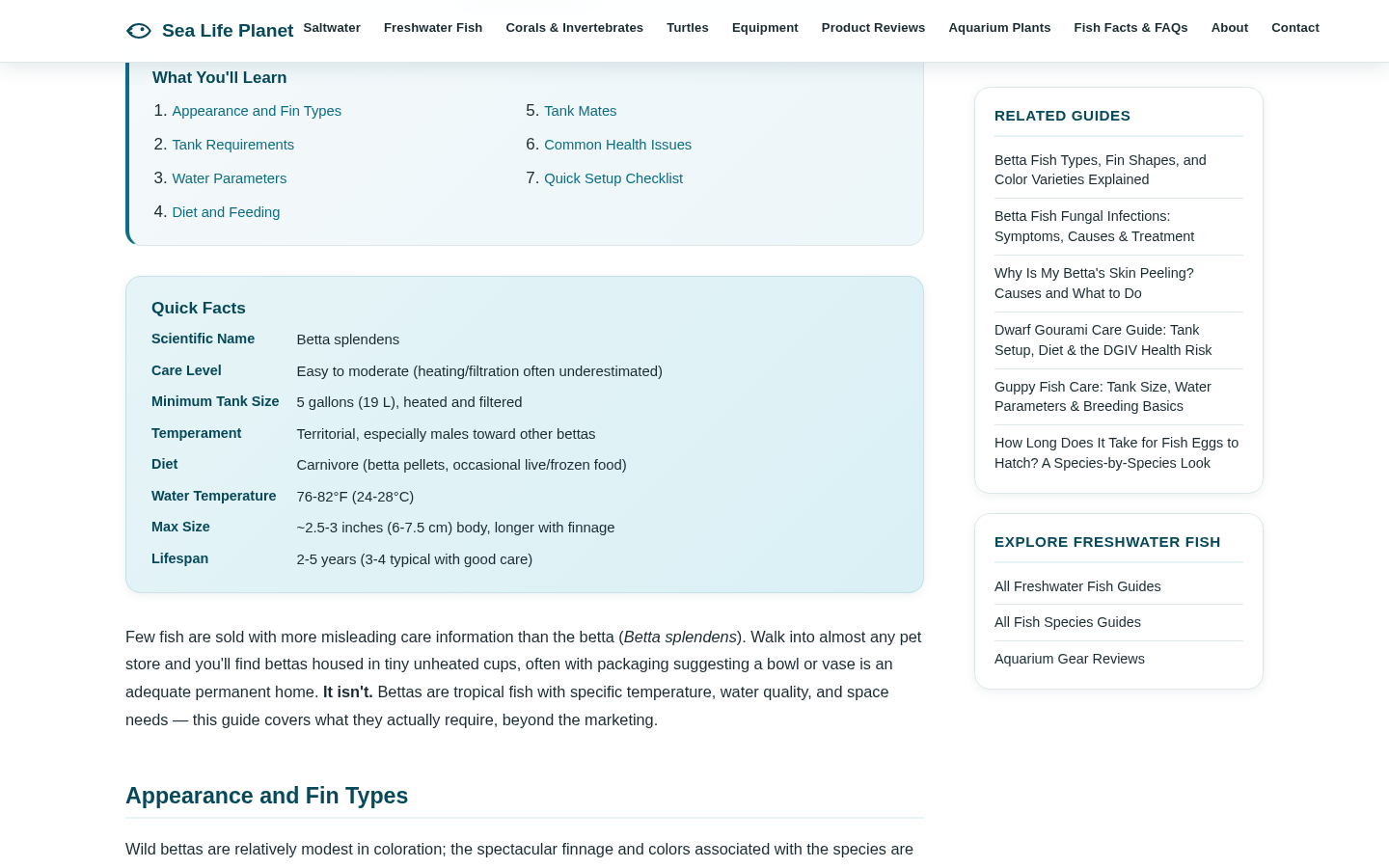
Flagship species guide framed mid-page: 'What You'll Learn' TOC edge above, full Quick Facts definition panel (Scientific Name, Care Level, Minimum Tank Size, Temperament, Diet, Wa
Below 5 gallons, three problems compound. Waste concentrates fast, there is no floor space left for a heater and a filter, and the water temperature tracks the room almost immediately. A 2-gallon tank is not a smaller version of a 5-gallon tank; it is a much less forgiving one.
Tank volume | Works for | Trade-off |
|---|---|---|
5 gallons (19 L) | one betta, minimum viable setup | weekly water changes matter; no room for tank mates |
10 gallons (38 L) | one betta plus a small cleanup crew | needs a stable stand; more water to change each time |
20 gallons (76 L) or more | a planted display with room to scape | most space, equipment, and maintenance time |
Choosing the tank itself: shape, lid, and stand
Three physical decisions matter more than the logo on the box.
Shape. A rectangular tank with a wide top is easier to light, filter, and work in than a tall column or a narrow-mouthed bowl. Many betta tanks are sold as tall or curved designs because they look good on a shelf, but for a fish that spends most of its time near the surface, a shallow, long tank beats a deep, narrow one at the same volume.
Lid. A lid is not optional. Bettas jump, especially after a water change or when something startles them, and an open top also loses heat and speeds evaporation. Leave an inch of air between the water line and the lid so the fish can still come up to breathe, and keep any feeding opening small.
Stand. Plan for the filled weight, not the empty tank. Water, substrate, and rock add up quickly, so the tank needs level, solid furniture underneath it rather than a shelf that merely holds the glass. Keep it out of direct sun and away from radiators, which push the temperature around.
Equipment a betta tank actually needs
- Filter. A gentle, adjustable filter that holds biological media. A sponge filter or a baffled intake suits a long-finned betta better than a strong power filter. The filter's real job is housing the bacteria that process ammonia, not polishing the water.
- Heater. A unit rated for the tank's volume, paired with a separate thermometer so you can verify it. Preset heaters are simpler; adjustable ones let you aim for the middle of the betta's range, around 78°F (26°C).
- Thermometer. Inexpensive, and the only way to know the heater is telling the truth.
- Lid and light. A lid for safety, and a light sized to whatever plants you keep, running six to eight hours a day. More light without plants to use it just grows algae.
- Test kit. Ammonia, nitrite, nitrate, and pH. The format matters less than being able to measure ammonia and nitrite during the first weeks.
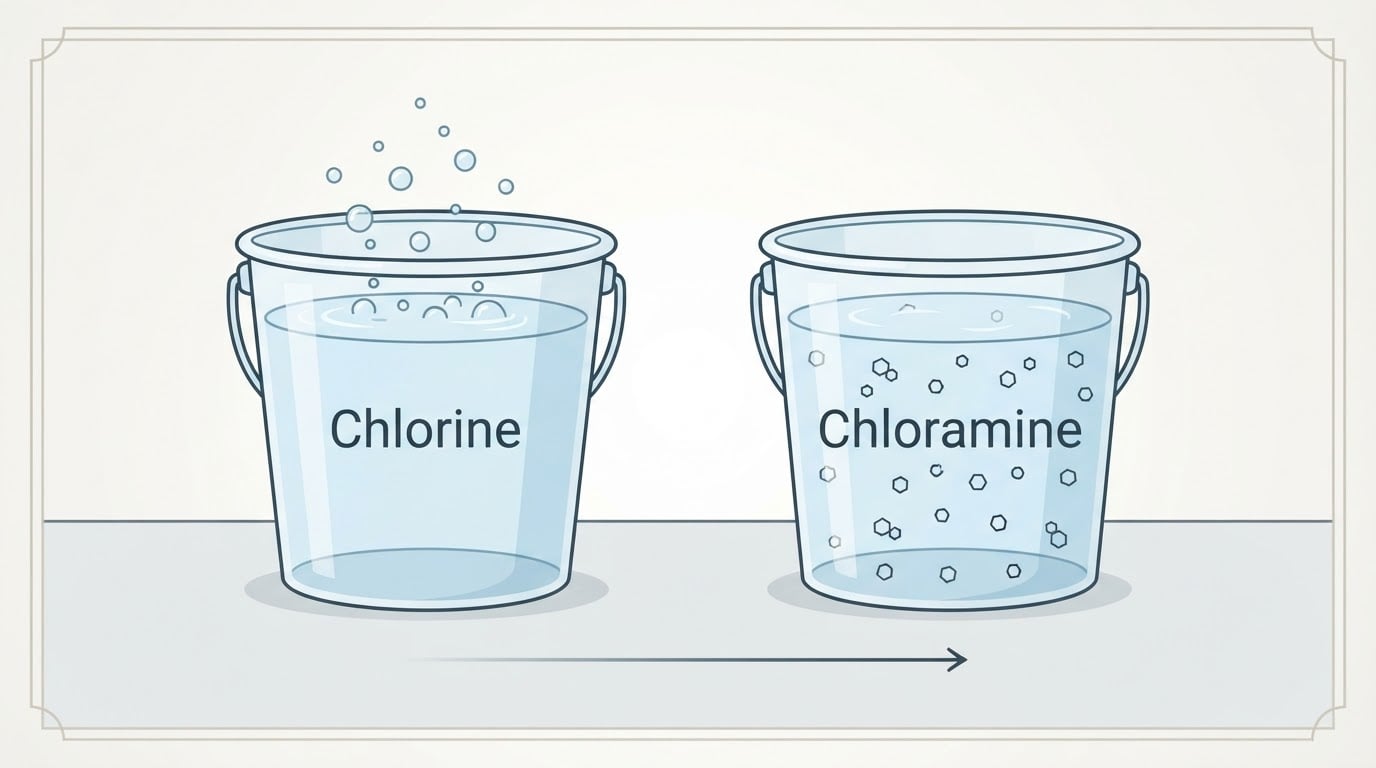
- Water conditioner. A dechlorinator for tap water. That is the whole startup chemistry list.
An air pump and airstone are usually counterproductive in a betta tank: they add current and noise without adding filtration capacity, and the fish can already breathe at the surface.
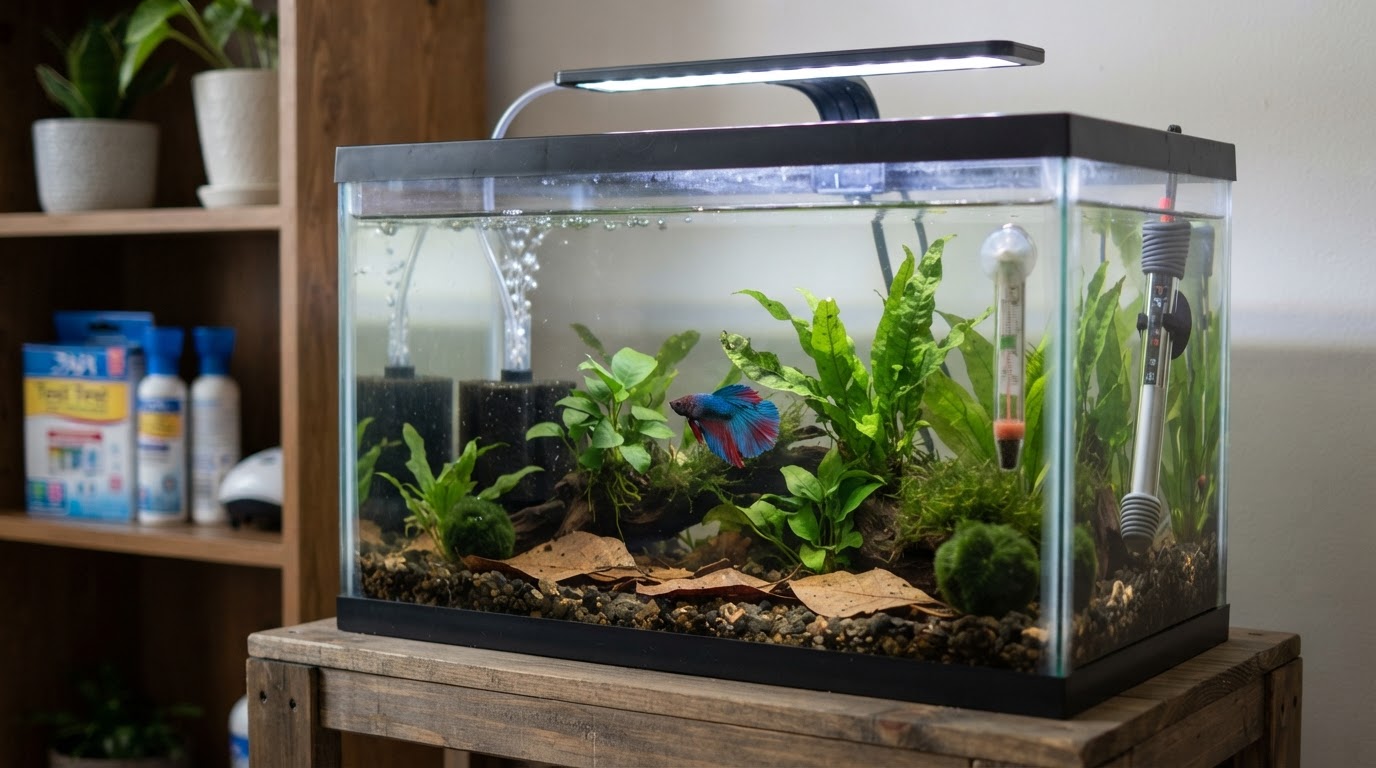
Setting up a betta fish tank, step by step
- Place and level the tank on a flat, solid surface away from direct sun. Add a foam mat under rimless glass if the manufacturer calls for one.
- Rinse the substrate and add it. An inch or two of gravel or sand is plenty; rinse until the water runs clear.
- Arrange plants and decor, leaving open swimming space at the front and a clear gap under the lid.
- Fill with dechlorinated water. Pour onto a plate to avoid stirring up the substrate, and stop an inch or so below the rim.
- Install the filter and heater, plug them in, and let everything run for 24 hours. Check the temperature with your own thermometer rather than trusting the heater's dial.
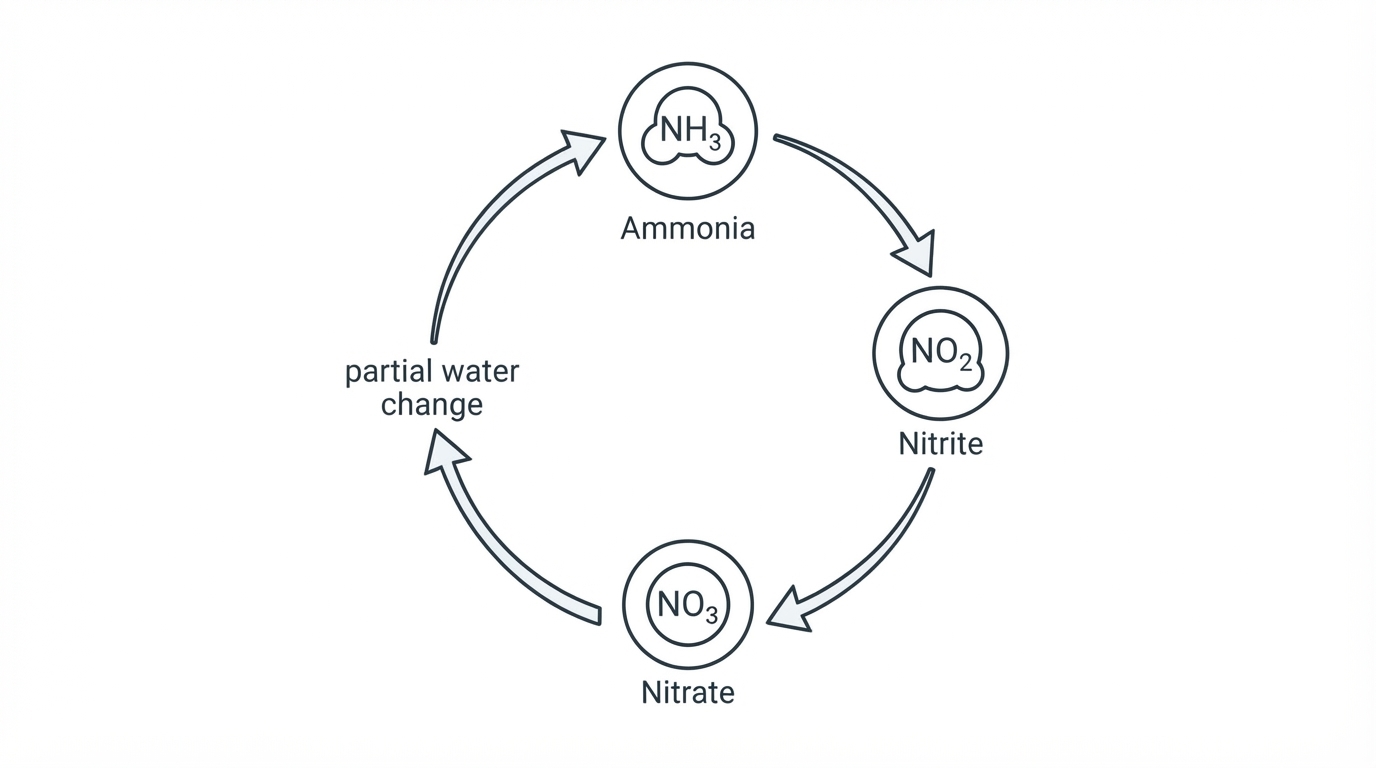
- Cycle the tank before buying the fish. Add an ammonia source, test daily, and wait for ammonia and nitrite to fall to zero while nitrate appears. A fishless cycle often takes two to six weeks; bottled bacteria or filter media from an established tank can shorten it.
- Confirm the cycle with tests — 0 ppm ammonia, 0 ppm nitrite, and a readable nitrate level — then change part of the water.
- Acclimate the fish slowly. Float the container for 15–20 minutes, mix in tank water gradually, then release the fish with a net or a cup instead of pouring store water into the tank.
- Feed lightly for the first week and test every couple of days, then settle into a routine.
Cycling is the step most buyers skip, and it is the one that decides whether the tank works. A brand-new tank has no bacteria to convert ammonia, so the first fish becomes the ammonia source and the water turns toxic between water changes. Waiting weeks with an empty tank is far less satisfying than bringing a betta home the same day, but it removes the most common failure mode of a new setup.
Where first betta tanks go wrong
- No heater. A betta in room-temperature water sits at the edge of its range, and every cold snap becomes a health event.
- A bowl or a 1-gallon "betta tank." There is no room for a filter, no stable temperature, and almost no margin for a missed water change.
- An uncycled filter. Adding the fish to a brand-new tank means living with an ammonia spike instead of preventing one.
- Overfeeding. Uneaten food decays into ammonia, and a betta's stomach is tiny. Feed only what disappears in a couple of minutes, once or twice a day.
- Rinsing filter media under the tap. Chlorinated water kills the bacteria the filter exists to host. Rinse media in water removed during a water change.
- A full teardown "clean." Scrubbing everything resets the tank to day one. Regular partial water changes and a gentle siphon do the real work.
- Strong current. A filter that pushes the fish around is exhausting it, not exercising it.
- Tank mates in a 5-gallon. A small tank leaves no room for a second species, and the betta usually pays for it.
- Household cleaners and soap. Rinse anything that goes into the tank with water only.
Tank mates, plants, and long-term maintenance
A betta on its own is a complete setup, not a compromise. It is also the simplest way to avoid compatibility problems, which is the honest answer to "what else can go in there?"
If you do want company, start at 10 gallons. Avoid known fin-nippers such as tiger barbs and serpae tetras, skip anything that resembles another betta, and rule out goldfish entirely — they need cooler water, produce far more waste, and grow far larger. Snails and shrimp often work in a planted tank, though a betta may treat shrimp as a snack, and both add to the bioload the filter has to handle.
For plants, start with low-light species that tolerate a simple light and no added carbon dioxide. Floating plants are especially useful: they shade the tank, give the fish cover, and soak up nitrate at the same time.
Once the tank is running, a 25 percent partial water change once a week is a sensible routine for a single betta in 5 gallons. Siphon the substrate, rinse filter media in the old tank water, and keep a short written log of test results. Parameters that drift upward are much easier to catch in a notebook than in memory.
Common follow-up questions
Is 5 gallons really enough for a betta?
Yes, for one fish, as long as the tank is heated, filtered, cycled, and maintained. If you want tank mates or a planted scape with room to grow, 10 gallons is the better starting point.
Does a betta tank need a heater?
In most homes, yes. Bettas need 76–82°F (24–28°C), which is warmer than typical room temperature, and an unheated tank leaves the fish at the edge of its comfortable range with no buffer against a cold night.
How long does a betta tank take to cycle?
Often two to six weeks without help, and less with bottled bacteria or mature filter media. Test rather than count days: the tank is ready when ammonia and nitrite read zero and nitrate is present.
How often should I change the water?
A 25 percent change once a week suits a single betta in a 5-gallon tank. In a larger or lightly stocked setup, the test kit decides — if nitrate climbs, change more water more often.
Can I keep a betta in a bowl if I change the water often?
No. Frequent changes can lower ammonia, but they cannot supply stable warmth, room for a heater and filter, or enough volume to absorb a single mistake. A 5-gallon tank is not a luxury upgrade; it is the smallest setup that does the job.