The short answer, and the part most answers skip
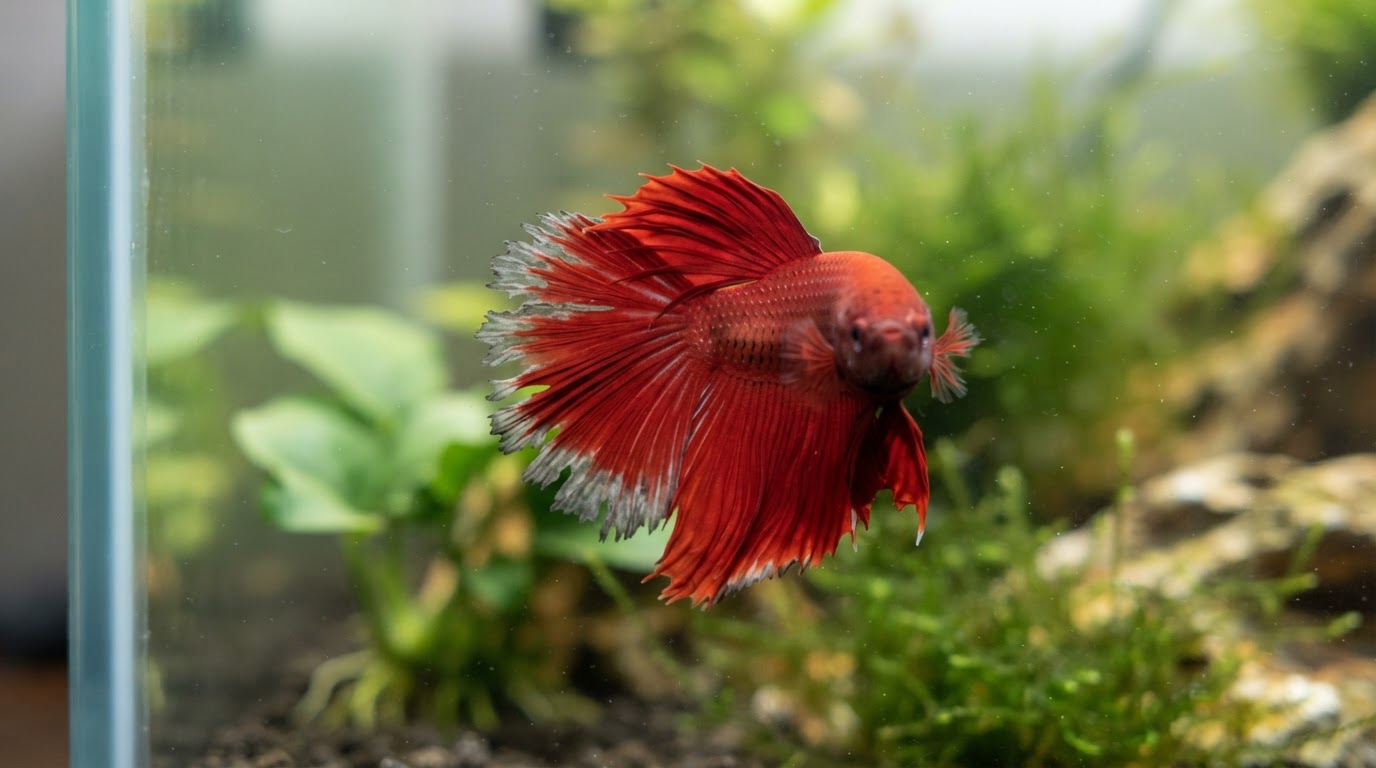
Betta splendens comes from the shallow, warm waters of Southeast Asia, and that origin is written into how the fish works. A betta is an ectotherm: its body temperature follows the water around it rather than holding its own steady internal temperature the way a mammal does. Digestion, healing, and immune response all run on the temperature of its surroundings.
That makes the heater question less dramatic and more practical than it sounds. A betta in cool water does not usually collapse overnight. It slows down. Appetite drops, digestion drags, activity falls, and the fish becomes easier for an infection to catch. Those changes are easy to miss in the first week and hard to miss across a season.
Most homes sit somewhere in the high 60s to low 70s Fahrenheit, which is comfortable for people and cooler than a betta does best in. So for most keepers the honest answer is yes: plan on a heater, and use the sections below to confirm it for your room.
Why warmth matters to a betta's body
Two things happen when a betta gets cold.
The first is the slow-down. A betta's metabolism tracks water temperature, so in cooler water it burns less fuel and moves less. Digestion slows with it, which means a cold fish eating the same meal it would eat in warm water is handling more than its body is ready for. Keepers usually notice it as a fish that stops rising for food, sits low in the tank, or holds its fins clamped against its body.
The second is oxygen. Warm water holds less dissolved oxygen than cool water, so pulling oxygen from the water is only part of the picture — surface access matters too. Bettas are labyrinth fish, meaning they can gulp air at the surface and use a special organ to take oxygen from it. That is a large part of why they survive in the slow, warm, shallow water they come from.
The practical consequence is simple: a warm tank needs moving water at the surface. A filter outlet, an air stone, or both keep the surface churning so gas exchange continues and the warmth you add does not come with dull, stagnant water.
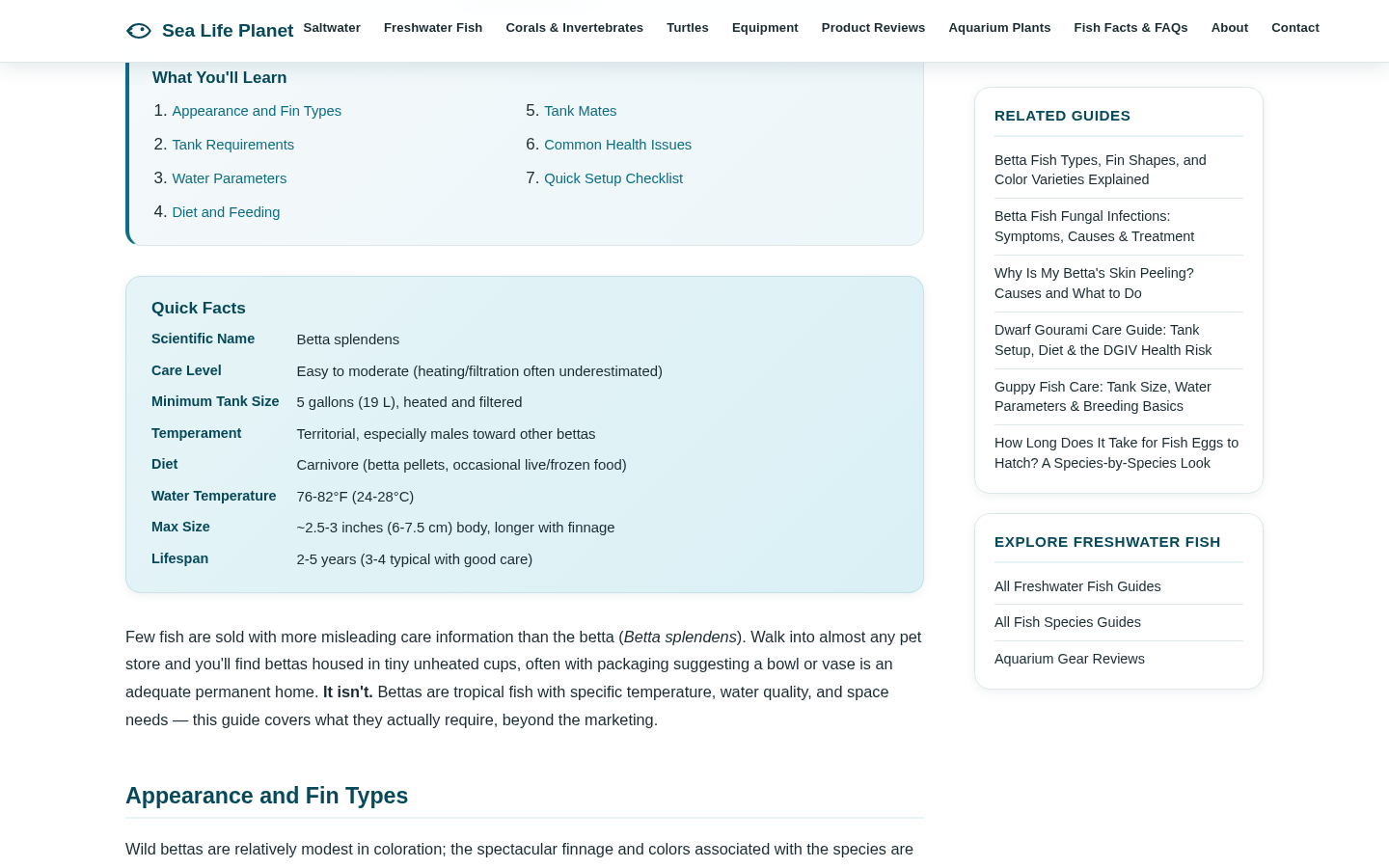
If the mechanism is the part you find interesting, Sea Life Planet keeps plain-language explainers in its fish facts and FAQs section — how a labyrinth organ pulls oxygen from air, and whether fish feel cold the way we do. Its species guides link to those explainers when a reader wants the biology rather than the instruction, which makes them a reasonable next stop once your tank is warm and stable.
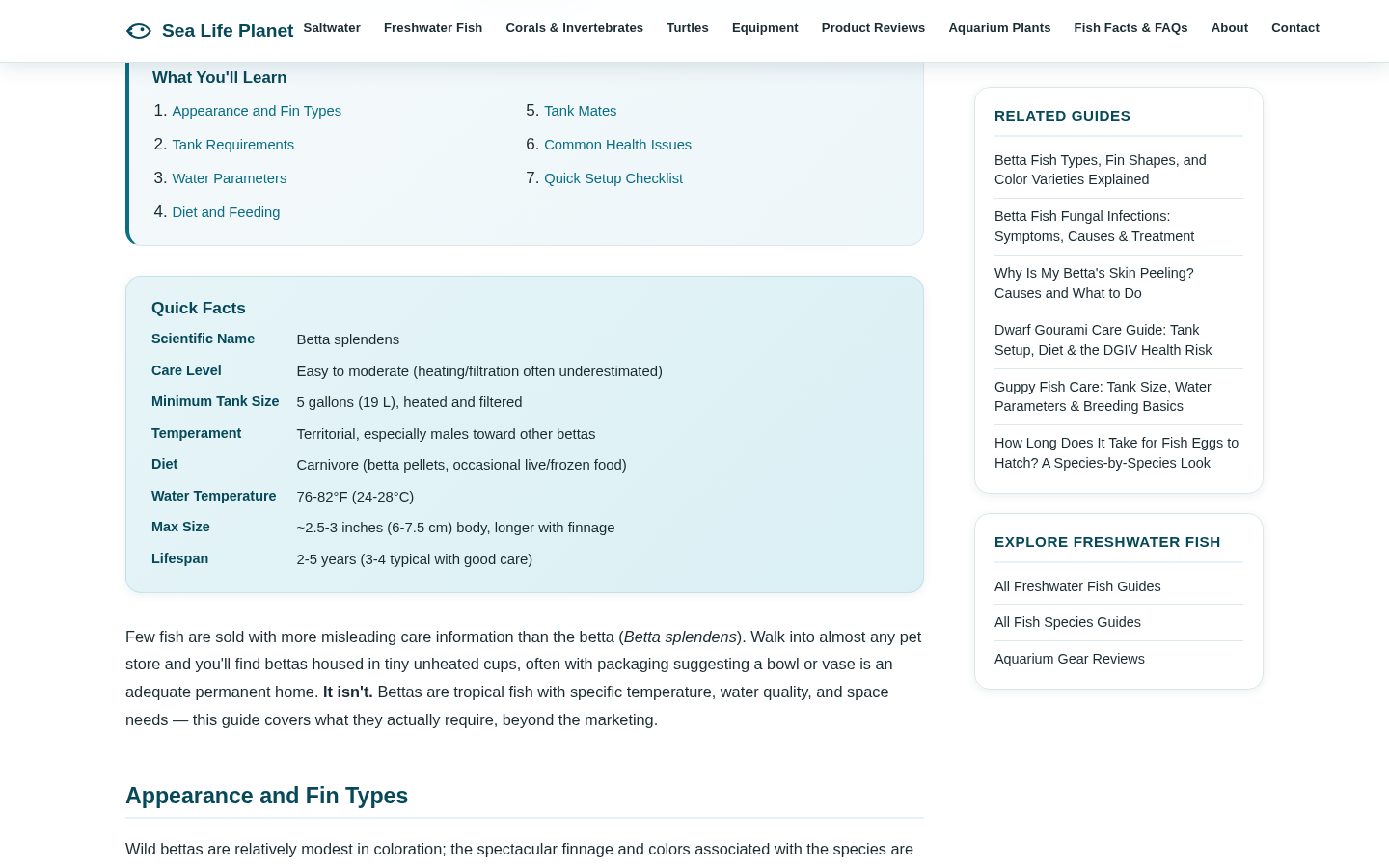
Flagship species guide framed mid-page: 'What You'll Learn' TOC edge above, full Quick Facts definition panel (Scientific Name, Care Level, Minimum Tank Size, Temperament, Diet, Wa
How warm is warm enough, and why steady beats exact
The range betta keepers generally aim for is the mid-to-high 70s: roughly 76–81°F (24–27°C), with 78–80°F (25–27°C) as a common target. If your tank holds somewhere in that band, you are in good shape.
Steady matters more than hitting one exact number. A degree or two of drift across a day is normal. A tank that swings six or eight degrees between afternoon and 4 a.m. is a different situation, because the fish is managing a moving environment on top of everything else. The goal is a narrow band that holds through the night, not a perfect dial reading at noon.
To find out what your tank is doing, leave a thermometer in the water and check it at three points in the day — morning, afternoon, and late evening — for several days. The pattern tells you more than any single reading.
When a betta tank can work without a heater
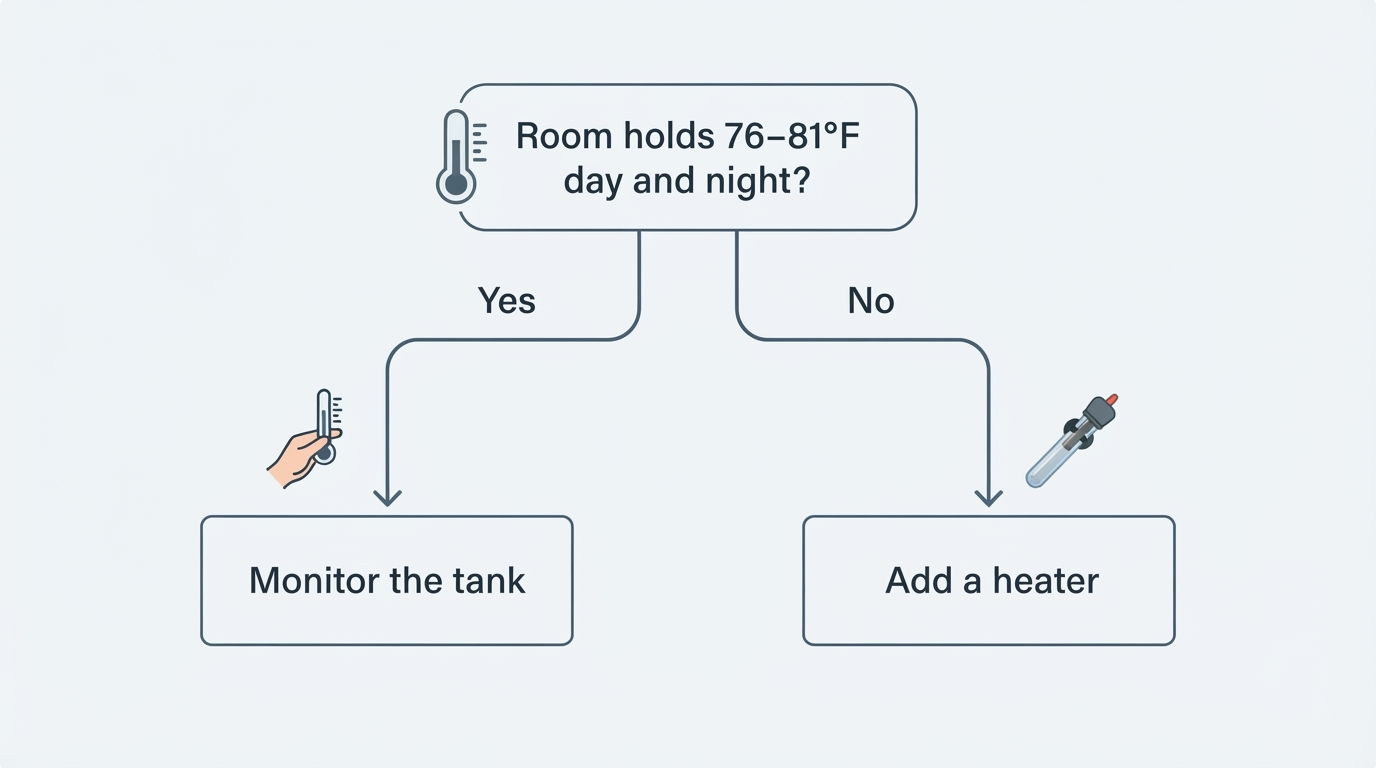
A heater solves a room problem. If your room does not have that problem, the heater is optional.
That means the no-heater case only holds when the water stays in the mid-to-high 70s day and night, all year: through winter nights, through summer air-conditioning, through heat waves and cold snaps. A room that reads 78°F on a mild spring afternoon can drop into the 60s at 3 a.m. in January, or in August with the AC running.
The variables that break the no-heater arrangement are worth naming:
- Air-conditioning and open windows in summer
- Cold nights, especially in winter and the shoulder seasons
- Basements, garages, and rooms far from central heating
- Tanks near doors, windows, or AC vents
- Small volumes of water, which change temperature quickly
If you want to test the theory, put a thermometer in the tank and check it over a full week, including one overnight reading. If the water never leaves the 76–81°F band, you can reasonably go without a heater. If it dips overnight even a few times, the heater is not really optional — it is the piece of equipment that makes the rest of the setup predictable.
How to heat a betta tank, step by step
You need four things before you start: a tank that is set up and cycling, an adjustable heater rated for your water volume, a separate thermometer rather than the dial on the heater, and enough water movement to spread heat through the tank.
- Size the heater. A common starting rule is about 5 watts per gallon, then size up if the room runs cool. In practice a 5-gallon tank usually lands in the 25–50 watt range once the room factor is included.
- Choose adjustable over preset. A preset heater assumes a fixed room temperature. An adjustable one lets you correct for a cold room or a hot summer without buying a second heater.
- Place it where the water moves. Mount the heater near the filter outflow or under the return rather than in a dead corner. Moving water carries heat through the tank instead of leaving one warm column around the glass tube.
- Set the target and leave it alone. Set the heater for the low end of your target band, then wait. Turning the dial every hour tells you nothing because water takes time to respond.
- Measure at the far end. Put the thermometer on the opposite side of the tank from the heater. That reading shows what the fish actually experiences, not what the heater claims.
- Check a full day and night. Read the thermometer in the morning, in the afternoon, and before bed. The job is done when the tank holds your target band across all three checks.
- Adjust in small steps. If the tank runs cold overnight, raise the setting by a degree or two and check again the next day instead of making one large correction.
A few safety habits belong with the heater:
- Unplug it for water changes, and never let it run dry. Most heaters also need to sit below a minimum water line while they are plugged in.
- Treat heat waves like cold snaps. If the room is warmer than your target, turn the heater down; it cannot cool water.
- Power outages are the real risk in cold weather. A heater cannot help with the power out, so the plan is to keep the room warm or slow the tank's heat loss until power returns.
- Small bowls swing fastest. More water means more stability and less daily correction.
How to keep a betta warm when there is no heater
Without a heater, the room is your heating system. Three changes do most of the work.
- Move the tank out of trouble. Away from windows, doors, and air-conditioning vents. A tank sitting in a draft loses heat all day without anyone noticing.
- Keep it covered. A lid reduces evaporation, and evaporation cools. A covered tank holds its temperature longer than an open one.
- Use more water. A larger volume changes temperature more slowly than a small one, so a bigger tank buys you time when the room cools.
For emergencies — a cold night, a power outage — wrapping the tank in a towel or blanket slows heat loss, but it does not add heat. Warm-water top-ups are a short-term nudge at best, and only when the replacement water is close to tank temperature.
Avoid improvised heat sources: lamps, reptile mats, and heating pads built for other animals do not hold a water temperature steady, and uneven heat from above or below is harder on a fish than a cool, consistent tank.
What to check after any heating change
Give the tank at least a full day before judging a new setting.
- Temperature at both ends. Read the thermometer near the heater and at the far end. The gap between them tells you whether water is moving.
- The overnight reading. Morning is the coldest point in most rooms, so that reading counts the most.
- The fish. A comfortable betta is active, curious about food, and moves around the tank. A cold one sits low, holds its fins tight, and ignores food.
- Feeding. Digestion slows in cool water, so smaller meals are safer than the usual amount until the tank is warm and stable again.
Quick answers: nights, filters, bubblers, and no-heater setups
Do bettas need a heater at night? Night is exactly when you need one. Rooms cool after dark, and a thermostatic heater holds the water in range while you sleep. If you are testing a no-heater setup, the overnight reading is the one that decides it.
Do bettas need a heater and a filter? They do two different jobs. A filter moves water and keeps it clean; it does not warm anything. In practice a filter helps a heater work better because moving water spreads heat, which is one more reason to run both in a small tank.
How long can a betta live without a heater? There is no fixed number to plan around, and that is the useful answer. A betta can survive cool water, but chronic cold slows metabolism and immune function, which lowers the odds over time rather than killing the fish on a schedule. The goal is steady warmth, not survival.
Do bettas need a bubbler? An air stone adds surface movement and gas exchange. It does not heat water. If your heater is doing its job but the surface looks flat and still, a bubbler is a cheap addition; if the tank is cold, a bubbler will not fix that.
The pattern behind all four answers is the same: warmth comes from the water, and the equipment around it either holds that warmth steady or does something else entirely.