How Long Do Betta Fish Live?
The figure repeated across care guides and keeper communities is two to four years for a well-kept betta. Fish kept in stable warm water, with regular partial water changes and a protein-based diet, often reach the top of that range and occasionally pass four years. Reports of five or six years exist, but they are the exception, not the expectation.
Two details make the range more useful. First, lifespan counts from hatch, not from the day the fish came home. Bettas are usually sold somewhere between three and twelve months old, so a fish that lives four years may only spend three of them with you. Second, the number is a curve, not a date. A betta that spends its first year in cold, unfiltered water often reaches year two carrying damage that better care cannot undo. The earlier the setup improves, the more of the curve you can still influence.
What Decides Whether a Betta Gets Three Years or Five
Five factors do most of the work, and four of them sit in your hands.
Factor | What shortens a betta's life | What supports a longer one |
|---|---|---|
Temperature | Room-temperature water with night-time swings | Stable 78-82°F, checked with a thermometer |
Tank volume | Bowls and containers under 2 gallons | 5 gallons or more, with real surface area |
Water quality | Ammonia and nitrite spikes, rare changes | Cycled filter, weekly testing, 25-30% changes |
Diet | Starchy flakes and overfeeding | Measured protein-first portions, twice daily |
Stress | Bare tank, strong current, harassment | Plants, hides, baffled flow, calm tank mates |
Each row is a lever, not a verdict. A heated five-gallon tank with lazy maintenance can still produce a sick fish, and a perfect setup cannot repair bad breeding. Read the table as a list of what you can actually control.
Heat and Tank Size Set the Ceiling
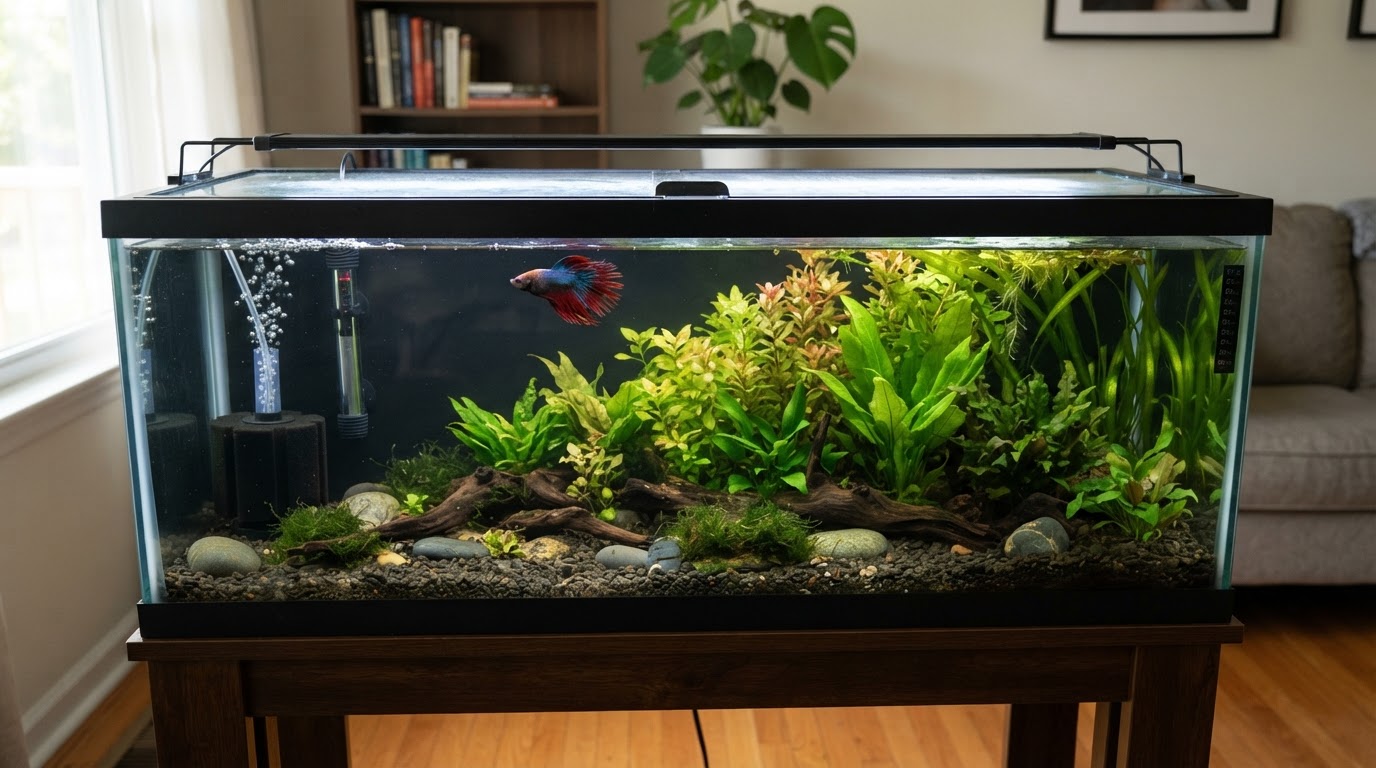
A betta's body works best in warm, stable water, commonly given as 78-82°F. The exact number matters less than the stability: a tank that drifts from 74°F at night to 82°F in the afternoon stresses the fish every day. An adjustable heater plus a thermometer placed at the far end of the tank tells you what the fish actually experiences, not what the dial promises. A lid matters too, because bettas jump.
The old bowl habit fails on the same points. Small volumes change temperature fast, hold little surface area for gas exchange, and leave no room for a filter or a heater. A five-gallon tank with a lid, a small heater, and a gentle filter is the practical baseline, not an upgrade. Ten gallons is easier still, because a larger volume of water takes longer to drift.
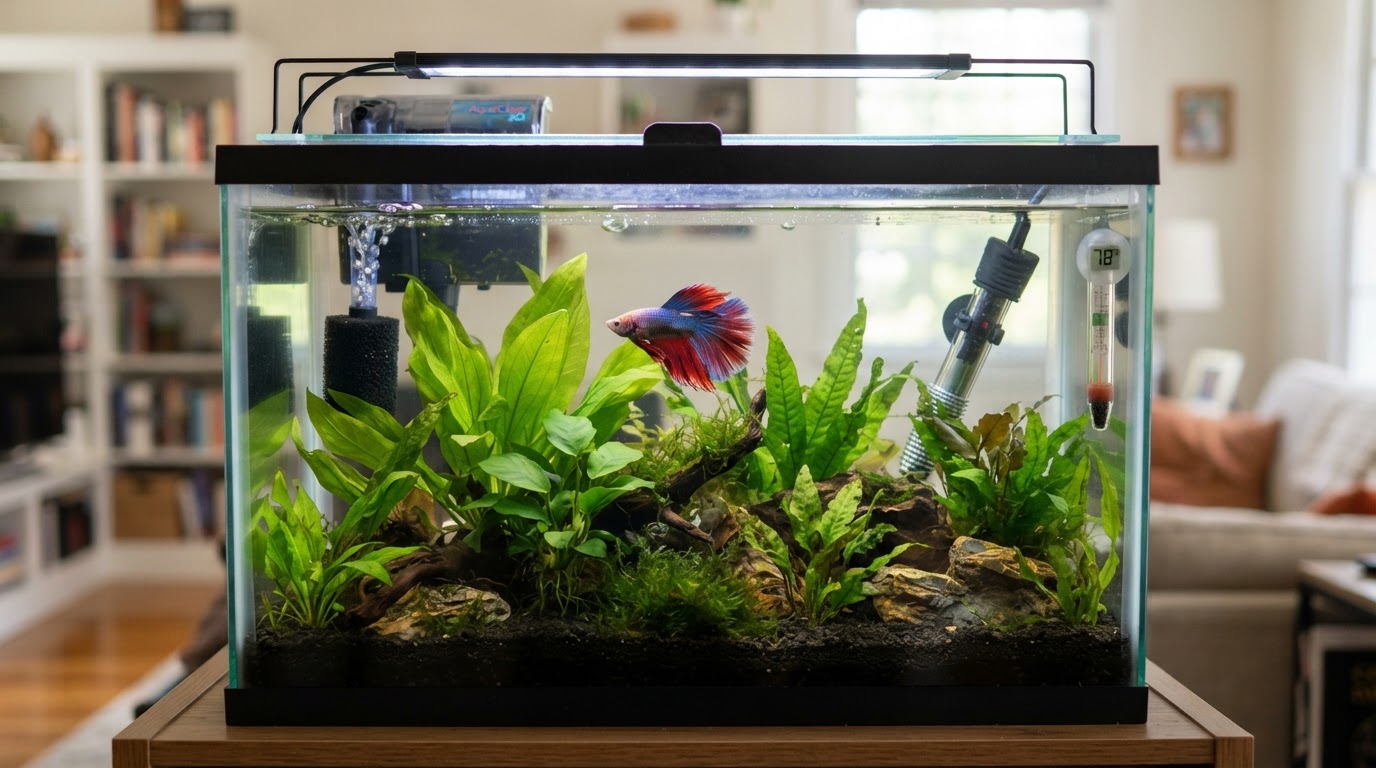
Shallow water is not the same as tiny water. Wild bettas come from warm, slow, plant-filled shallows with enormous surface area, not from puddles that evaporate in a week. A bowl imitates the wrong half of that picture.
Water Quality: The Part Nobody Sees
Ammonia and nitrite should read zero. Nitrate should stay low and stable, which is why a test kit is more useful than a calendar. In a cycled tank, the filter converts ammonia into nitrite and then into nitrate; water changes remove the nitrate and reset the minerals the fish and plants use.
A weekly change of 25-30%, with a gravel vacuum and a gentle rinse of filter media in removed tank water, keeps that cycle healthy. Run the same short loop every week and write down the numbers. Rinsing media under tap water, replacing it every month, or skipping changes because the water looks clear are three common ways to crash a filter and shorten a fish's life.
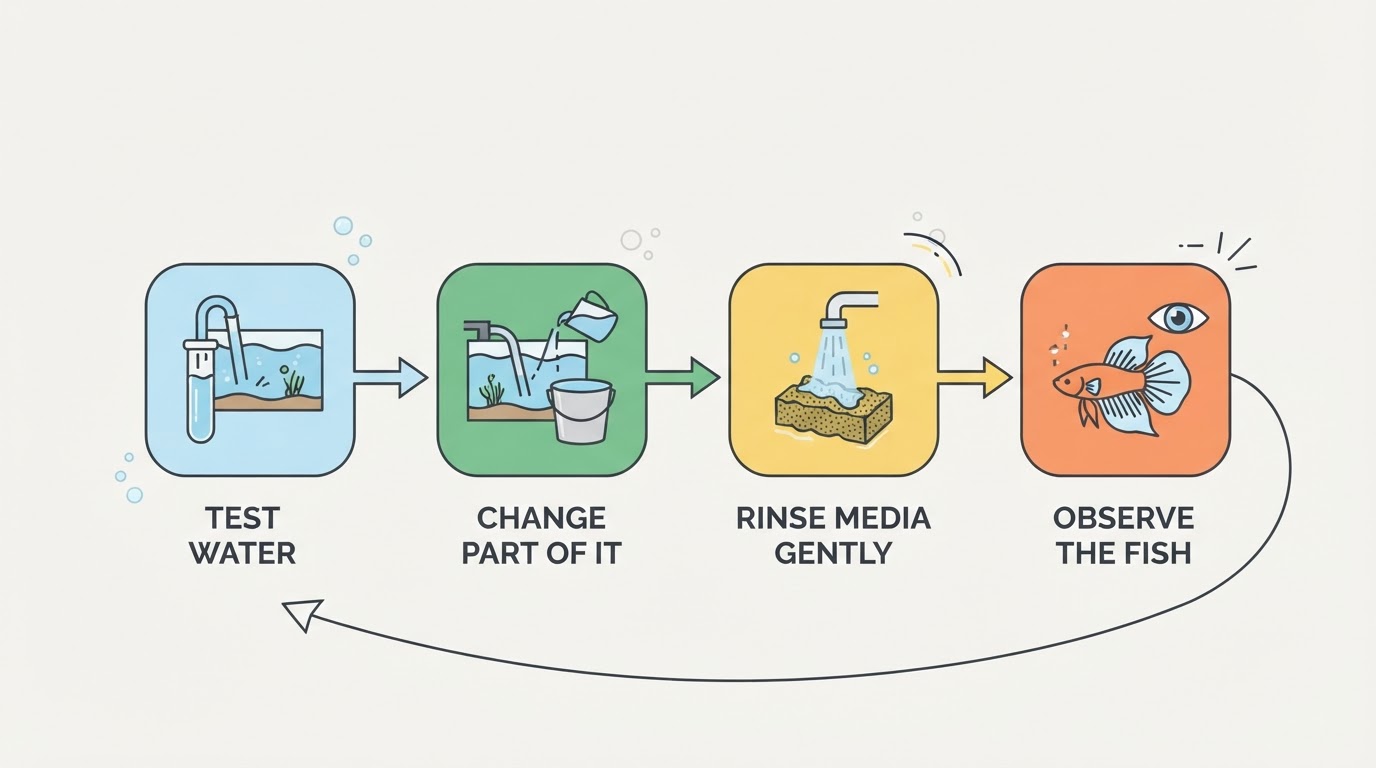
Flow deserves a mention. Bettas are not current fish. If the filter pushes them across the tank, baffle the outlet with a sponge or a piece of filter floss so the fish can rest.
Feeding: Small Portions, Protein First
Bettas are insect eaters. Their stomach is roughly the size of one eye, which is the simplest portion guide there is: two to four small pellets once or twice a day, adjusted to the fish's size and activity. A protein-based pellet or frozen food such as daphnia or brine shrimp fits that biology better than a starchy flake designed for community tanks.
Overfeeding is the quiet failure. Uneaten food fouls the water, and a bloated betta can develop constipation or buoyancy problems. One fast day a week is a reasonable reset, and soaking dry food briefly before feeding helps. If the belly looks distended for more than a day, check water quality first, then reduce portions before reaching for medication.
Stress, Enrichment, and Tank Mates
A bare, bright tank with a strong filter gives a betta nowhere to retreat. Plants, floating cover, a cave or two, and dimmer lighting let the fish choose where to be, which is what enrichment looks like for a territorial species. A mirror can prompt a short display, but leaving one in place turns a natural behavior into a constant threat.
Tank mates are a trade-off, not a requirement. Bettas are territorial, and other bettas, especially two males, should not share a tank. In a five-gallon tank, a single betta is often the honest stocking. In a larger, planted tank, small snails or shrimp may work, and some keepers add calm schooling fish, but the betta's temperament and the tank's footprint decide that, not a general rule.
Genetics and How the Fish Was Sourced
You cannot train a fish out of its genes. Mass breeding for color and fin shape has produced lines that are more fragile than their wild ancestors, and some fish arrive already compromised. That is one factor you cannot change after purchase, but you can change what you buy.
Look for an active fish with clear eyes, steady breathing, unclamped fins, and no gold dust or white spots. Avoid a fish that sits on the bottom, gasps at the surface, or shows ragged fin edges. If the store keeps its bettas in small unheated cups, assume the fish has already spent weeks in stress and plan a careful introduction, ideally with a short quarantine in a separate container before adding it to a stocked tank.
Illness: What to Catch Early
A daily thirty-second look does more than most medicine cabinets. Watch appetite, breathing rate, fin position, and color. Clamped fins, gasping, white spots, a velvety gold coating, frayed fin edges, swelling, or a fish that floats or sinks without control are all early signals.
The first response is almost always the same: test the water, correct temperature, and do a partial water change. Many early problems are water problems. If symptoms persist, treat for the specific condition with the matching medication rather than mixing a broad cocktail, and isolate the fish if other animals share the water.
Signs of Healthy Aging
An older betta often slows down before anything looks obviously wrong. Color may soften, the fish may rest more, and fins may grow in thinner. Those changes are not automatically illness. What matters is whether the fish still eats, still reacts to you, and still swims between resting spots.
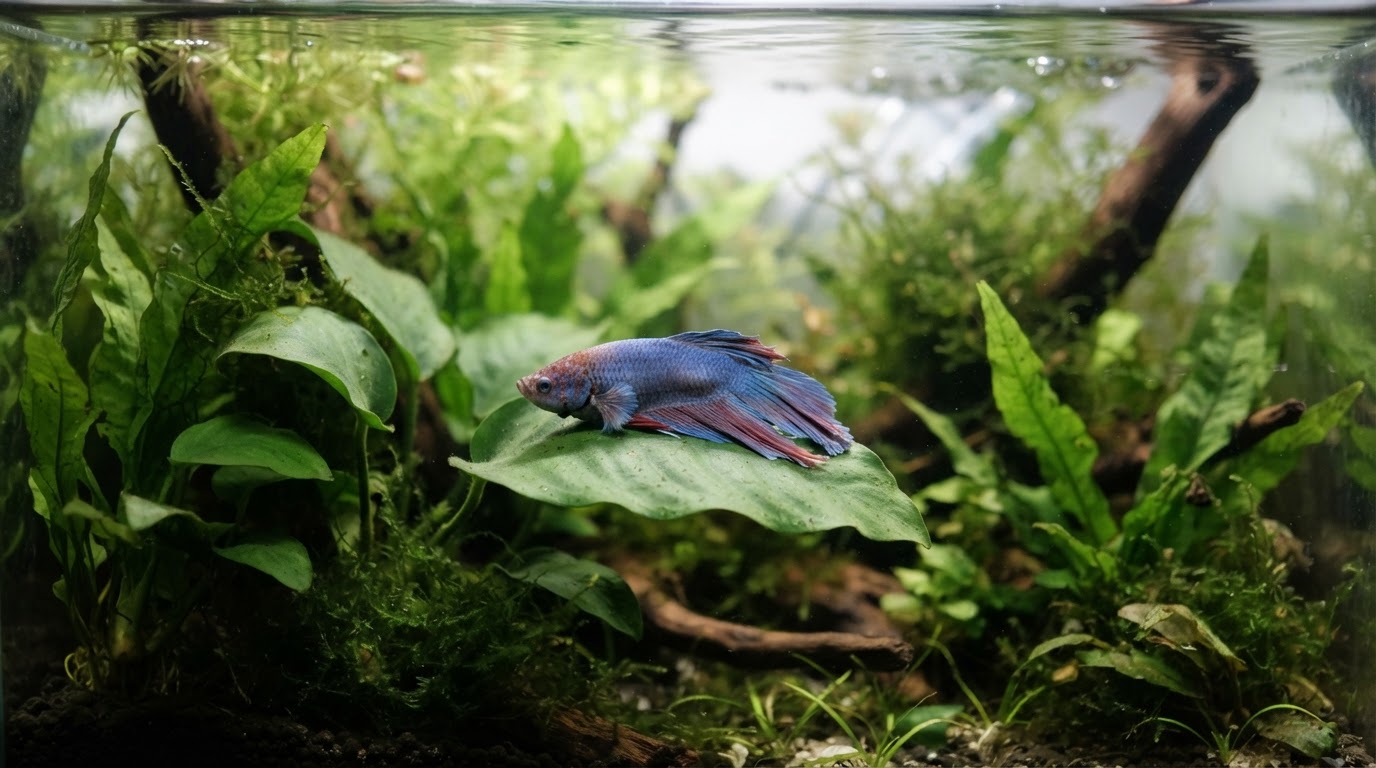
Adjust the tank to the fish. Lower the flow, add a broad leaf near the surface as a resting place, keep the temperature steady, and offer smaller meals more often. Unexplained weight loss, a sunken belly, or labored breathing is a reason to check water and consider treatment, not a normal part of aging.
Myths That Cost Years
"Bettas live in puddles." They live in warm, shallow, planted water with a large surface area. A sealed bowl is not that habitat.
"A bowl is traditional, so it is fine." It cannot hold a heater, a filter, or a thermometer, and its temperature moves with the room.
"Bettas do not need a heater." Room temperature is usually several degrees too cold and far too unstable.
"One year is a normal lifespan." It is a common outcome in poor setups, not a natural limit.
"They can eat any fish food." Starchy flakes and overfeeding wear out the digestive system and foul the water.
"A bigger tank is more work." A bigger tank is more stable. The work is in the water changes, not the volume.
A Lifespan-Focused Care Checklist
- Tank of 5 gallons or more, with a lid and a thermometer at the opposite end from the heater.
- Adjustable heater holding 78-82°F with no daily swing of more than a degree or two.
- Cycled filter with baffled flow, so the betta can rest without being pushed.
- Test kit for ammonia, nitrite, nitrate, and pH; ammonia and nitrite at zero.
- Weekly 25-30% water change with a gravel vacuum, logged so you notice drift.
- Two measured feedings a day at most, protein-first, with one fast day a week.
- Live or silk plants, floating cover, and at least one hide.
- A thirty-second daily check of appetite, breathing, fins, and color.
- A quarantine plan for any new fish, plant, or invertebrate.
What You Can Realistically Expect
A betta that reaches four or five years has usually had three things go right: stable warmth, clean water, and decent genetics. You control the first two. The third is a lottery, which is why buying an active, clear-eyed fish from a clean source is worth more than any supplement.
The goal is not a record. It is a fish that eats well, moves between resting spots, and shows color for as long as its biology allows. Get the heat and the water right first; most of the other decisions follow from those two.