
Piranha Fish Care: Tank Size, Group Size and Feeding
Piranhas need more room, more fish, and more filtration than most people expect. This guide walks through each decision in order, so you can plan the tank before you buy the fish.
Start with the species and its adult size
Piranhas are sold under several names, and adult size differs between species. Before you plan anything else, identify the exact species you plan to keep and look up its adult length.
The tank and group figures in this guide refer to the red-bellied piranha (Pygocentrus nattereri), the species most often kept in home aquariums. A tank planned around a juvenile will be too small within a year.
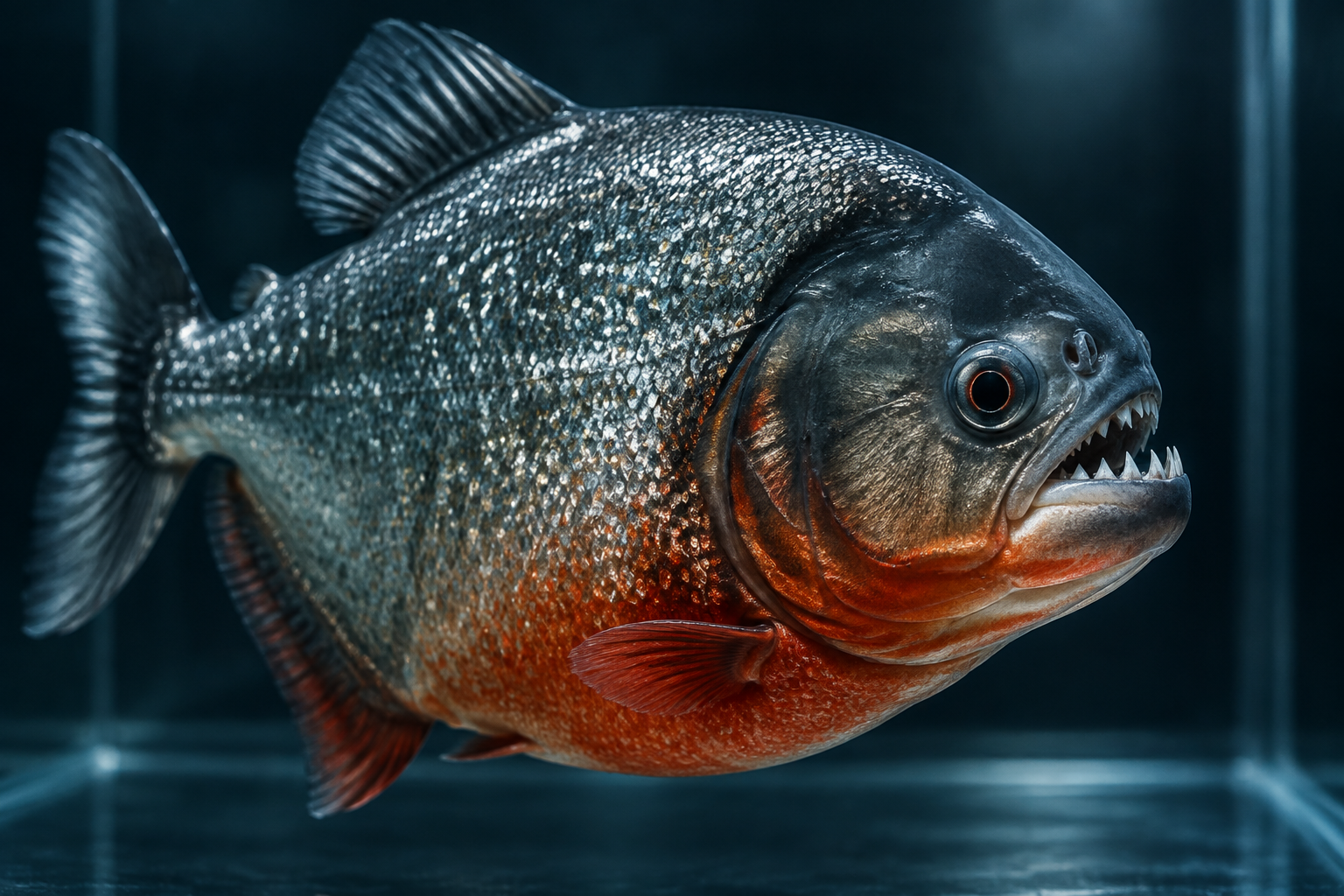
Plan the tank size from the group you will keep
Published care guides give different tank sizes for piranhas, so use these figures as a starting range rather than a fixed rule.
Juvenile Range
For a group of four juveniles, 75 gallons is the absolute minimum required for healthy development.
Adult Group Standard
For a group of four to six adults, many guides list 100 gallons or more. Large groups of six adults may require 125 gallons.
Work out the volume by hand
Measure the inside length, width, and water height in inches. Multiply all three, then divide by 231. Subtract 10% for décor.
Why piranhas do best in a group
A group of at least four (preferably six) spreads out social behavior. Keeping fish in similar size classes is critical—size disparity makes smaller fish targets.
Underfed groups become aggressive. Plan for sufficient feeding from the start to maintain social stability.

Filter for the volume and the waste
Piranhas eat meat-based food, which produces significantly more waste than plant-based diets. Choose a filter rated for the full tank volume and verify its turnover rate per hour.
Keep the water stable
Test ammonia and nitrite before adding fish; both must remain at zero. Regular partial water changes are mandatory to control nitrate levels.
Feed the whole group every time
Offer a varied meat-based diet. Remove uneaten food within minutes to prevent fouling. Use tongs or feeding tools—never your hands.
REFERENCE: SPECIES FEEDING SCHEDULE MANDATORY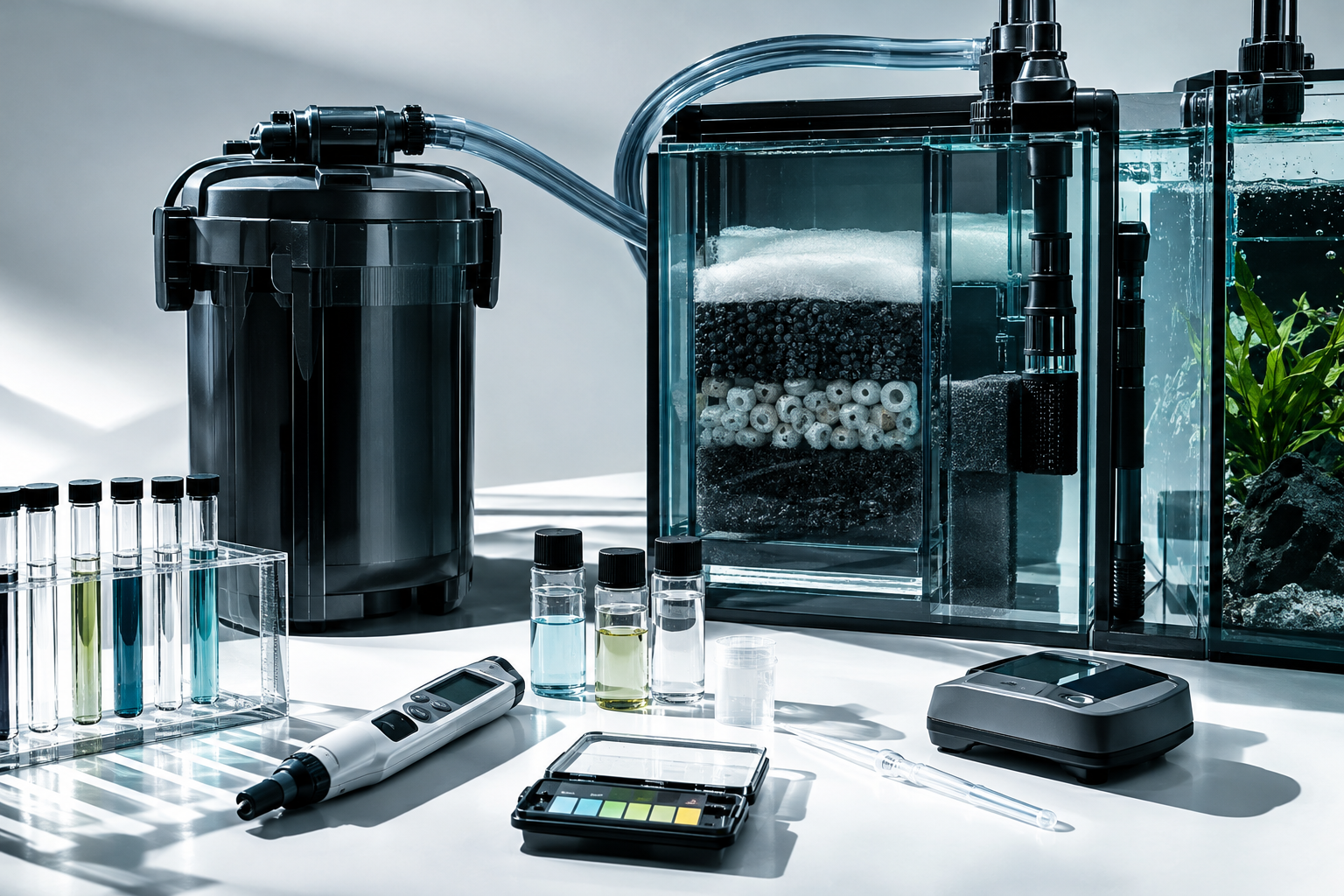
Before you buy, check these six points
Species Confirmation
Confirm the species and look up its adult length. Crucial for long-term tank planning.
Group Sizing
Choose the group size, four to six fish for red-bellied piranhas. Prevents targeted aggression.
Manual Calculation
Measure the tank inside and calculate its volume by hand to ensure accuracy.
Tank Selection
Pick a tank at least as large as the adult figures, prioritizing health over space.
Filtration Check
Add a filter rated for the full volume, and check its turnover for heavy organic waste.
Water Cycling
Cycle the tank with ammonia and nitrite tests before adding any fish.
If you want a faster check, our tools do the arithmetic for you.
Check your numbers with the calculators
Use the tank volume calculator to confirm dimensions, then the filter turnover calculator to check equipment compatibility.
Accurate measurements for piranha health
Check the rules where you live, and handle with care
Ownership rules for piranhas vary by country, state, and city. Check your local regulations before buying. Keep hands out of the water when the fish are feeding, and use tongs or a net for maintenance, because piranhas bite.
Public note: Tank figures differ between published care guides. Confirm the figures for your species before buying a tank.
Frequently asked questions
How many piranhas should be kept together?
Published guides advise a group of at least four, and many suggest six. Keep them in a group of similar-sized fish.
How big a tank do piranhas need?
For a group of four to six adult red-bellied piranhas, many guides list 100 gallons or more, and some recommend 125 gallons or more. Plan for adult size.
Can a piranha live alone?
Published guides advise against keeping a single piranha. A group behaves more naturally and is less likely to fight when it is large enough.
What do piranhas eat?
Piranhas eat meat-based foods. Feed the whole group, remove uneaten food, and check your species reference for the feeding schedule.
Do I need to check local laws before buying a piranha?
Yes. Ownership rules for piranhas vary by location, so check your local regulations before you buy.
Keep planning before you buy
Piranhas are a long-term commitment. Plan the tank, the group, and the filter first, then bring the fish home. For other freshwater species, browse the freshwater fish guides.
Browse freshwater fish guidesResearch-backed care guides for every species.