Check the animals and the basics before you chase the cloud
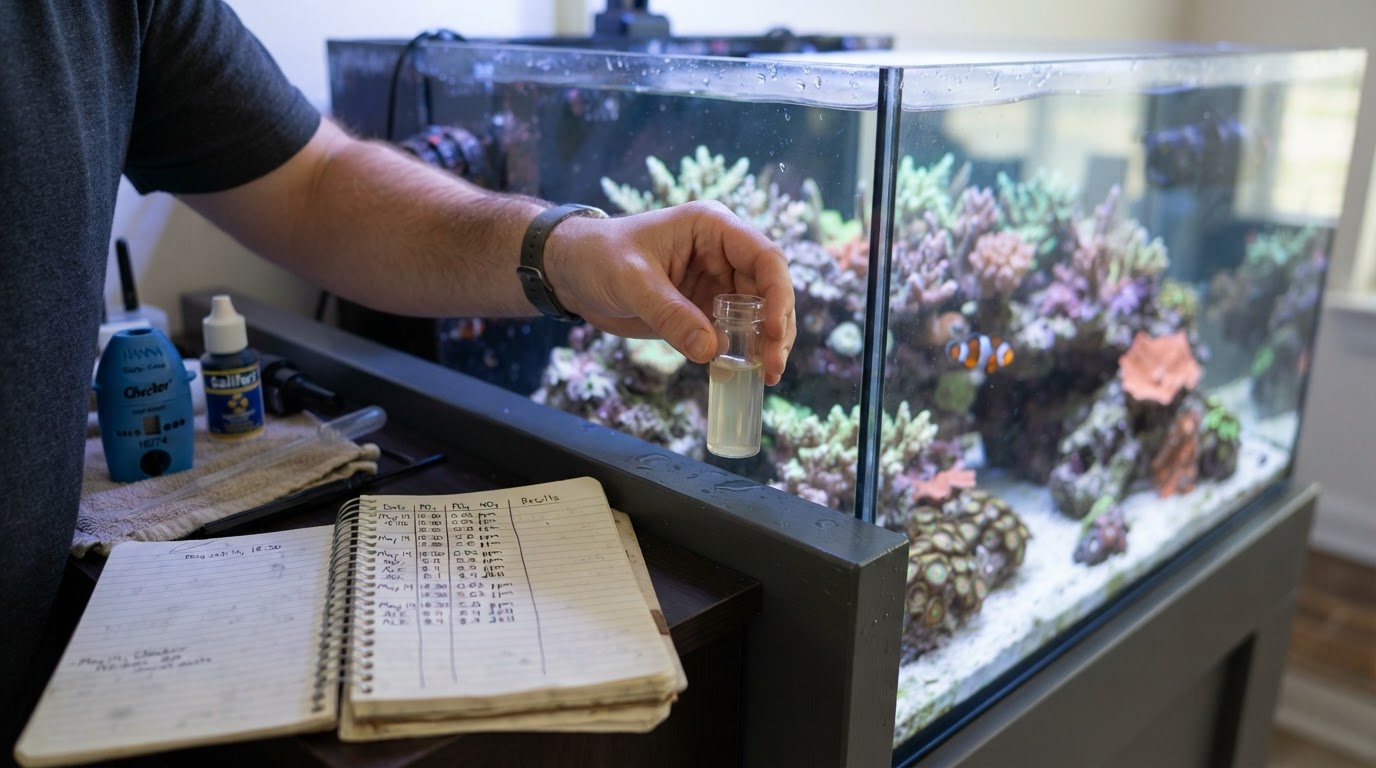
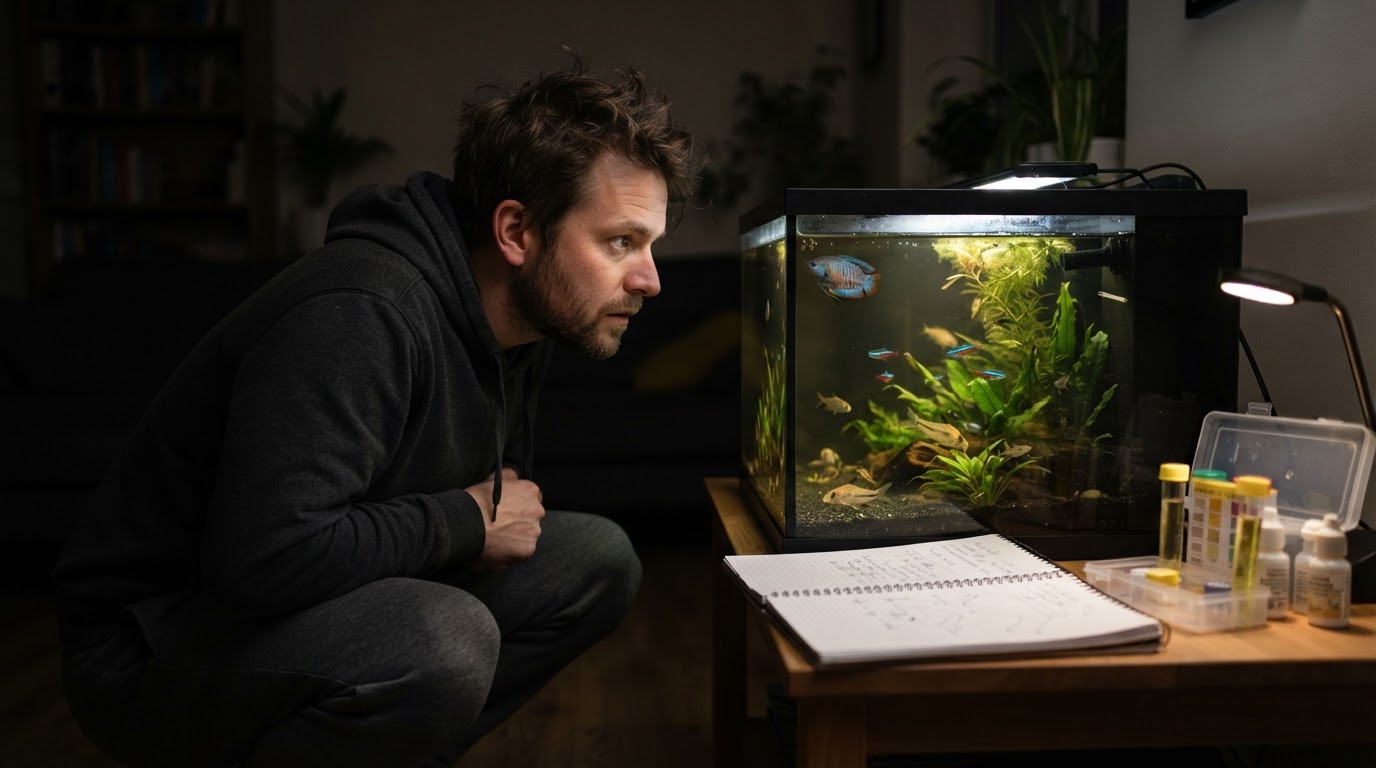
A cloudy tank is a symptom, not a diagnosis. Before classifying the haze, look at the livestock and the two parameters a water change most easily disturbs.
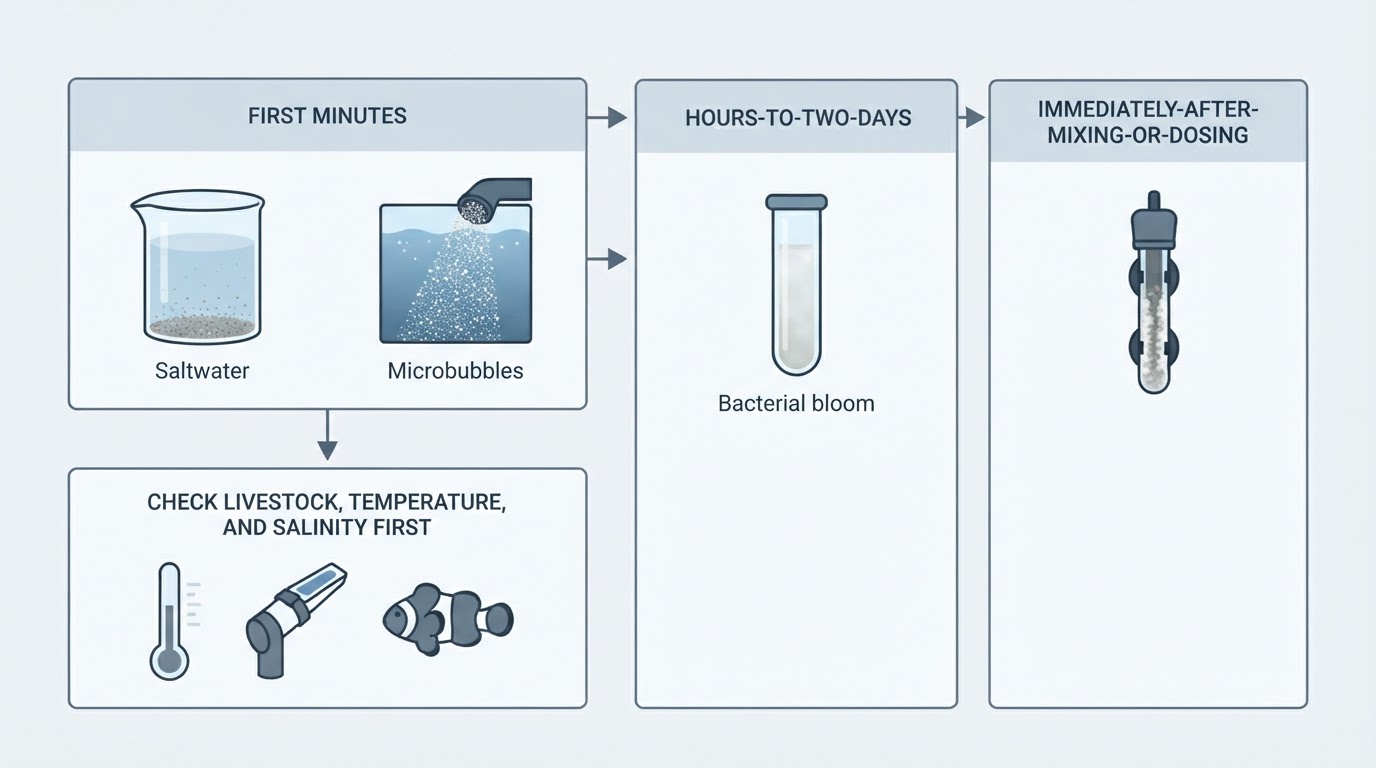
If fish are gasping, hiding, or breathing fast, or corals are closed and slimed over, treat that as the priority. Keep flow and surface movement running, then re-check temperature and salinity: a mismatch between the new water and the tank is a common reason animals react badly after a change (How to Do a Reef Tank Water Change). If the animals look normal and are feeding, you have time to work through the causes below.
The four usual suspects, separated by timing
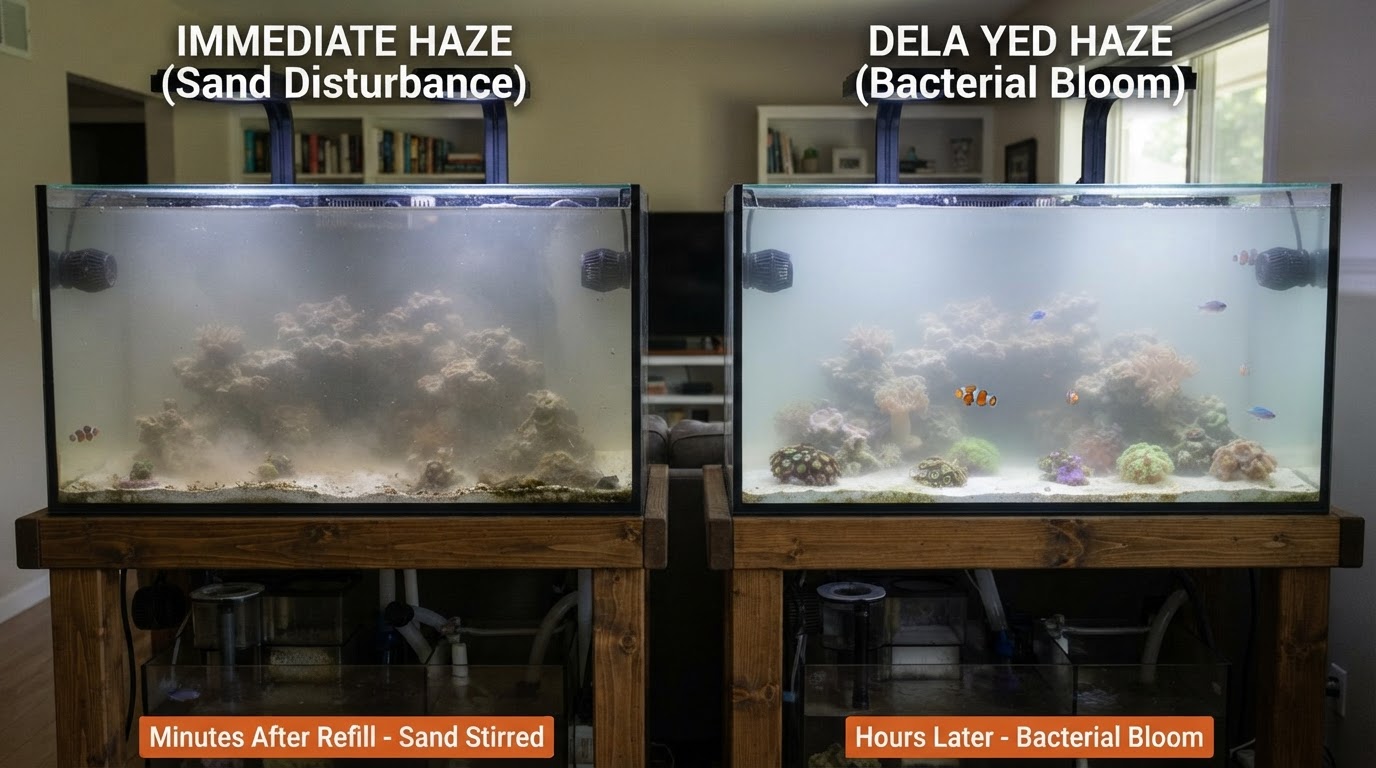
The single most useful clue is when the cloudiness started. Immediate haze and delayed haze almost never share a cause.
What you see | When it appears | Most likely cause | Safe first move |
|---|---|---|---|
Fine grey or tan dust, specks in the light | Minutes after the refill | Sand or detritus lifted by the new water | Stop the refill, add filter floss, let filtration run |
Sparkling haze, tiny bubbles clinging to glass and rock | Minutes after pumps restart | Microbubbles from the return pump, plumbing, or skimmer | Check sump level, intake fittings, and skimmer setting |
Uniform milky white haze with no visible particles | Hours to a day or two later | Bacterial bloom | Keep flow high, feed lightly, run filtration, and monitor |
Chalky white haze, white crust on a heater or pump, right after dosing or mixing | Minutes to an hour after the water goes in | Calcium carbonate precipitation | Stop dosing, add nothing else, re-test, fix the mix |
The timing split matches the distinction the hobby literature makes between mechanical, biological, and chemical cloudiness, and each category points to a different fix (Troubleshooting Marine Salt Problems).
Sand dust: mechanical, common, and mostly harmless
If the haze appeared the moment new water hit the tank, the cause is probably physical: refilling too fast, pouring onto the sand bed, or disturbing a mature substrate lifts fine particles into the water. It usually improves as the filter runs once the source stops. Refill more slowly, aim the flow into the sump or against a plate, and skip aggressive deep vacuuming of a mature sand bed (How to Do a Reef Tank Water Change).
Microbubbles: look for sparkle, not haze
Microbubbles look like suspended glitter: they rise, cling to glass and rock, and look worst right after the return pump or skimmer restarts. A low sump level, a loose intake fitting, or a skimmer still breaking in pulls air into the water. The fix is inspection rather than chemistry: top up the sump, tighten intake-side plumbing, and reset the skimmer. Once the air source is gone, the water clears as the gas equalizes.
Bacterial bloom: milky, uniform, and later
A bloom is the classic delayed haze: hours after the change, uniformly milky, without visible specks. It shows up most often in new aquariums, recently disturbed systems, and tanks carrying excess nutrients (Troubleshooting Marine Salt Problems). Heavy cleaning that knocks back filter bacteria can trigger the same response. The bloom means the system is rebalancing, so respond with support rather than panic: keep circulation high, feed lightly, and do not replace filter media.
Precipitation: chalky, sudden, and chemical
Precipitation makes the water look like skim milk and often leaves a white crust on heaters, pumps, and mixing gear. Two triggers show up again and again: new saltwater mixed incorrectly, and concentrated alkalinity or calcium supplements added too fast or too close together (Troubleshooting Marine Salt Problems). On the mixing side, adding water onto dry salt, mixing too long, or heating the batch too aggressively can push calcium and carbonate out of solution and lower the batch's calcium and alkalinity before it reaches the tank (Mixing Saltwater Guide). Pause dosing, re-test alkalinity and calcium, and fix the mixing routine before the next change.
Fix the new water before the next change
Most of these problems start in the bucket, not the tank. A repeatable batch is the cheapest prevention (Mixing Saltwater Guide):
- Always add salt to water, never water to dry salt.
- Start with purified RO/DI water, not tap water.
- Target 1.025 to 1.026 specific gravity for most reef tanks.
- Match temperature closely, usually within about 1°F of the display tank.
- Mix at least a few hours; 12 to 24 is common, but follow the salt maker's instructions, because some high-alkalinity salts precipitate if mixed too long or heated too aggressively.
- Calibrate the refractometer, and test the finished batch before it goes in.
Refill slowly and restart deliberately
The refill is where a good batch can still go wrong. Turn off the return pump, skimmer, auto top-off, and any heater that could run dry, but keep in-tank circulation running (How to Do a Reef Tank Water Change). Siphon from the sump or open areas instead of deep-stirring the sand bed, add the water slowly, then confirm the skimmer does not overflow and re-check salinity and temperature.
Frequently asked questions
Can I just add a water clarifier?
Not as a first move. The cloudiness has to be identified as particles, bacteria, or precipitate before an additive can help, and rapid corrections tend to create more problems than they solve (Troubleshooting Marine Salt Problems). Fix the cause first, then let filtration and time do the rest.
How long should cloudy water last?
Mechanical haze improves as the filter runs, and microbubbles fade as the gas equalizes. A bloom can linger for days while the system rebalances. If the haze worsens for more than a couple of days, re-check temperature, salinity, and the batch you mixed.
Is cloudy water dangerous for the fish?
It depends on the animals, not the color. Feeding and swimming normally is very different from gasping, hiding, or closed corals. If the livestock is distressed, treat the temperature and salinity match as the first suspect (How to Do a Reef Tank Water Change).
For water parameters outside the immediate post-change window, use our broader aquarium water quality guide; this checklist is limited to cloudiness that appears around a saltwater change.
What this guide cannot do
Cloudy water cannot be diagnosed from color alone; two tanks that look identical may need opposite responses. These checks narrow the likely cause but do not replace test kits, a calibrated refractometer, or a maintenance log. There is no universal clearing product and no single cause worth assuming.