Verify The Reading Before You Treat It
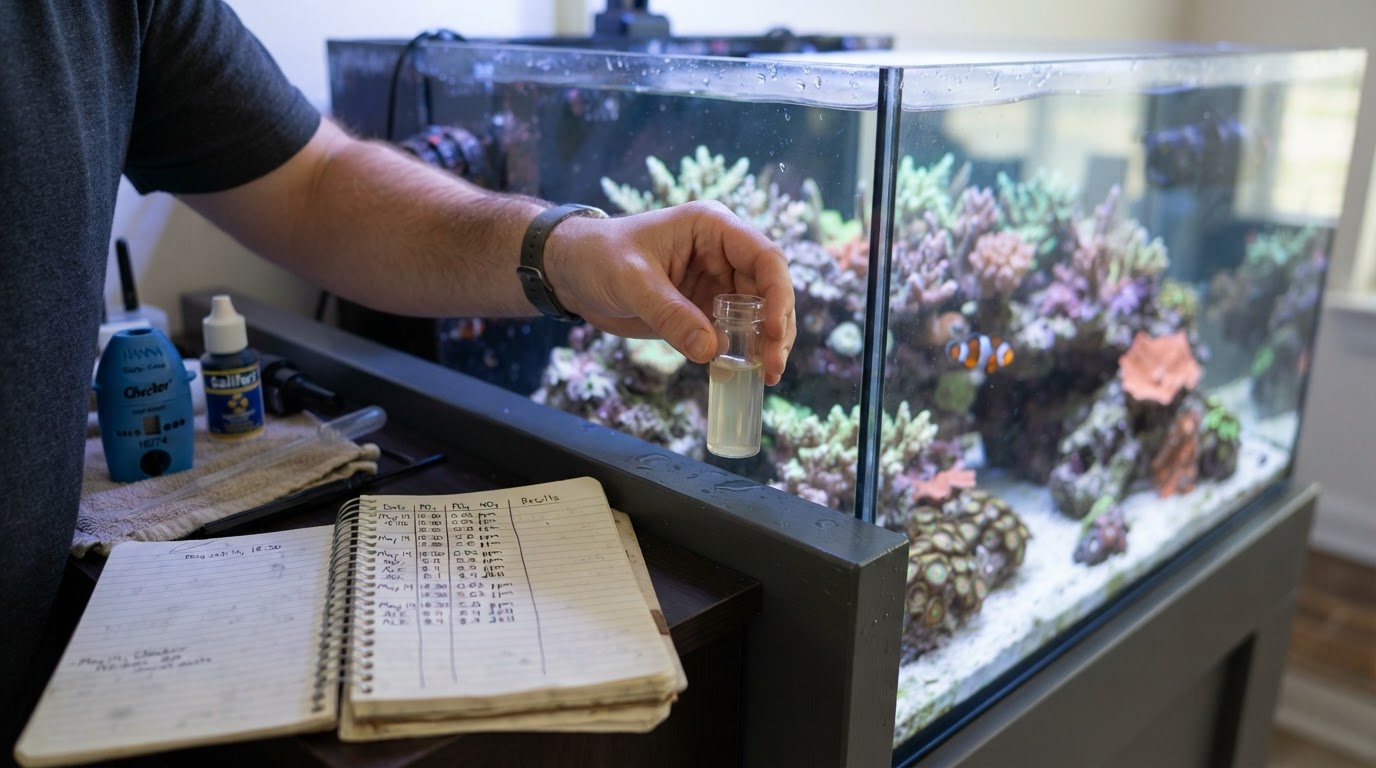
Two tests that both show zero can mean different things, because kits differ in precision and units.
- ppm or mg/L? For aquarium use they are the same number: one part per million is one milligram per litre.
- Phosphate or phosphorus? Some meters report phosphorus instead. Hanna Instruments' checker comparison shows the HI736 reporting 0 to 200 ppb phosphorus (roughly 0.000 to 0.613 ppm phosphate), while the HI713 and HI774 report phosphate in ppm. Comparing a ppb-phosphorus number with a phosphate target can put you out by roughly a factor of three.
- What is the detection limit? The same sheet lists the HI774 ultra low range at 0.00 to 0.90 ppm with 0.01 ppm resolution and accuracy of ±0.02 ppm ±5% of reading, and the HI713 low range at 0.00 to 2.50 ppm. Near the bottom of either range, one 0.01 ppm step is close to the instrument's noise floor.
So check the unit and range, repeat the test with fresh reagent and a clean cuvette, and treat a single zero as a data point, not a diagnosis.
Work Out Why Phosphate Is Low
- Corals, coralline algae, macroalgae and nuisance algae take up phosphate as they grow.
- Aragonite sand and live rock can bind phosphate, hiding it from the water column.
- Phosphate-removing media such as GFO do exactly what they are sold to do.
- Low feeding, a light fish load, or aggressive filtration can leave less input than the tank consumes.
Test nitrate too: nitrogen and phosphorus are consumed together, so a tank low in one is often low in the other. If the reading does not match the livestock - pale tissue, stalled growth - verify the test rather than adding more.
Choose A Product And Follow Its Label
No dose is correct for every reef tank, so start with the label of the exact product you bought.
- Use a product sold for aquarium use. Never add untreated household phosphate or non-aquarium chemicals to a reef tank.
- Read your bottle's label, not a forum post, and use the maker's dosing calculator if one is provided.
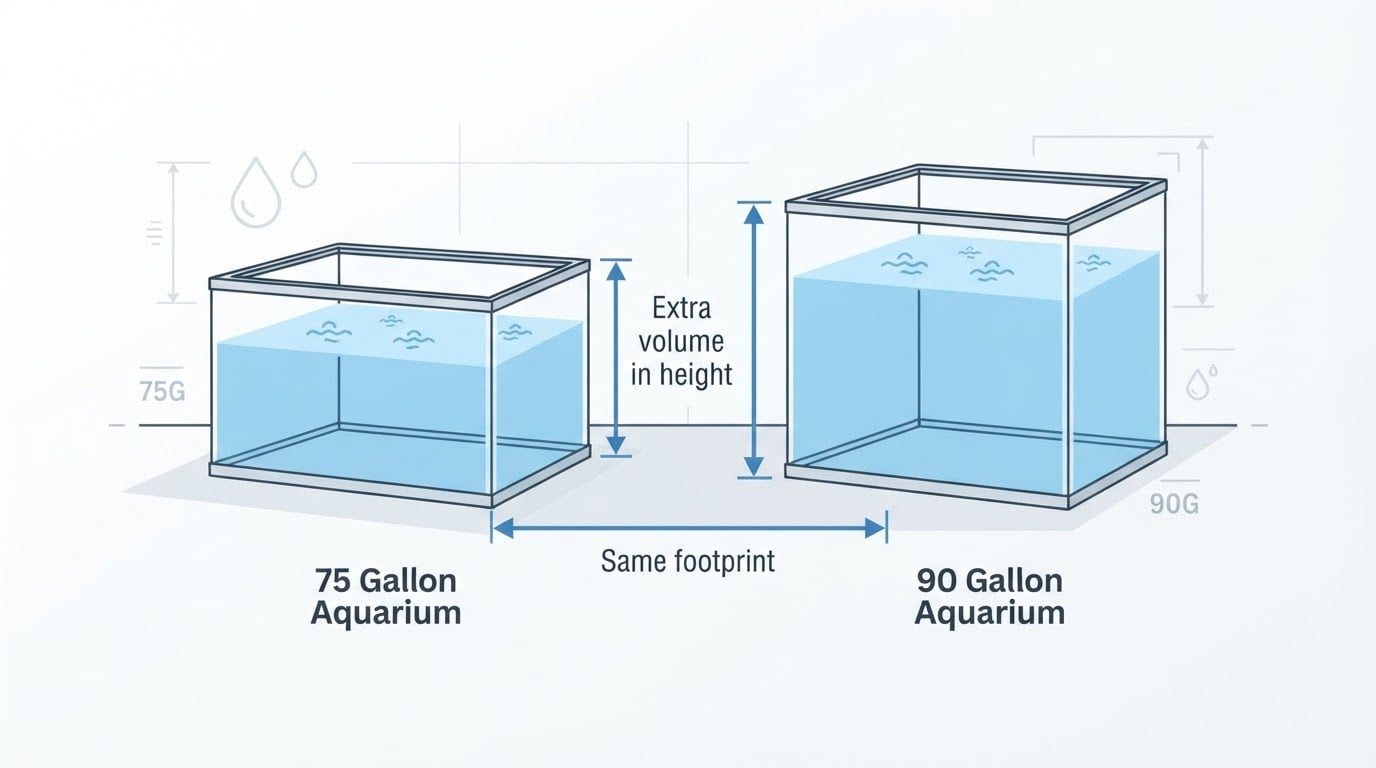
- Work from net water volume, not the tank's nominal size, because sand, rock and equipment displace water.
A worked example: the label for Brightwell Aquatics' NeoPhos says to test first, dose toward about 0.02 ppm, wait 24 hours, and retest nitrate and phosphate before acting again. It gives a 0.01 to 0.02 ppm maintenance target and warns that more than one strength has been sold, so check the gallons treated on your bottle. That is why no universal dose exists.
Use This Decision Table
What you see | What it usually means | Next step |
|---|---|---|
0.00 ppm on a kit whose resolution is 0.01 ppm | The value may sit below the kit's reliable floor | Repeat with fresh reagent and a clean cuvette, then confirm with a second method |
Zero, but corals look pale or growth has stalled | Low phosphate is plausible, but unconfirmed | Confirm unit and detection limit, test nitrate, then follow one product's label |
Phosphate falls after every water change | Dilution is outpacing input | Adjust change size or frequency, or dose after the change per the label |
Phosphate stays near zero even after feeding more | Corals, algae, rock or sand consume it as fast as it arrives | Stop chasing it with food and use a labelled phosphate product |
The reading rises past your target after a dose | Overshoot | Stop dosing, retest, and let normal uptake bring it back down |
Zero phosphate alongside high nitrate | The two nutrients are out of balance | Address the carbon or nutrient balance per that product's label and retest both |
Dose In Steps And Define "Done"
Verify the reading, find the cause, dose per the label, then retest - in that order, every time.
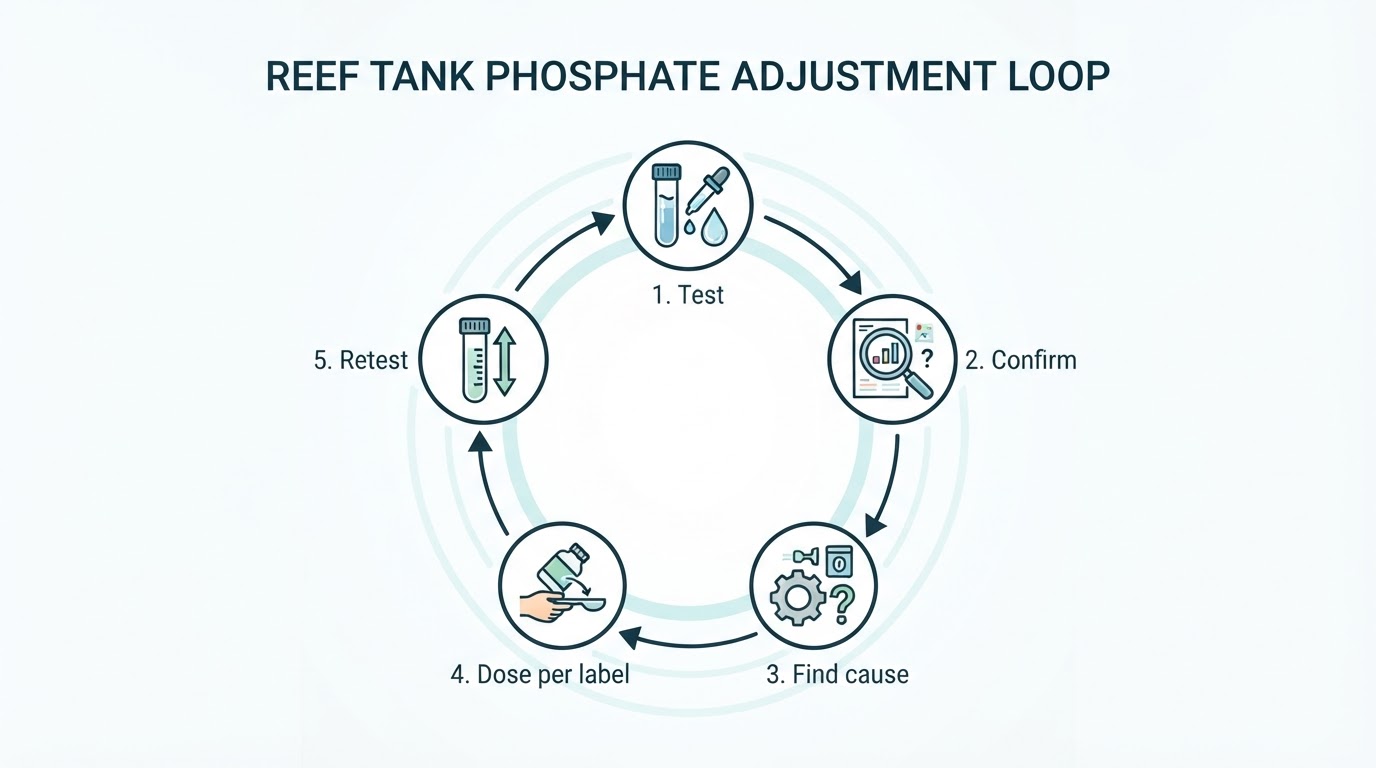
- Record a baseline: date, net volume, phosphate with its unit, nitrate, and the test method.
- Repeat the phosphate test to confirm the reading reproduces.
- Remove or adjust the obvious cause where you can.
- Read one product's instructions completely.
- Calculate the starting amount from the label and your net volume, using the maker's calculator if available.
- Add that amount, wait exactly as long as the label requires (24 hours on the NeoPhos label), then retest before deciding on another dose. Do not stack doses; the tank may still be binding or consuming the first one.
Completion check: two readings inside the label's target range, a day apart, with no upward trend and no algae bloom. Then move to a weekly check. If labelled dosing changes nothing, treat it as a demand or binding problem, not a dosing failure.
What This Method Cannot Tell You
- Low-range colorimeters are uncertain: ±5 ppb plus 5% of reading is a wide band at the bottom of the scale, so two tests a day apart can differ without the tank changing.
- Colorimetric kits measure dissolved reactive phosphate; they do not see phosphate bound in food, detritus, or tissue.
- Hobby target numbers are conventions, not laws; a value that works in one reef may be wrong in another.
- Adding phosphate naturally, through more food and more fish waste, also raises nitrogen and organic load, which is hard to steer.
- Raising nutrients will not fix a problem that is not nutrient-related, such as disease, flow, or lighting.
If your repeat tests instead show excess phosphate, use our separate guide to signs of high phosphate in a reef tank; that is the opposite problem and should not be treated by adding more phosphate.
Frequently Asked Questions
Why does phosphate read zero when I feed frozen food every day?
Feeding is an input, not a guarantee. Corals, algae, rock and sand consume or bind phosphate as fast as it enters, and a low-range kit may not resolve the residual. Confirm the unit and detection limit, repeat the test, and check nitrate before assuming the tank is empty.
Can I raise phosphate just by feeding more?
Sometimes, but it is the least controllable way: extra food raises phosphate along with nitrogen, ammonia and organic load. To raise phosphate levels in a reef tank in a measured way, a labelled product with a defined strength and retest interval is easier to steer.
How fast can I raise phosphate safely?
Slowly, with a retest between steps, following the label of the product you use. The NeoPhos label's own example is one application toward about 0.02 ppm, a 24-hour wait and retest, then maintenance at 0.01 to 0.02 ppm. Do not stack doses or chase a number; watch the livestock and algae, not only the meter.