Start With the Grazers That Actually Eat Hair Algae
If your rocks are covered in soft green strands, the most reliable invertebrate answer is a sea urchin. AlgaeBarn puts it plainly: there is probably no saltwater aquarium invertebrate that eats hair algae as reliably as a sea urchin, naming the pincushion urchin (Lytechinus variegatus) and the blue and red tuxedo urchins (Mespilia globulus) as shorter-spined options that mow hair algae like a lawn (AlgaeBarn).
Snails are the next slot, but species matters more than the label. That same guide rates Trochus snails highly for film algae on the glass while saying they are not much help against hair algae on rock; cerith snails, by contrast, readily consume hair algae and also eat detritus. Copepods such as Tisbe and Tigriopus are useful early because they graze new growth and trimmed stalks, but they cannot keep up with long, mature filaments alone.
Fish are the third layer, not the first. Tangs and certain blennies are the usual choices, and the court jester goby (Koumansetta rainfordi) is a genuinely useful small-tank option whose captive-bred specimens are known to take hair algae. Bulk Reef Supply's hair algae guide lists tangs, rabbitfish, and blennies such as lawnmower and starry blennies as the fish half of a cleanup crew.
Match the Grazer to Your Tank, Not the Biggest List
The animal that stars in a 180-gallon reef can be a poor fit in a nano, and the urchin that clears a patch can run out of food once the patch is gone. Use the situation you actually have:
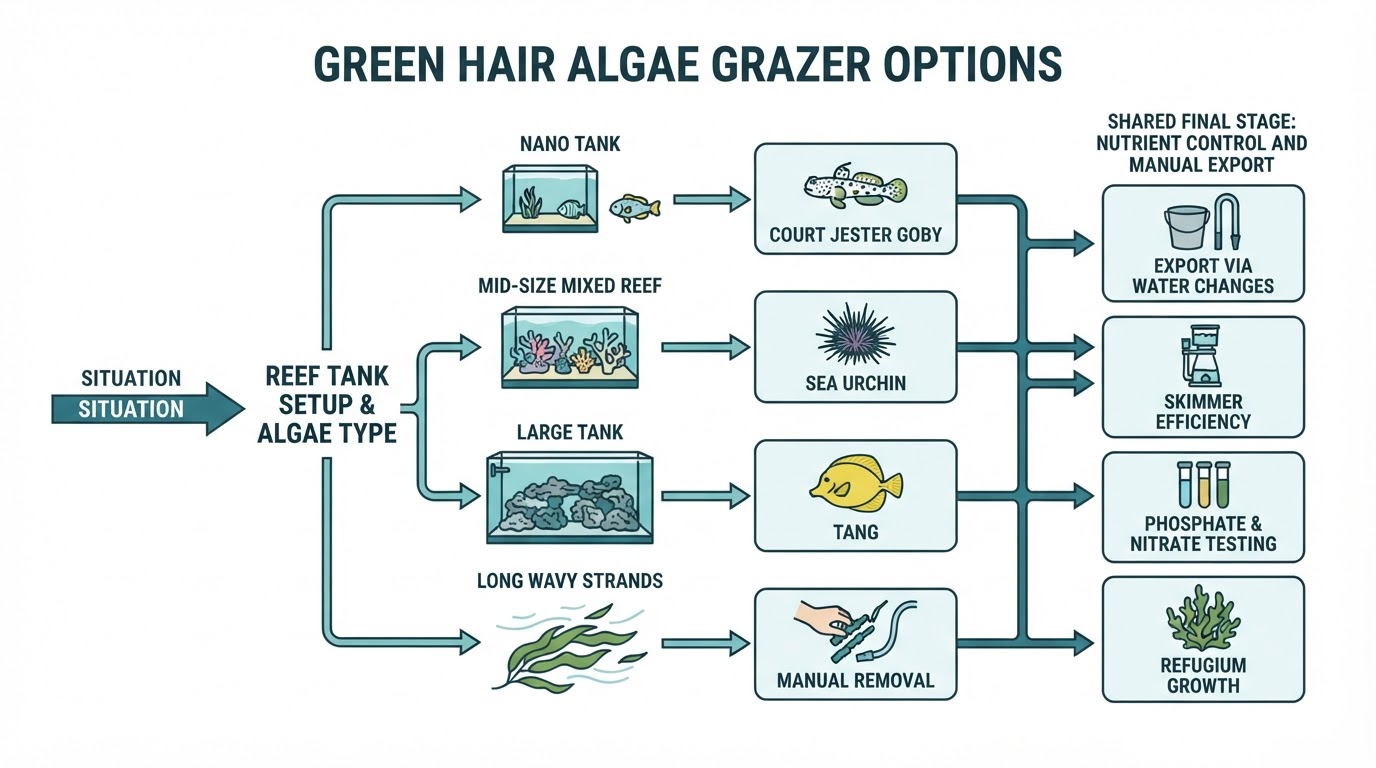
Your situation | Best first move | Why it fits | The catch |
|---|---|---|---|
Nano or small tank | Check whether cerith snails or a suitable small fish fit your existing livestock | Some small grazers include hair algae in their diet | Do not add a fish without checking its adult size, feeding needs and compatibility |
Mid-size mixed reef with hair algae on rock | A sea urchin, backed by cerith snails | Urchins are the most reliable invertebrate grazer; ceriths mop up smaller growth | Urchins can dislodge frags and need supplemental algae wafers or macro once food runs low |
Large tank with heavy growth | A suitable tang or rabbitfish plus an urchin sidekick | Larger herbivores strip the bulk fast; smaller grazers clean up the crumbs | Tangs need serious swimming room, and some are aggressive |
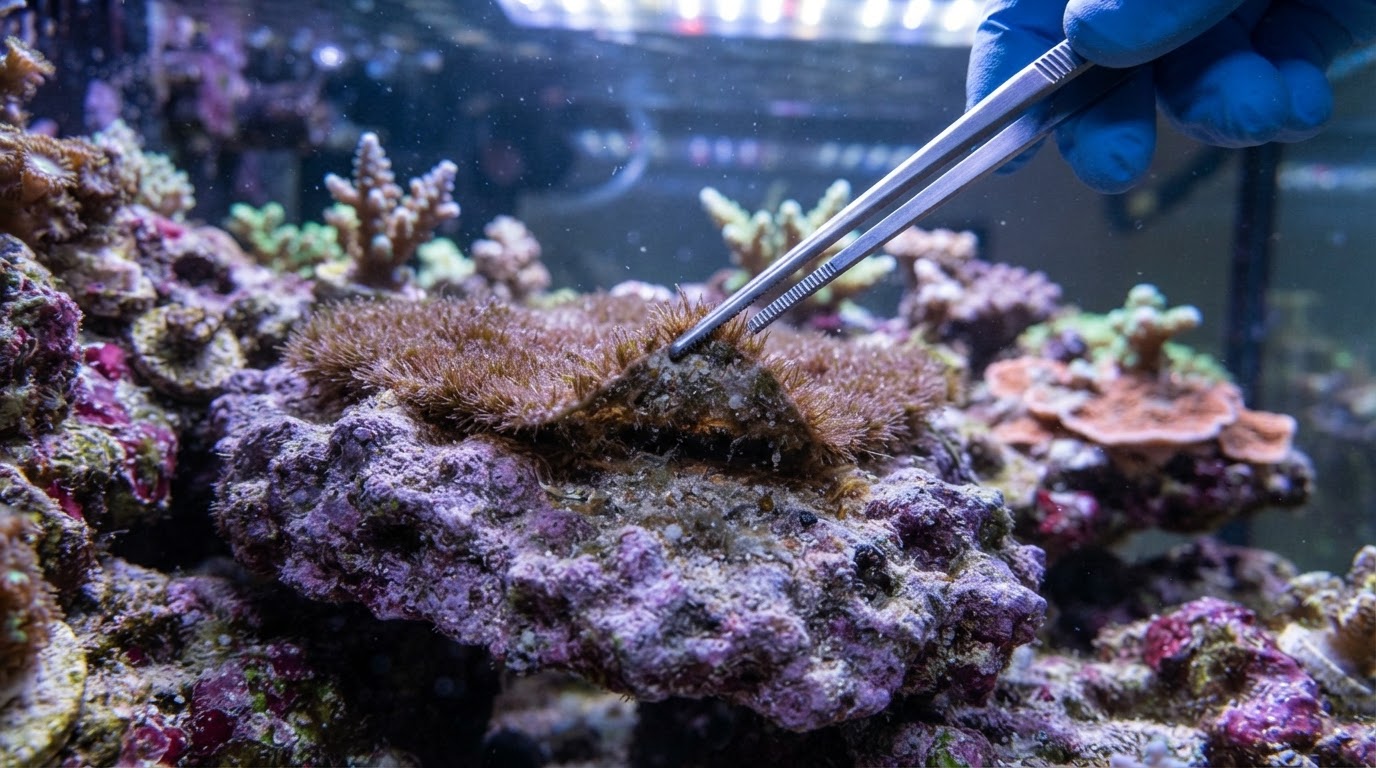
Long, wispy strands waving off the rock | Manual removal first, then grazers | Cleanup crews often ignore long filaments that are hard to bite | It takes repeated sessions, and scrubbing spreads fragments instead of removing them |
Two habits make the table work. Graze and export together, because a grazer that crops algae is not removing the nutrients that built it. Then stock for the algae you have now: too many grazers competing for the same shrinking food supply end up starving, and the decay feeds the next bloom.
Why No Creature Is a Guaranteed Cure
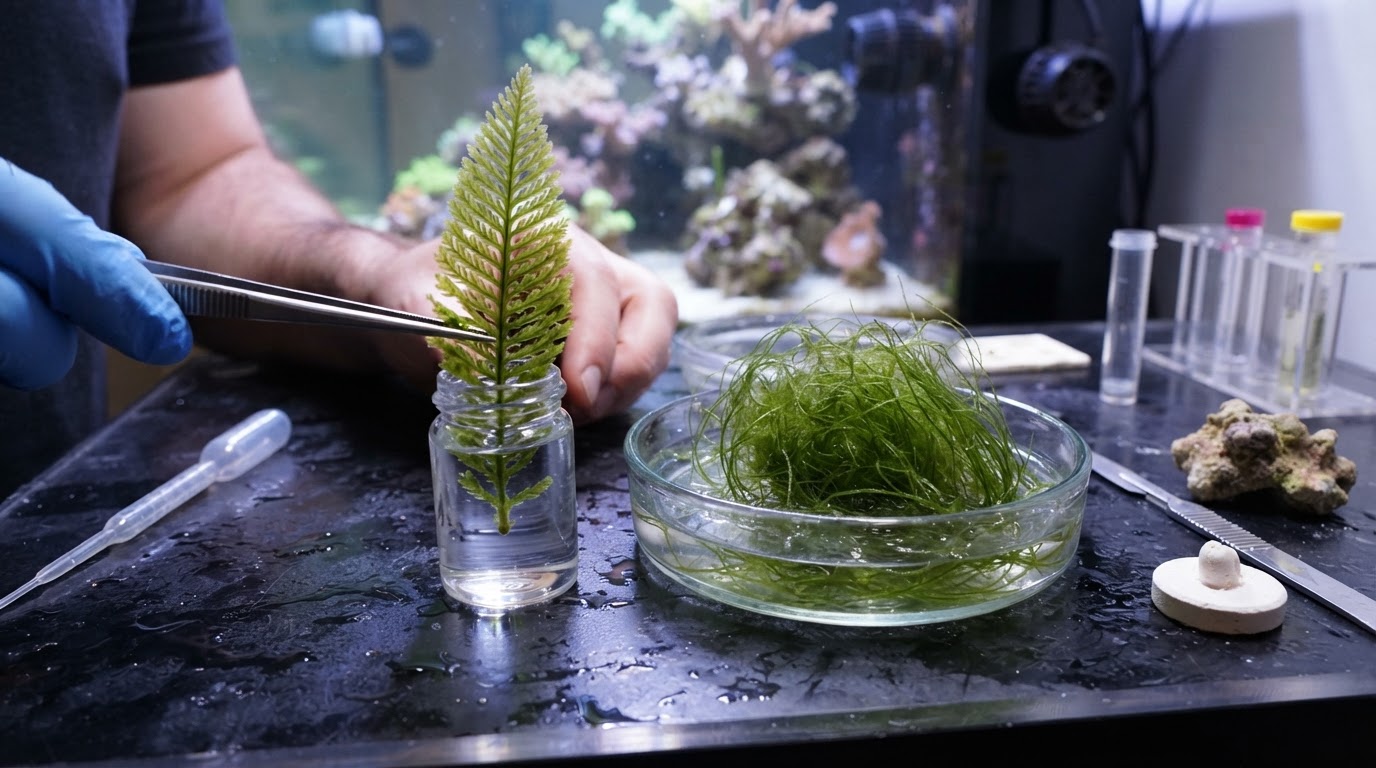
Every list of hair algae eaters breaks down at the individual animal. Appetite varies between fish, and a well-fed tang may ignore a patch it would otherwise nip. Long filaments are physically harder to bite than short growth, which is why manual thinning often comes first. Urchins will run out of food in a clean tank and need supplemental feeding. And a patch that several plausible grazers refuse may not be hair algae at all: stiff, feathery, firmly anchored growth points to bryopsis, which most cleanup crews will not touch.
Hence the honest answer is a team, not a hero. AlgaeBarn makes the point directly: there is no single ideal biocontrol for hair algae, and a balanced community of selected herbivores does better than any one species. Larger grazers clear most of a patch quickly; smaller ones finish the edges and slow the return.
Check the Identification Before You Buy Livestock
Green hair algae is the easy one to recognize: soft, wavy, bright-green strands that pull away between your fingers, usually Derbesia or a close relative. The lookalikes are where money gets wasted.
- Bubble algae grows as round, shiny, water-filled vesicles on rock and coral bases. Remove it carefully and siphon loose material rather than scattering fragments.
- Turf algae is a short, dense, wiry mat that stays put when you pull. A fish bought for hair algae may ignore it. See the separate turf-algae identification guide.
- Bryopsis looks like tiny green feathers and roots firmly into rock. Most grazers leave it alone.
The Part Grazers Cannot Do for You
Nutrient control and manual export remain the load-bearing wall of any hair algae fix. Bulk Reef Supply frames the job as three prongs: natural predators, physical removal, and nutrient control. Test nitrate and phosphate over time and use purified source water where appropriate. Its suggested nutrient ranges are examples, not targets to impose on every reef; a zero reading in an algae-covered tank may reflect rapid uptake rather than an absence of nutrients.
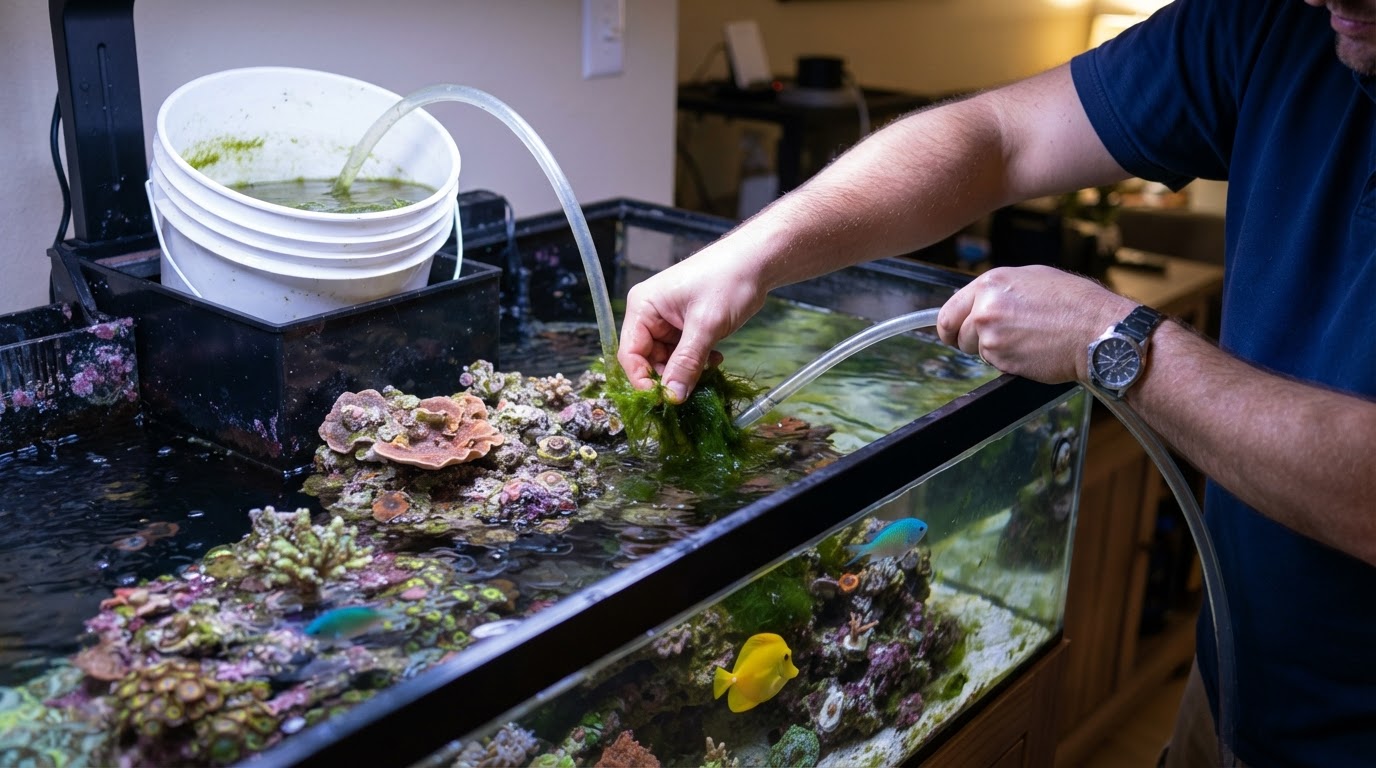
For removal, pinch and siphon: grip clumps with your thumb and a siphon hose so the strands leave the system instead of floating free. Scrubbing a rock with a brush only breaks filaments into fragments that reattach elsewhere.
FAQ: What Eats Green Hair Algae in a Reef Tank?
Will a sea urchin eat green hair algae in a reef tank? Yes, more reliably than most other invertebrates. Pincushion and tuxedo urchins are the usual picks because they lack the long, injuring spines of some species. Expect to feed yours once the algae thins out, and expect it to rearrange small frags as it grazes.
What fish eats hair algae in a reef tank? Tangs, rabbitfish, and blennies are the common helpers, and the court jester goby is a realistic option in smaller tanks. Treat them as part of a team, because no fish is guaranteed to eat hair algae and some will only nip at it between meals.
How do I tell green hair algae from turf algae? Pinch a small piece. Soft, wavy strands that come away easily are likely hair algae; short, wiry growth that fights back is turf. If it is stiff and feather-like, suspect bryopsis before buying grazers that will not eat it.