The Short Answer: Fern-Like Branches, Not a Tangle of Strands
Look at one frond, not the whole patch. Bryopsis species often grow as feather-like fronds with a central axis and side branches; the University of Hawai‘i's reef-algae guide describes that pattern for B. pennata. This is a clue, not a visual diagnosis for every green filament in a reef tank.
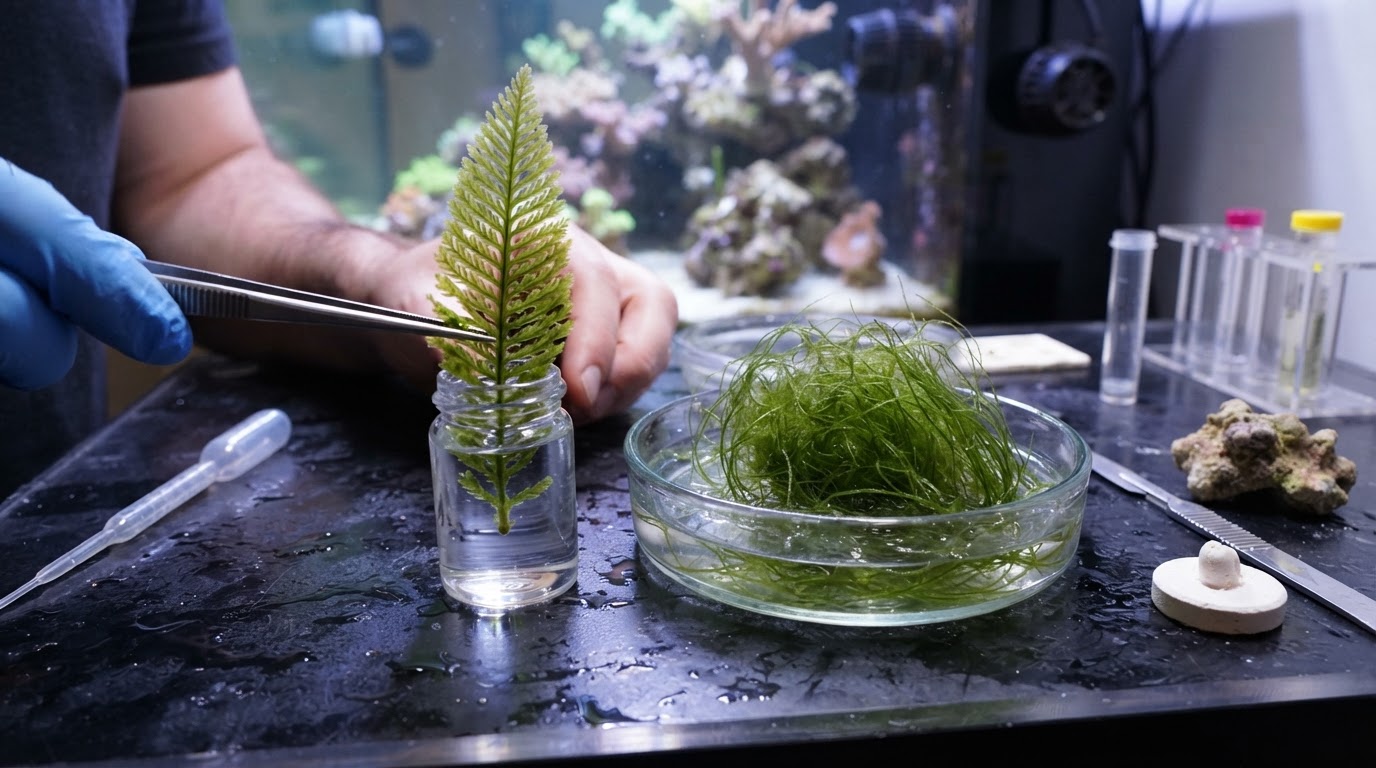
Attachment is a second clue. B. pennata has rhizoidal holdfasts, and a quick pull may tear the frond rather than remove the base. "Green hair algae" is a broad hobby label covering more than one organism, so a loose-looking clump is not a definitive alternative identification. Firm, orderly branching plus a persistent base makes Bryopsis a candidate, not a certainty. Slime-like films and brown dust call for a different investigation; see our diatoms versus dinoflagellates guide.
Clue | Bryopsis | Ordinary green hair algae |
|---|---|---|
Growth form | Feather-like fronds with a central stem and side branches | Unstructured strands with no repeating pattern |
Texture and attachment | May have a persistent base; pulling can leave fragments | Varies widely by organism; not a definitive discriminator |
Identification ceiling | Branching raises suspicion; expert microscopy or molecular work may be needed | "Hair algae" is a broad hobby category, not a single species |
Why a Photo Alone Cannot Confirm It
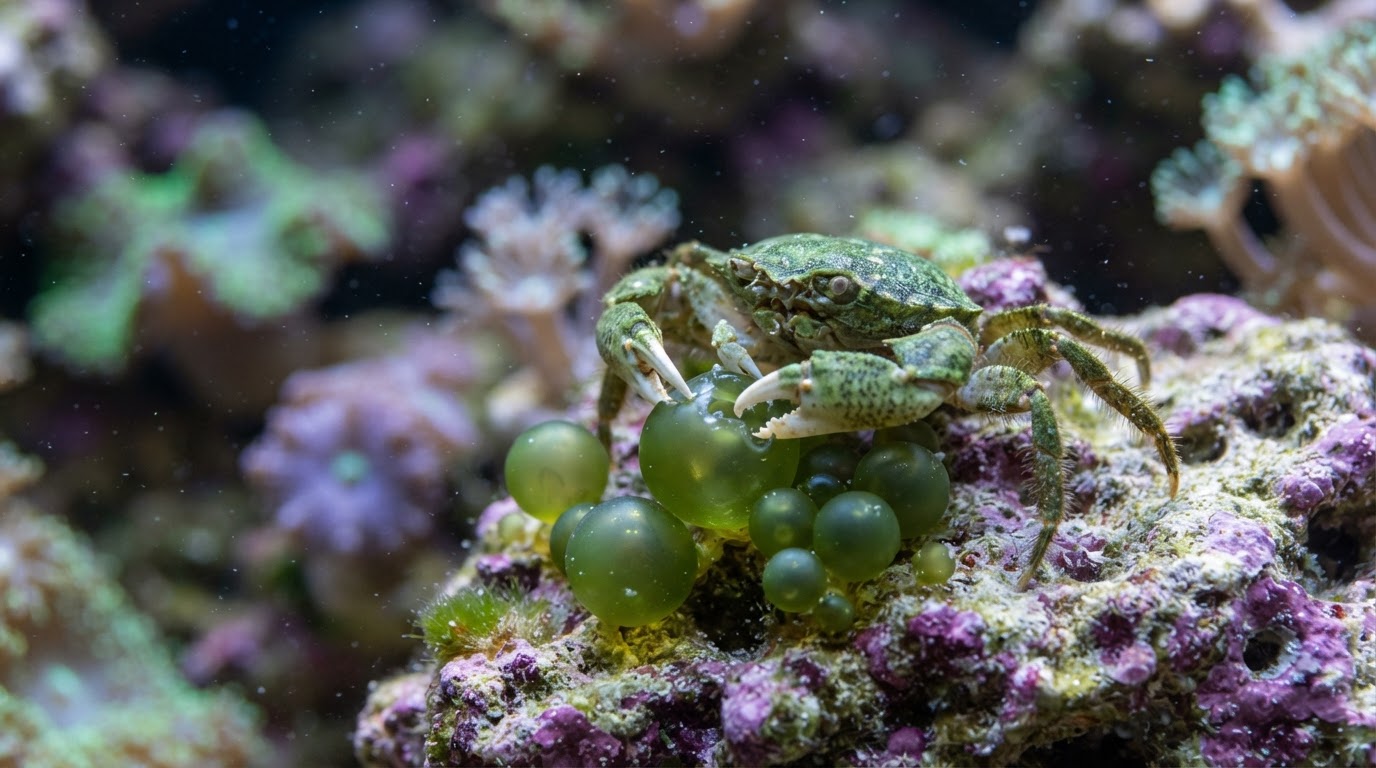
The genus includes several species with variable form; taxonomic research uses both morphology and molecular analysis. Small, damaged or grazed fronds are particularly hard to identify, and other filamentous algae can look similar. A close photo is useful evidence, not proof. Do not use a chemical treatment as an identification test.
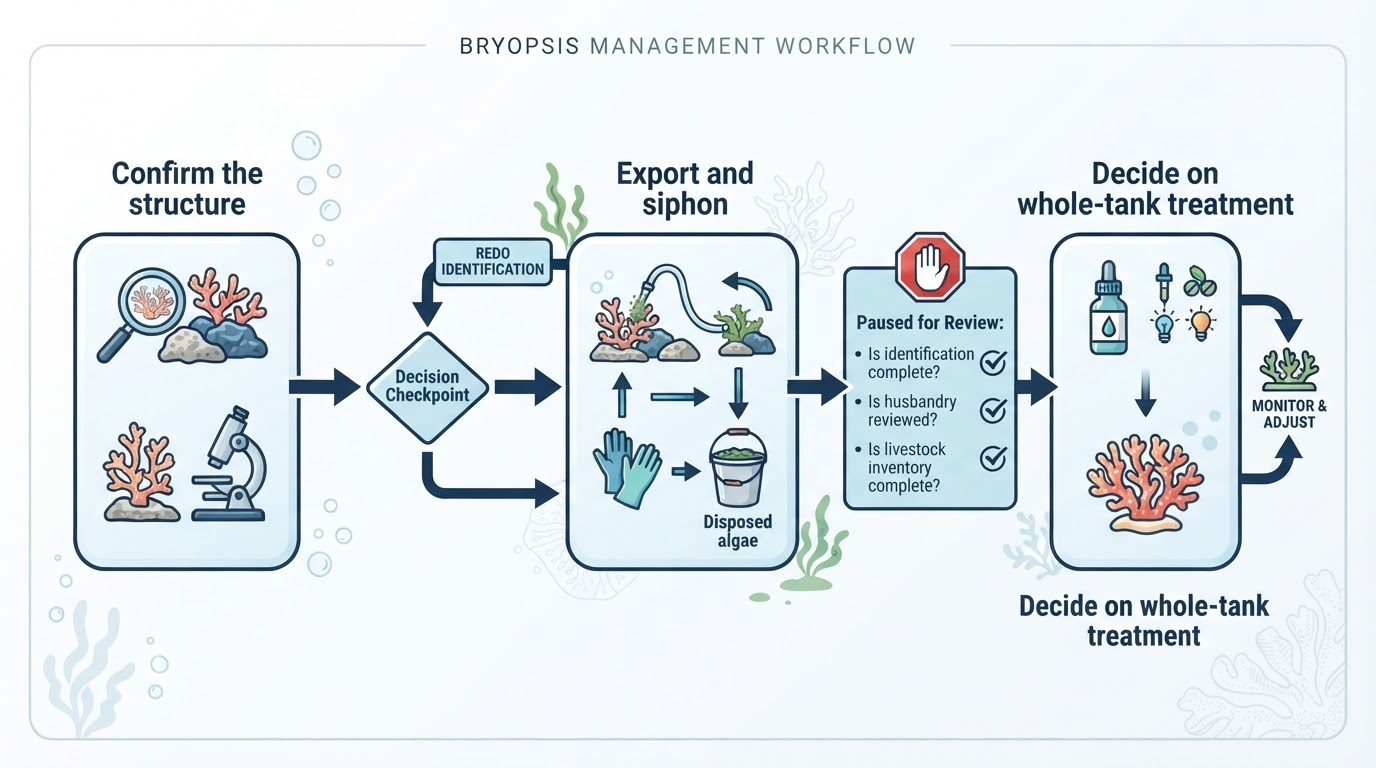
Inspect instead. Use whiter light, photograph one intact frond with an object for scale, examine the attachment point rather than only the free end, compare several patches, and magnify when the branching stays unclear. If you cannot find recognizable feathered branches growing from a central structure, pause before moving from physical control to a tank-wide treatment.
Where It Comes From and What You Are Measuring
Bryopsis can arrive as a hitchhiker on new marine material; the University of Florida aquarium guide describes that route. Inspect frags, plugs and live rock before introduction. Nutrients and trapped detritus are worth investigating, but neither a single test result nor a photograph establishes the cause of one outbreak.
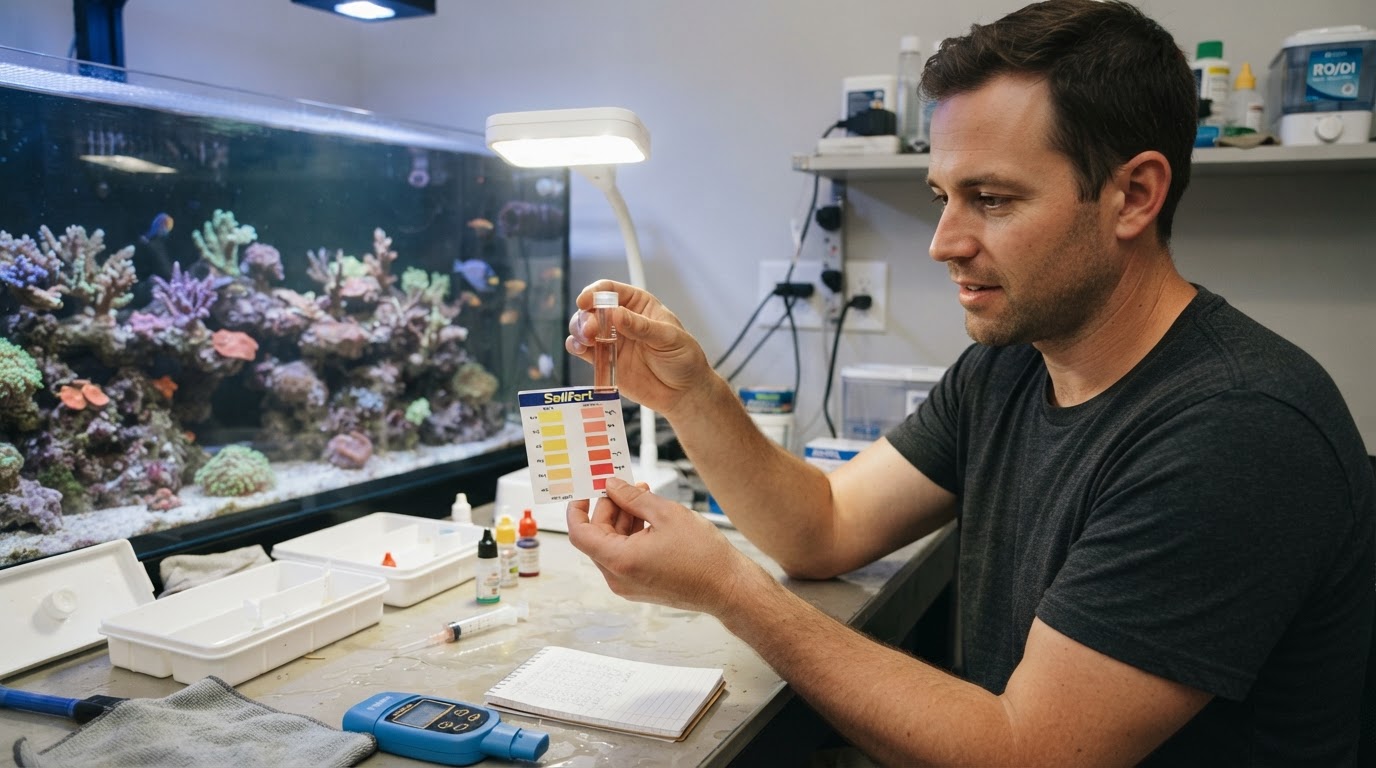
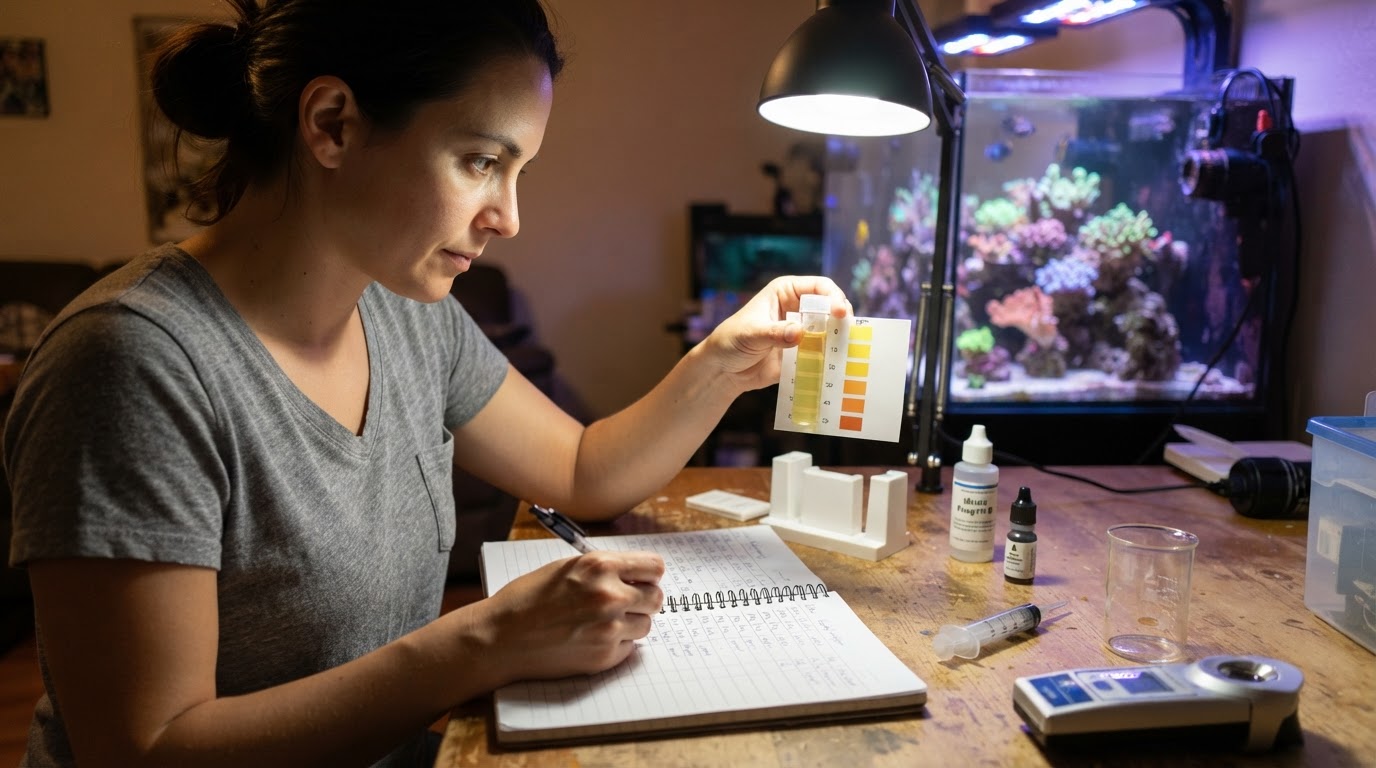
A low reading does not prove that nutrient input has stopped, because growing algae take up nutrients. Measure trends with your own nitrate and phosphate kits, record feeding and maintenance changes, and avoid chasing a universal target number or abruptly driving nutrients to zero.
Choose the Response by Outbreak Level
Outbreak level | What you see | First move | What changes the plan |
|---|---|---|---|
1 — contained | One small patch on a removable frag, plug, or rubble | Work on it outside the display or replace the contaminated plug | No whole-tank medication is proportionate |
2 — reachable | Growth on accessible rockwork that returns after simple pulling | Pinch-and-siphon removal plus a review of source water, feeding, detritus, filtration, lighting, and flow | Observation may contain it; a tank-wide intervention is not automatic |
3 — widespread | Bryopsis in fixed rockwork, crevices, or around coral bases, returning after careful removal | Confirm the identification, correct husbandry problems, inventory livestock and macroalgae, then evaluate a whole-system option with label guidance | Only now is fluconazole worth weighing — with product-label and qualified guidance |
Manual Removal That Does Not Spread Fragments
- Run a narrow siphon hose into a bucket and fit clean mechanical filtration if siphoned water returns to the system.
- Reduce or stop circulation so loose pieces cannot drift across the display.
- Grip the algae close to its base and pull slowly rather than snapping the frond.
- Hold the siphon intake beside the patch so the attachment point and every visible fragment leave the tank immediately.
- Check crevices, frag-plug undersides, pump guards and cords, overflow teeth, sump baffles, frag racks, and snail and hermit shells (Reef Directory).
- Restore circulation, then replace or clean loaded filter media.
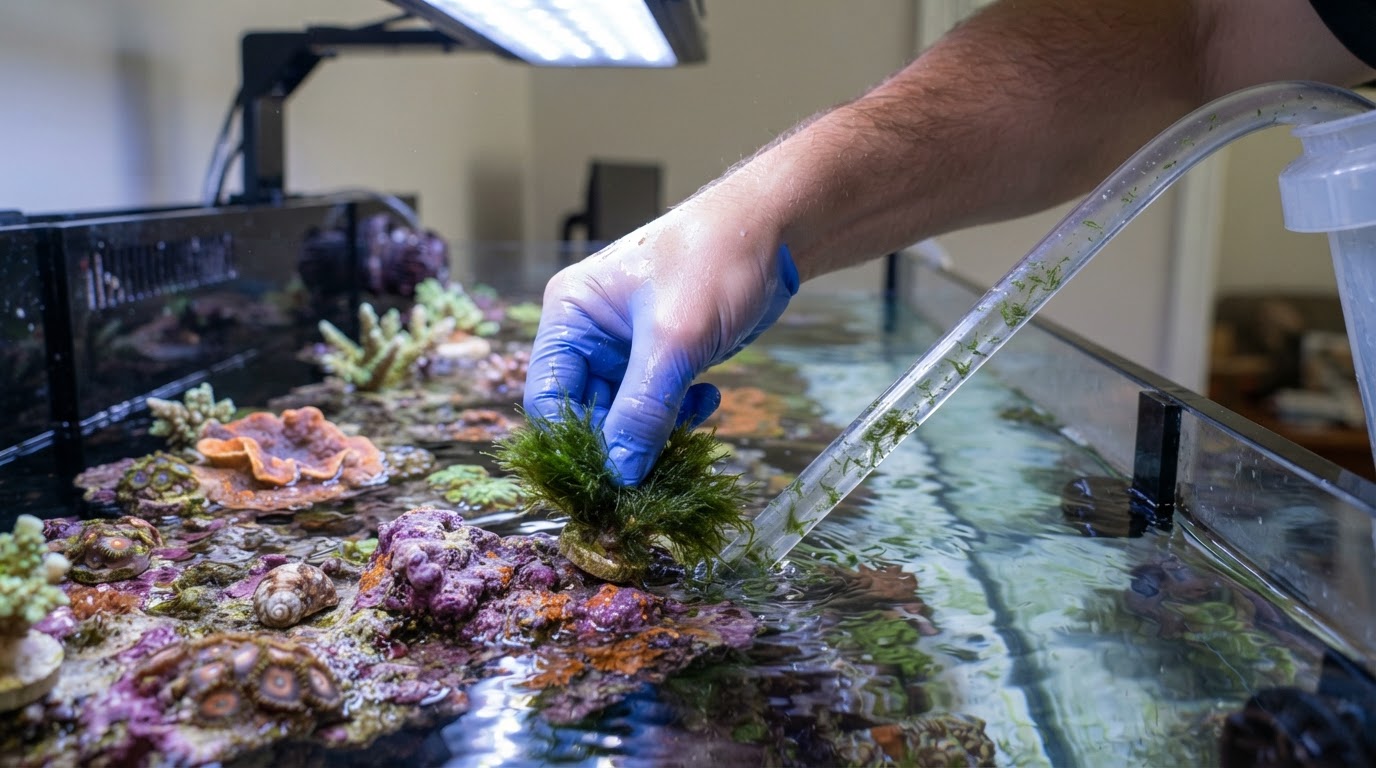
Avoid brushing Bryopsis inside the display: it disperses fragments that settle elsewhere (Bulk Reef Supply). Porous rock makes complete removal unlikely, because embedded material survives a visible frond being pulled. The work still matters — every exported clump is biomass that cannot spread or decay in the tank, and removing it before any chemical step reduces the die-off load.
Chemical Options: Label and Qualified Guidance Only
Fluconazole is discussed in retailer and hobby material, but those reports do not establish a universal dose, duration or livestock-safety profile. Treat it as a product-specific decision, not a default next step.
If you consider a treatment, read the exact product label and its livestock warnings; products and intended uses differ. Check with a qualified aquarium professional or veterinarian when livestock compatibility is uncertain. Do not copy a forum dose, turn off life-support equipment based on a general article, or assume an apparent improvement guarantees that the identification was correct.
Oxidizers and other hobby remedies can harm corals, invertebrates and beneficial organisms. This page does not provide a chemical recipe or recommend raising magnesium to an arbitrary number.
What to Measure Before and After
Record baseline temperature, pH, ammonia, nitrate and phosphate; photograph representative patches under repeatable lighting; and list the livestock and macroalgae in the system. After any intervention, watch animal behaviour, coral extension and water parameters. Export detached algae, maintain filtration and follow the specific product's guidance if one was used. Judge progress against your own baseline over time, not a universal deadline or one test result.
FAQ
Can I identify Bryopsis from a photo? Often the fern-like branching is visible, but photos miss small or damaged fronds, and species-level identification needs microscopy or molecular data. Use the photo as evidence, not proof.
Does anything eat Bryopsis? Rabbitfish are sometimes reported to graze it, and turbo snails, trochus snails, and tuxedo urchins appear in guidance, but results are inconsistent — an animal may trim exposed growth or ignore it (Bulk Reef Supply; Reef Directory). Choose livestock by adult size, diet, and long-term care, not as a cleanup tool.
Is fluconazole a cure? No treatment is guaranteed, and hobby reports do not establish a universal safe procedure. Check the exact product label and livestock compatibility with qualified guidance before considering it.
The Order That Matters
Identification first, export second, treatment third — and only when the evidence and your livestock mix justify it. A confirmed Bryopsis problem is manageable; a misidentified one treated with a tank-wide chemical is a self-inflicted risk.