Start With the Measurement, Not the Bottle
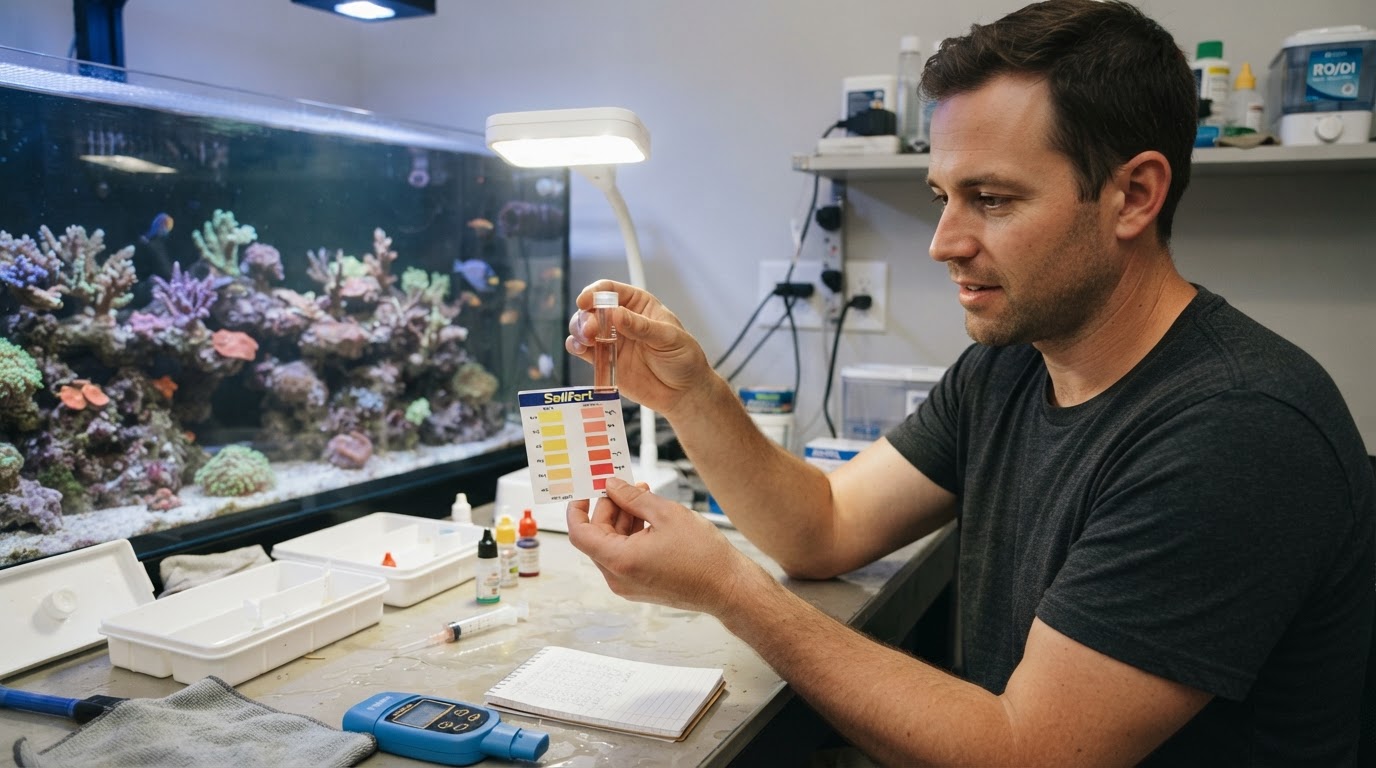
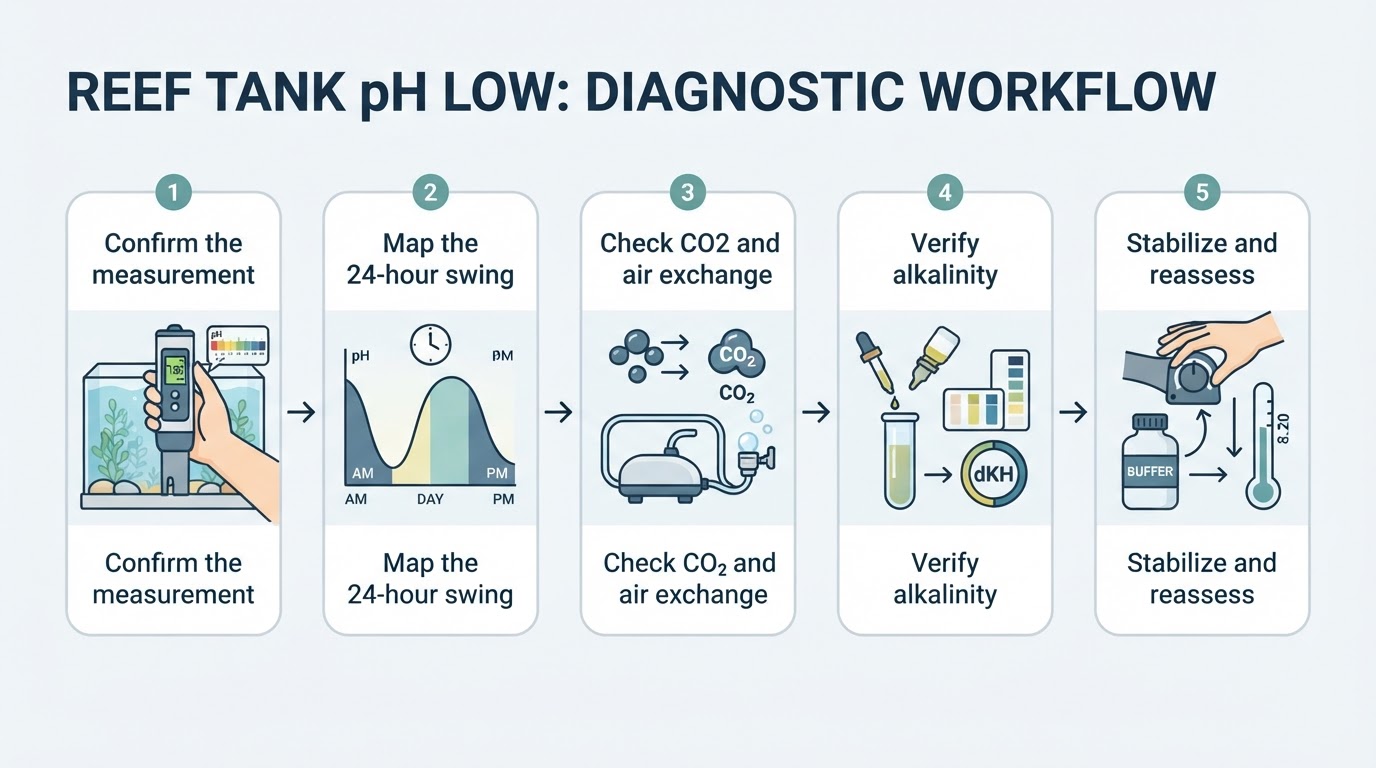
A low pH number is only as trustworthy as the instrument that produced it. Before you treat the tank, confirm the reading. pH electrodes drift as they age, and a probe that responds slowly or will not hold a calibration may need replacing. Follow your own meter maker's calibration procedure with fresh standards; for example, Neptune Systems specifies pH 7 and 10 standards for a saltwater aquarium. Rinse between standards and wait for readings to settle. Then verify with another method if available; a disagreement is a reason to check calibration and test technique before changing the tank.
Why a Reef Tank's pH Falls Every Night
Tank organisms respire around the clock and release CO₂. During the photoperiod, photosynthesis can consume CO₂, so pH often climbs through the afternoon. After lights-out, photosynthesis stops while respiration continues, and pH often falls before the lights return. That cycle is expected. A flat trace may reflect stable conditions or a measurement problem, so verify it rather than assuming either. A wide day-night gap warrants checking gas exchange and measurement conditions, while a tank that sits low around the clock warrants checking both CO₂ and alkalinity.
pH and Alkalinity Are Different Measurements
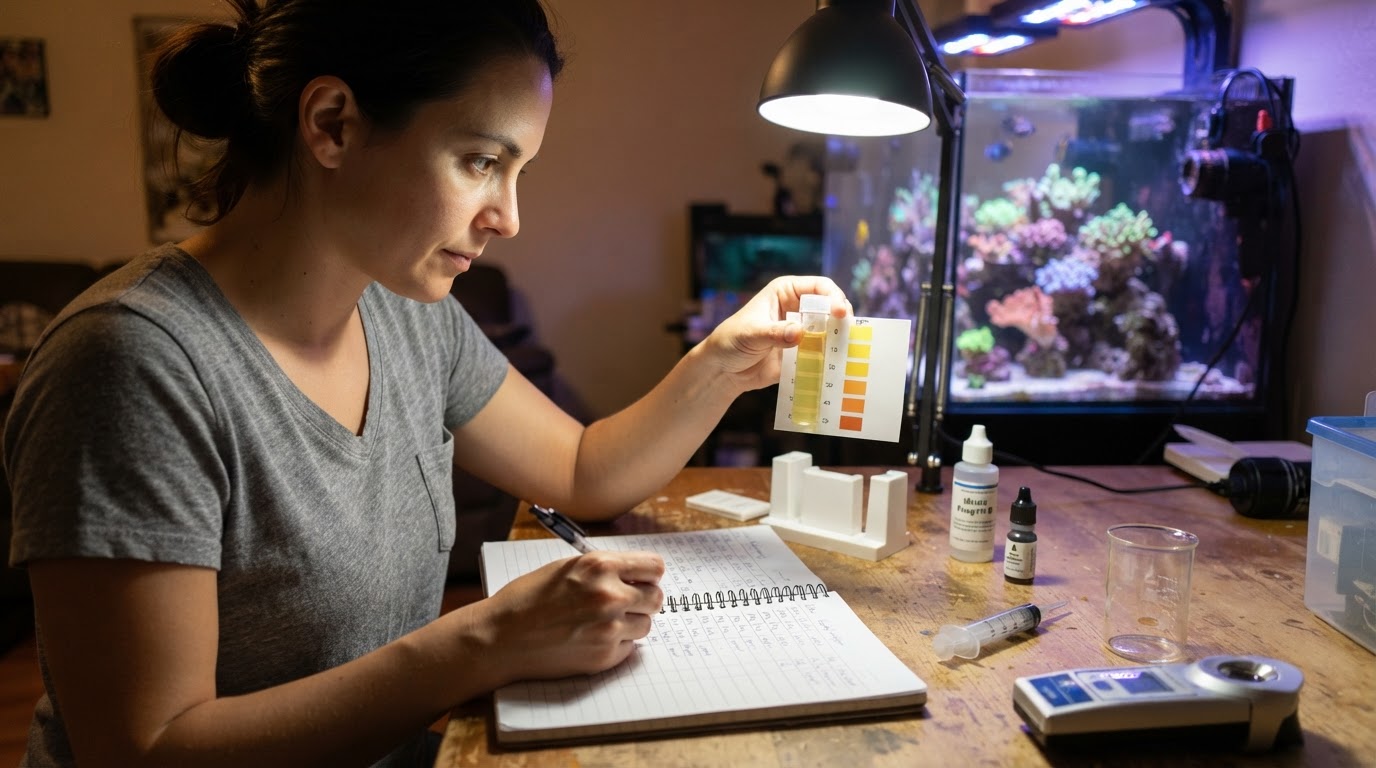
Alkalinity is the water's capacity to neutralize acid, reported in dKH or meq/L. pH is the current acid-base state of the water. Alkalinity is the shock absorber; pH is where the suspension sits right now. A tank can hold healthy alkalinity and still read low pH when CO₂ accumulates, because dissolved CO₂ forms carbonic acid. A tank whose alkalinity has slipped will dip deeper and recover more slowly under the same CO₂ load. That is why raising alkalinity does not automatically raise pH: with CO₂ as the driver, extra buffering may lift the number for an afternoon and then settle back.
Diagnostic Matrix: Match the Pattern, Not the Number
Use the pattern rather than a single reading. The table pairs each common observation with the check that follows.
What you see | Most likely cause | Next check |
|---|---|---|
The reading will not hold a calibration, or it moves slowly and jumps after handling | Probe drift or an aging electrode | Recalibrate with fresh 7.0 and 10.0 packets; replace the probe if it still will not hold |
pH bottoms out before the lights come on and climbs through the afternoon | Respiration and photosynthesis with limited gas exchange | Log a 24-hour high and low; inspect surface movement and the skimmer's air source |
Low all day and all night, alkalinity normal, room often closed | Excess indoor CO₂ | Run the aeration test below and improve air exchange |
Low pH together with alkalinity below the range you keep | Depleted buffering capacity | Verify alkalinity with a reliable kit, then correct it over days with a balanced regimen |
A sudden drop right after an additive or a water change | Something you added, or a precipitation reaction | Stop the additive, re-test pH and alkalinity, and account for what changed |
The Aeration Test That Separates Tank CO₂ From Room CO₂
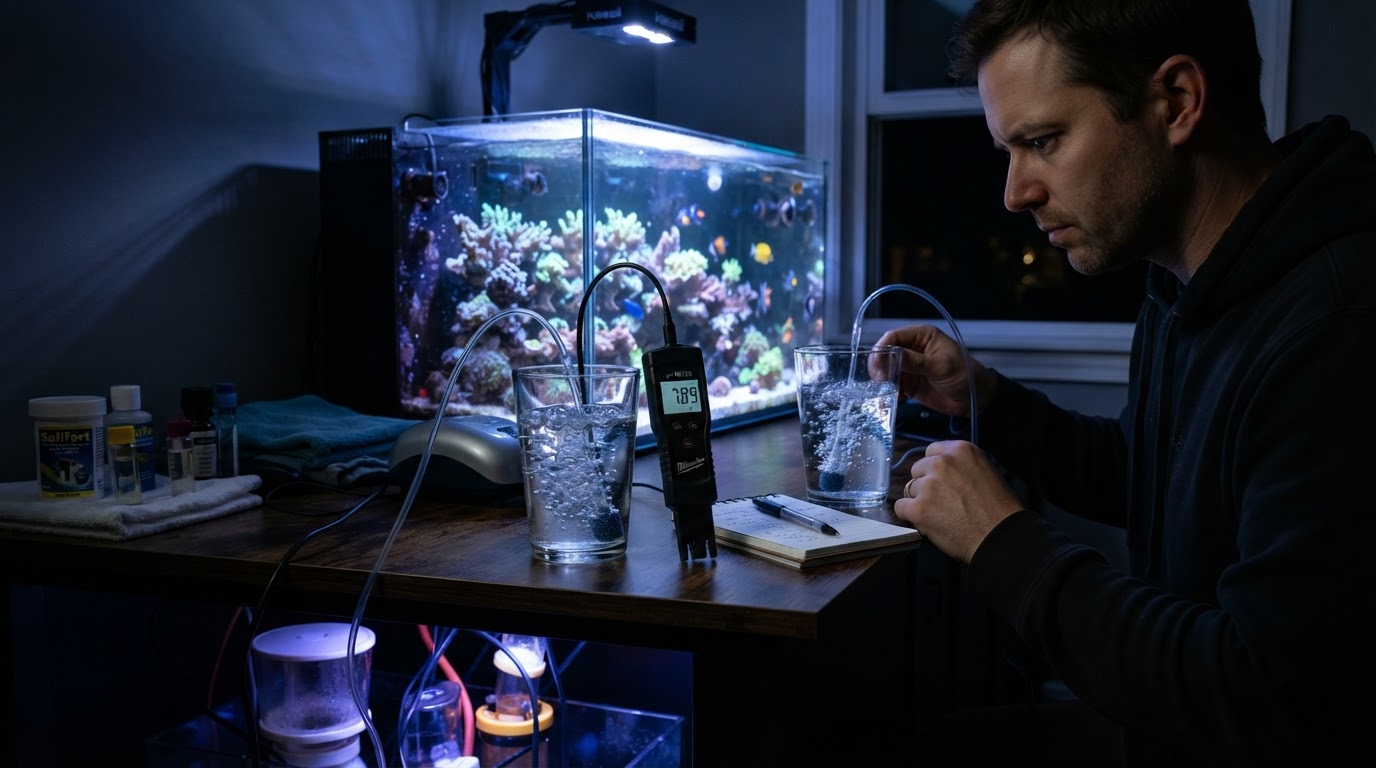
Take two cups of tank water and measure the pH of each. Aerate one with room air and the other with outdoor air, using the same equipment and enough time for the readings to stabilize. Keep sample temperatures similar before comparing them. If the indoor-air cup rises above the tank's reading, more tank aeration may help. If only the outdoor-air cup rises, excess indoor CO₂ is plausible, and simply bubbling more room air may not help. This is a diagnostic, not a dose calculation; see reef chemist Randy Holmes-Farley's aeration-test explanation.
Fix Air Exchange Before You Reach for a Buffer
When the test points at CO₂, the cheapest fixes come first. Aim a return nozzle or powerhead at the surface until ripples cross the waterline. Give the skimmer access to fresher air by cracking a window near the tank, or route its air intake to outside air if the tank sits in a closed room. Improve ventilation in the room itself: a sealed room with people, pets, or a gas appliance is a CO₂ trap, and the tank equilibrates with whatever air surrounds it. Re-check the 24-hour trend after a day or two before changing anything else. If pH is still low once the measurement is confirmed and gas exchange is genuinely good, verify alkalinity and the other basics with a reliable test kit. Only then consider equipment built for pH support, such as a CO₂ scrubber on the skimmer intake or a balanced supplement regimen, following the manufacturer's instructions for each. A buffer answers a question about alkalinity; it does not remove CO₂, and chasing a pH number with fast doses tends to move alkalinity around while pH drifts back.
What This Diagnosis Cannot Tell You
A single reading is not a diagnosis. Hobby probes and test kits drift, and calibration slows that drift rather than eliminating it. Acceptable pH varies with tank type, livestock, and the range you deliberately keep. The aeration test narrows the cause; it does not produce a number to dose toward. If a probe cannot hold calibration after a careful two-point routine, replace it instead of compensating for it in software. Changing aeration, alkalinity, and an additive at once leaves you unable to tell which one moved the number.
FAQ
How low is too low in a reef tank?
There is no universal cutoff, because the pattern matters more than the number: how long it sits low, how far it swings, and whether the measurement is sound. If a calibrated reading sits below the range you keep for your tank, and stays there for more than a day or two, work through the checks above instead of dosing on one result.
Does low pH hurt corals?
Corals build skeletons from carbonate, and persistently low pH makes that chemistry harder, which is why long, deep dips deserve attention. A normal night-time dip is not the same problem; it is the expected result of respiration. Stability within a sensible range matters more than hitting one exact number.
When is a buffer actually justified?
After you have confirmed the measurement, found the cause, and verified alkalinity, and then as a deliberate correction with a balanced product rather than a reflex to a low reading. If CO₂ is the driver, the buffer will not fix it, and rapid dosing can destabilize alkalinity while pH returns to the same place.